Introduction
This guide covers the three main categories of CNC machined work in the construction and roads sector: wear parts, precision brackets, and site equipment componentry. It also covers the Australian standards and compliance frameworks that apply, from Austroads to state road authority specifications, and how to handle reverse-engineered or obsolete components.
Summary
Key Takeaways
- Wear-grade steels require specialised CNC machining. Australian-made Bisalloy Wear Steel and international grades like SSAB Hardox can reach up to 600 HB hardness, far harder than standard structural or tooling steels. Machining them requires appropriate tooling selection, controlled cutting parameters, and a workshop set up for hard-metal work.
- Precision matters even in heavy construction. Pins, bushings, bore holes, and mounting-hole patterns all need controlled dimensions to function correctly, requirements that plasma cutting or as-fabricated steel cannot meet. CNC milling and CNC turning deliver the accuracy that construction componentry requires.
- Australian compliance requirements are real and getting more specific. Austroads published new guide post specifications in May 2026. State road authorities in NSW, Queensland, and WA each have their own steel fabrication and supplier qualification requirements. ISO 9001 is effectively mandatory for suppliers to road infrastructure projects.
- Local machining and reverse engineering can replace obsolete components. When OEM parts are discontinued, or when a custom component is needed for a non-standard application, CNC machining from a measured sample or engineering sketch is a well-established Australian service, often faster and cheaper than waiting for an offshore replacement.
- Downtime is the real cost driver. In construction, a machine sitting idle is more expensive than the part itself. Sourcing CNC machined components from a local Australian machining supplier with rapid turnaround and same-day communication is often the lower-total-cost option, even when the unit price is higher than an offshore alternative.
1. Wear Parts: Machining Hard-Wearing Construction Steels
Wear parts are the components that take the hardest punishment on a construction or mining site: bucket lips, ground-engaging tools, chute liners, hopper walls, and conveyor components. They are made from abrasion-resistant (AR) steels specifically designed to resist surface wear, and they eventually need to be replaced, or have precision features machined into them that laser cutting and plasma profiling cannot achieve.
Australian Wear Steel: Bisalloy
Bisalloy Wear Steel (Bisalloy Steel Group, ASX: BIS) is the benchmark Australian-made abrasion-resistant steel. These are quenched and tempered (Q&T) steels, heat-treated after rolling to achieve hardness levels that standard structural steel cannot reach. Current Bisalloy Wear grades include:
- Bisalloy Wear 320: for moderate abrasion applications; chutes, hoppers, bin liners
- Bisalloy Wear 400: the most widely used wear grade; excavator attachments, dump truck bodies, wear liners
- Bisalloy Wear 450 and 450 Plus: higher hardness for more severe abrasion; bucket teeth adapters, crusher liners
- Bisalloy Wear 500, 500 Plus and 500XT: for demanding applications including ground-engaging tools and high-impact wear zones
- Bisalloy Wear 550 and 600: the hardest grades currently in the range, for extreme-abrasion applications such as rock cutters
The international equivalent is SSAB Hardox. For example, Hardox 450 carries a nominal 450 HBW hardness (guaranteed range 425–475 HBW) and is used in excavator buckets, dump truck bodies, concrete mixers, and asphalt rollers. Both Bisalloy and Hardox are available as plate and in some structural forms; the specific grade and thickness should be selected based on the wear mechanism (abrasion, impact, or a combination) and the material being handled.
Why These Steels Need CNC Machining
Wear-grade steels are supplied as profiled plate, plasma or laser cut to shape, with hardness and flatness verified. But for many applications, cutting alone is not enough. Here is where CNC machining enters:
- Flatness after heat treatment: Q&T steels can have some residual curvature after the quenching process. Where a wear plate needs to sit flush against a base frame or be bolted to a precision mounting face, machining the contact surfaces ensures flatness and even load distribution.
- Precision bores and holes: pins, bushings, and bucket-tooth adapters need controlled bore size, roundness, and surface finish for correct fit and load transfer. Plasma or laser cutting a hole leaves a tapered, heat-affected edge with significant size variance, not suitable for a controlled pin fit. CNC boring or reaming produces the accurate, clean bore required.
- Threaded features: mounting studs, retention bolts, and wear-plate fastening all require machined threads. Tapping a thread into a 400–600 HB steel requires appropriate tooling and cutting parameters; it cannot be done by conventional means.
- Counterbores and recessed faces: recessed fastener heads and counterbored seating surfaces are a CNC turning or milling operation, not a profiling one.
Machining Hard Steels: What to Expect
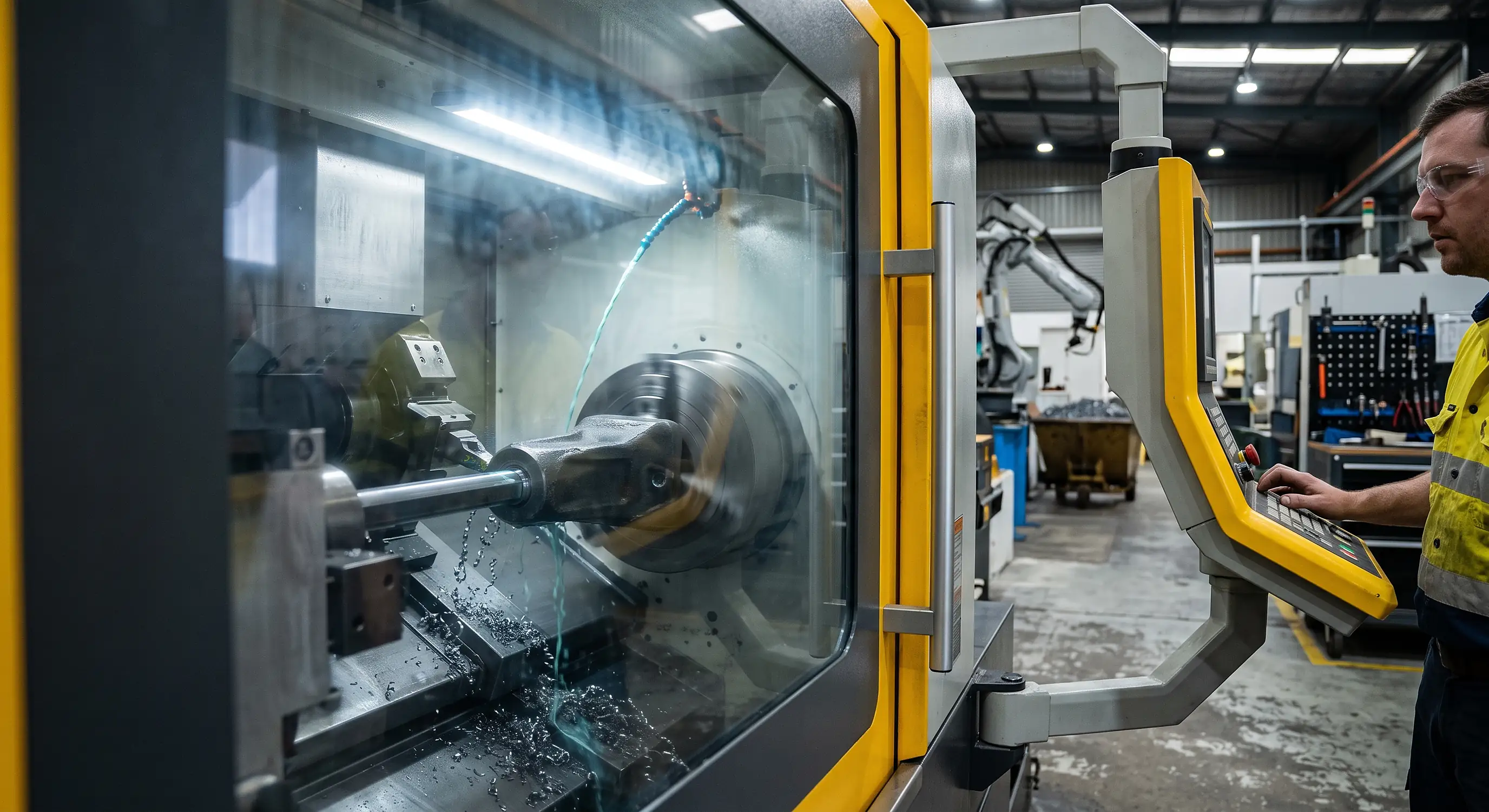
The hardness that makes wear steels resistant to abrasion in service makes them resistant to cutting tools during machining. At 400–600 HB, these materials wear tooling quickly and generate significant cutting forces. A CNC machining workshop equipped for this work will use:
- Carbide or ceramic insert tooling rated for hard turning and hard milling
- Reduced feed rates and depths of cut compared to mild steel
- Rigid workholding to prevent vibration and chatter
- Appropriate coolant application to manage heat buildup
Wear-steel machining is not a job for a general fabrication shop. It requires a CNC machining service with the right tooling, machine rigidity, and experience. The result of under-equipped machining is broken inserts, poor surface finish, and components that don’t meet their dimensional requirements.
2. CNC-Machined Brackets and Site Equipment Componentry
Not all construction CNC machining work is about hard steels. A large portion of the sector’s precision machining involves standard structural materials, mild steel, galvanised steel, and aluminium, where the requirement is not hardness resistance but dimensional accuracy, hole-pattern precision, and batch-to-batch repeatability.
Common Materials for Construction Brackets
Most structural brackets and site equipment componentry use:
- Mild steel (to AS/NZS 3679 structural sections and plate): the standard for load-bearing brackets, mounting frames, and fabricated site equipment
- Galvanised steel: for components exposed to weather, road salt, or moisture over long service lives; typical for road furniture, sign structures, and outdoor site installations
- Aluminium: for weight-sensitive applications where structural loads are moderate; common in elevated sign frames, mobile equipment accessories, and transport-related fittings
Where CNC Machining Fits in the Production Process
Most brackets start life in a fabrication shop, laser or plasma cut from plate, bent, assembled, and welded. CNC machining typically enters the process at one of three points:
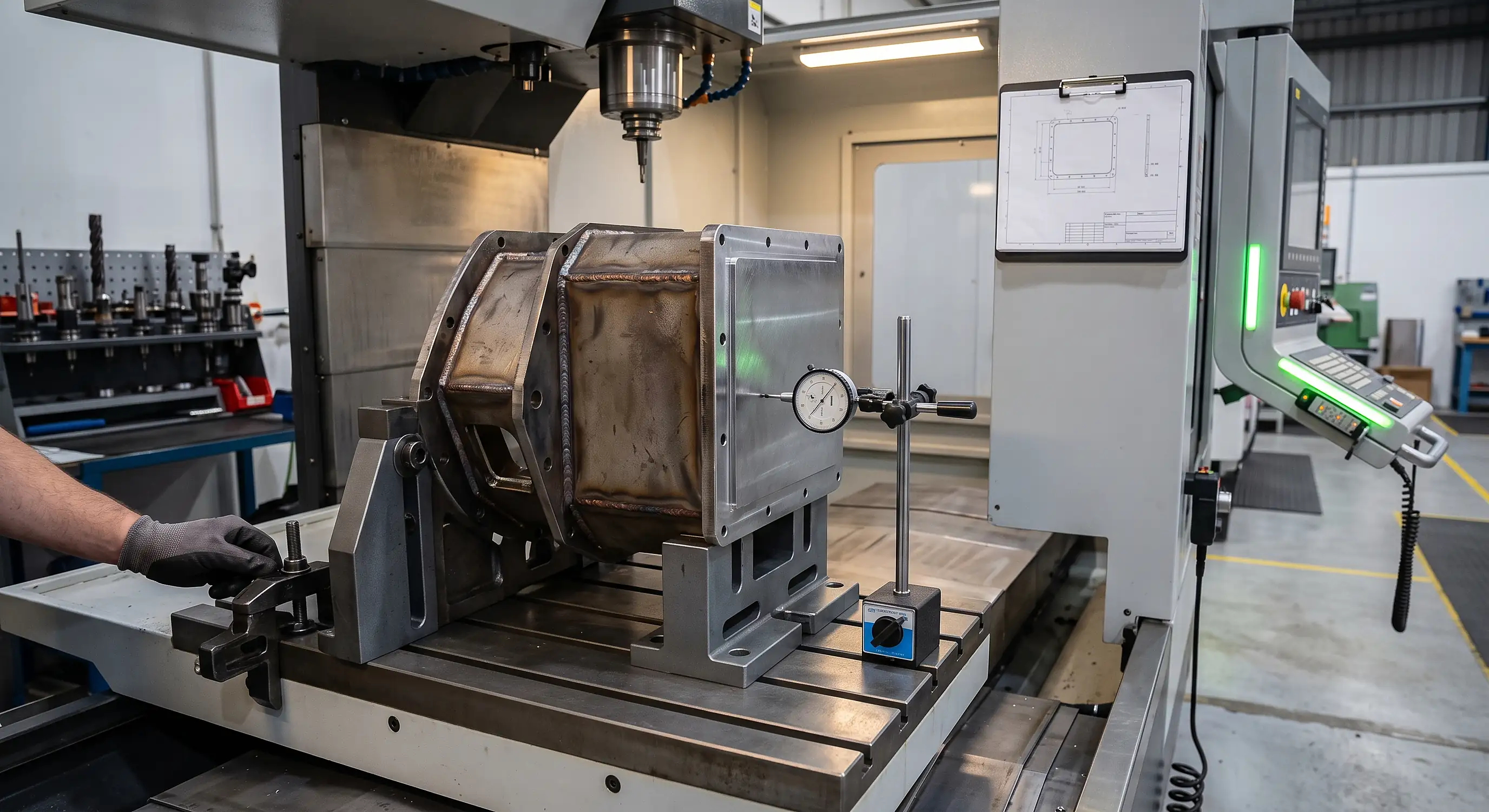
- Precision hole drilling and boring: mounting holes that need to be in exactly the right position, at the right diameter, with the right surface finish, to bolt onto OEM equipment or standardised road furniture mounts. Plasma-cut or punched holes have too much variance for a controlled fit. CNC drilling, boring, or reaming delivers the accuracy required.
- Flatness and face machining: a welded bracket that needs to bolt flush against a precision surface is machined on the contact face after welding. The mating face is brought to flatness and perpendicularity that the welding process cannot guarantee on its own.
- Round components: pins, bushings, spacers, and stepped fasteners are CNC turned from bar stock. These cannot be economically fabricated from plate; a CNC lathe produces them accurately and quickly.
Why Precision Matters for Construction Brackets
There are three practical reasons why dimensional accuracy matters in what looks like a simple bracket:
- Interchangeability: a batch of brackets that all have holes in exactly the same position can be fitted to any unit in a fleet without adjustment. Imprecise hole positioning means every fitting becomes a one-off job.
- OEM fitment: road furniture, sign gantries, safety barrier hardware, and heavy plant accessories are designed to bolt to OEM equipment at specific bolt patterns and interfaces. A bracket that is 2mm off in hole position may not fit at all.
- Safety: misaligned or ill-fitting brackets on road infrastructure or construction plant can create fatigue failure points under vibration and load. Getting the dimensions right matters for structural integrity, not just aesthetics.
3. Australian Standards for Road and Infrastructure Suppliers
Supplying CNC machined components into the construction and road infrastructure sector means working within a framework of Australian standards and state authority requirements. These are not optional; road authorities and principal contractors require compliance from their steel and component suppliers as a condition of approved supplier status.
Austroads: The Peak Body for Road Transport
Austroads is the peak body representing Australian and New Zealand road transport and traffic agencies. Its specifications and guidelines set the baseline for road infrastructure products across all Australian jurisdictions.
Two directly relevant, recently updated items:
- Guide posts: Austroads published ATS-4410 (Supply and Installation of Steel or Plastic Guide Posts), ATS-4420 (Timber Guide Posts), and ATM-830 (Testing of Guide Posts) in May 2026. These establish consistent AU/NZ supply, installation, and testing requirements for steel road-furniture componentry.
- Road safety barriers: Austroads runs the Safety Barrier Assessment Panel (ASBAP), which assesses barrier products against AS/NZS 3845, with crash-test protocols increasingly referencing the US AASHTO MASH standard as Australian testing practice evolves. Only ASBAP-assessed and accepted products may be installed on the NSW classified road network.
Core AS/NZS Standards for Steel Construction
The primary Australian standards governing structural steel work, and by extension the CNC-machined components that go into structural steel assemblies, are:
- AS 4100:2020: Steel Structures, the core Australian standard for steel structure design. Applies to bridge steelwork and structural brackets across most civil applications.
- AS/NZS 5131:2016 (+ Amendment 1:2020): Structural Steelwork: Fabrication and Erection, the fabrication standard that defines four Construction Categories (CC1 to CC4) based on risk level. The structural engineer specifies the category; the fabricator works to it.
- AS 5100: Bridge Design (9-part series; AS 5100.2:2017 received Amendment 2 in 2024): governs steel and composite bridge structures.
- AS/NZS 3845.1:2015: Road safety barrier systems, Part 1, the standard referenced by Austroads and state road authorities for barrier hardware assessment.
- AS/NZS ISO 9001: Quality management, effectively mandated by road authorities and principal contractors for higher-tier fabrication and component suppliers.
The Construction Category System (CC1–CC4)
AS/NZS 5131 uses a risk-based category system to scale quality requirements to the consequence of failure:
- CC1: Lowest risk (single-storey sheds, fence posts); mill certificates and welder qualification suffice
- CC2: Moderate risk (multi-storey residential and commercial buildings, portal frames); welding procedure specifications (WPS) and procedure qualification records (PQR) required, plus NDT on a defined sampling basis
- CC3: High risk (high-rise, hospitals, long-span industrial); scaled-up NDT, independent third-party inspection
- CC4: Highest risk (major bridges, critical infrastructure); requirements set project-by-project by the engineer of record
The category is determined by the structural engineer based on the Importance Level, Service Category, and Fabrication Category, not by the fabricator or the machining supplier. Knowing which category your project sits in tells you what documentation and quality system your supplier needs to operate under.
4. State Road Authority Compliance: NSW, Queensland and WA
Each Australian state road authority has its own requirements on top of the national standard framework. If you are supplying CNC machined components into road or bridge infrastructure projects, these are the specifications that matter.
Transport for NSW (TfNSW)
TfNSW’s steel fabrication specification is TS 01744 (Steel Fabrication, 2024 edition). It requires:
- Fabricators prequalified or registered to the level specified in the tender documents
- Quality systems complying with AS/NZS ISO 9001
- Quality-system conformance to AS/NZS 5131 Appendix D for the designated Construction Category (CC2 or CC3), or AS/NZS ISO 3834 welding quality certification via an accredited body
- Welding conforming to AS/NZS 1554 (Parts 1, 4 or 5) with qualified procedures and personnel, and a Welding Coordinator or Supervisor
- Steel material sourced from manufacturers certified under ATIC Scheme 10 or the ACRS Product Certification Scheme
For road safety barrier products specifically, only products assessed and accepted by ASBAP may be installed on the NSW classified road network. From July 2024, field staff installing or repairing permanent safety barriers must also hold ASHTAS (Austroads Safety Hardware Training Accreditation Scheme) Operative certification, a recent and directly enforceable requirement.
Queensland: Department of Transport and Main Roads (TMR)
TMR operates an Approved Products and Registered Suppliers scheme covering bridges, structures, steel fabrication, and reinforcing and prestressing steel. The relevant fabrication specification is MRTS78 (Fabrication of Structural Steelwork). Supplier listings can be rescinded or updated without notice based on in-service performance, meaning approved supplier status is ongoing, not a one-time achievement.
Western Australia: Main Roads WA
Main Roads WA operates Specification 830, Structural Steelwork, following the same general pattern as NSW and Queensland: a state-specific specification that references AS/NZS 5131, with ISO 9001 as the QMS baseline. This confirms that the compliance requirements for road infrastructure steel suppliers are broadly consistent across all three major states, even though each has its own formal scheme.
If your project spans multiple states, confirm the specific requirements for each jurisdiction. The underlying standards (AS/NZS 5131, ISO 9001, AS/NZS 1554) are consistent; the approval and registration mechanisms differ by state authority.
5. Reverse Engineering Worn and Obsolete Construction Components
One of the most practical applications of CNC machining in construction is reverse engineering: recreating a worn or obsolete component from a physical sample or measured sketch when the original OEM part is no longer available, is on long lead time, or is priced at a significant premium.
When Reverse Engineering Makes Sense
Reverse engineering is well-suited to:
- Discontinued plant and equipment parts: where the original manufacturer no longer makes the component, or where the machine is old enough that spare parts support has ended
- Long lead-time OEM components: where ordering from the original supplier means weeks or months of machine downtime, and a local machined replacement can be turned around in days
- Custom modifications: where the original component design had a weakness, and the replacement is an opportunity to redesign, using a different material, changing the geometry, or eliminating a failure-prone feature
- Underpriced volume replacements: where a construction company uses the same component across a large fleet and wants to reduce cost by machining in batch from a local supplier rather than buying individual OEM parts
The Design Improvement Opportunity
Reverse engineering does not have to mean an exact copy. When a component has a known failure mode, the recreation is an opportunity to engineer a better solution. One documented Australian example: converting a two-piece welded component into a single-piece CNC machined component in 4140 steel, eliminating the weld joint entirely and significantly improving structural integrity under load. The redesigned part matched all the dimensional requirements of the original while removing the failure point.
This kind of improvement is only possible when working with a CNC machining service that understands both the machining process and the engineering context of the component, not just a shop that makes what it is told to make.
What You Need to Bring to a Reverse Engineering Job
For a reverse engineering quote, a machining supplier needs:
- The worn or undamaged sample: if the original part is unavailable, a worn version can often be used, with dimensions taken from the unworn features and allowances made for known wear patterns
- Application context: what load does the part carry? What are the fit interfaces? What material or hardness is required?
- Quantity and urgency: a one-off emergency replacement is costed differently from an ongoing batch of 50 units per quarter
A capable CNC machining service can produce engineering drawings from your sample, quote from those drawings, and have a first article ready for dimensional verification before committing to batch production. We’ve handled exactly this kind of urgent turnaround before: see our case study on an overnight rush order of machined construction brackets for a Melbourne construction firm.
Southside Engineering: CNC Machining for Construction and Road Infrastructure
Southside Engineering is a 100% Australian owned precision CNC machining service based in Mordialloc, Melbourne. Since 1973, we have supplied CNC machined components to the roads and construction, mining, agricultural, marine, and heavy industry sectors. We are a metal machining specialist with a track record in hard-material work, wear-steel componentry, and urgent replacement parts.
What we can do for your construction or roads project:
- CNC milling and CNC turning to ±0.01mm tolerances on structural, wear-grade, and specialty steels
- Hard-steel machining on Bisalloy and equivalent wear-grade steels
- Precision bore work, pin holes, and threaded features in as-fabricated or welded assemblies
- Reverse engineering from physical samples: engineering drawing, first article, and batch production
- Urgent replacement components with 24-hour rapid prototyping capability
- Quote within 4 business hours of receiving drawings or a sample
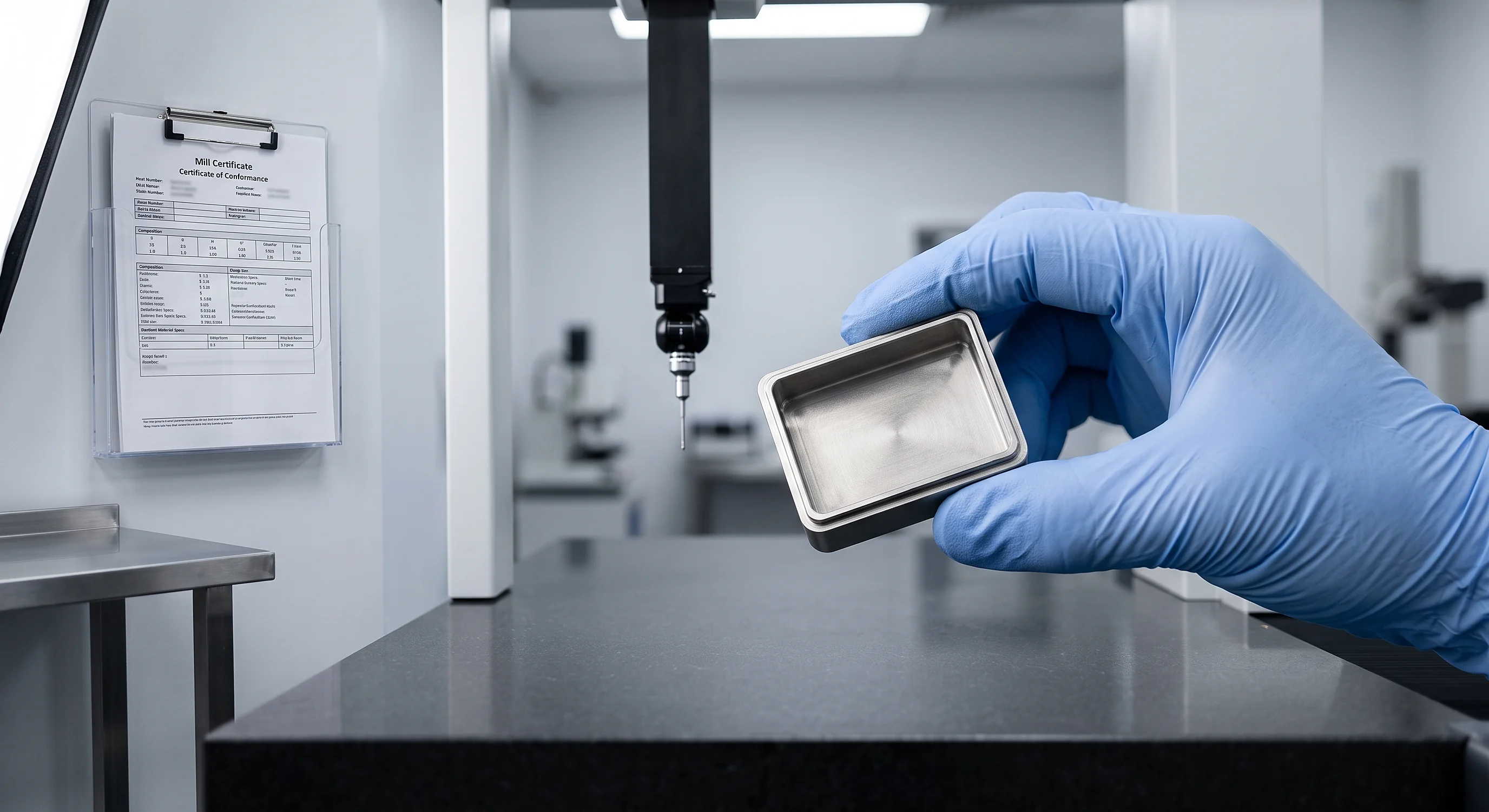
- ISO 9001-aligned quality documentation: mill certificates, CoC, and inspection records supplied on request
We understand what construction and civil suppliers actually need: fast turnaround, accurate components, reliable documentation, and a supplier who communicates clearly. As a CNC mill Australia workshop delivering CNC machining services to the construction sector, we’re one of the options Melbourne fabricators call when they need a CNC machinist Melbourne team that already understands wear steels and site deadlines, not one that’s learning on the job. We’re also a CNC machining Melbourne workshop for clients across the south-east industrial corridor, and we ship components nationally for clients who cannot source locally.
Need wear-part bores machined? A bracket tolerance held to drawing? A reverse-engineered pin or bushing turned overnight? Call us on (03) 9587 0405 or request a quote at ssengineering.com.au.