

From Prototype to Production, Done Right

We specialise in precision CNC machining of metal and plastic parts, servicing a wide range of industries across Australia, at any volume, with a 100% satisfaction guarantee.


+/- 0.01 mm
Best of 3 Quotes
AU Based QC Guarantee
1 Day Turnaround
.webp)
.avif)
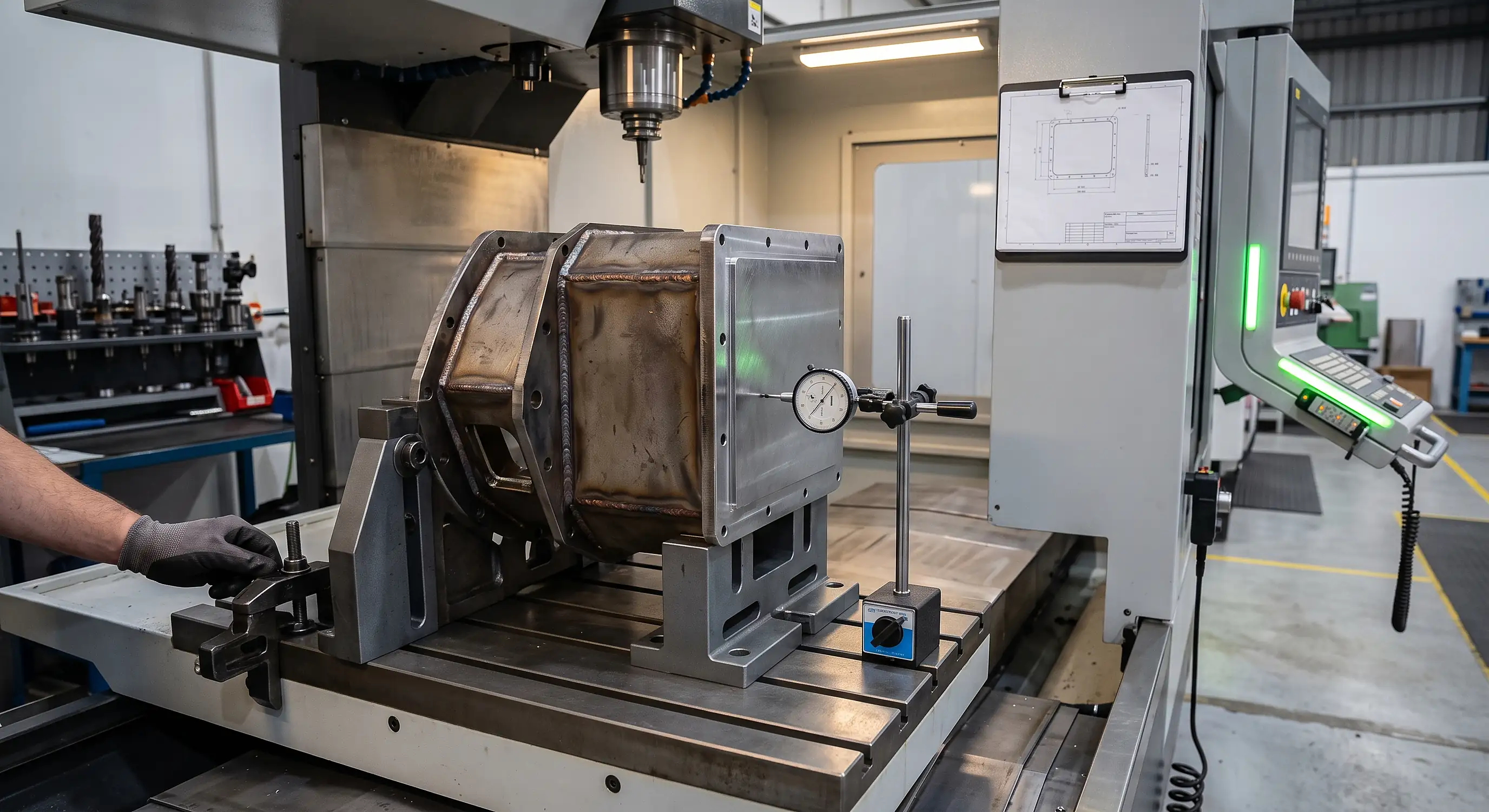
Precision tolerances of ±0.01mm for mission-critical components.
.avif)
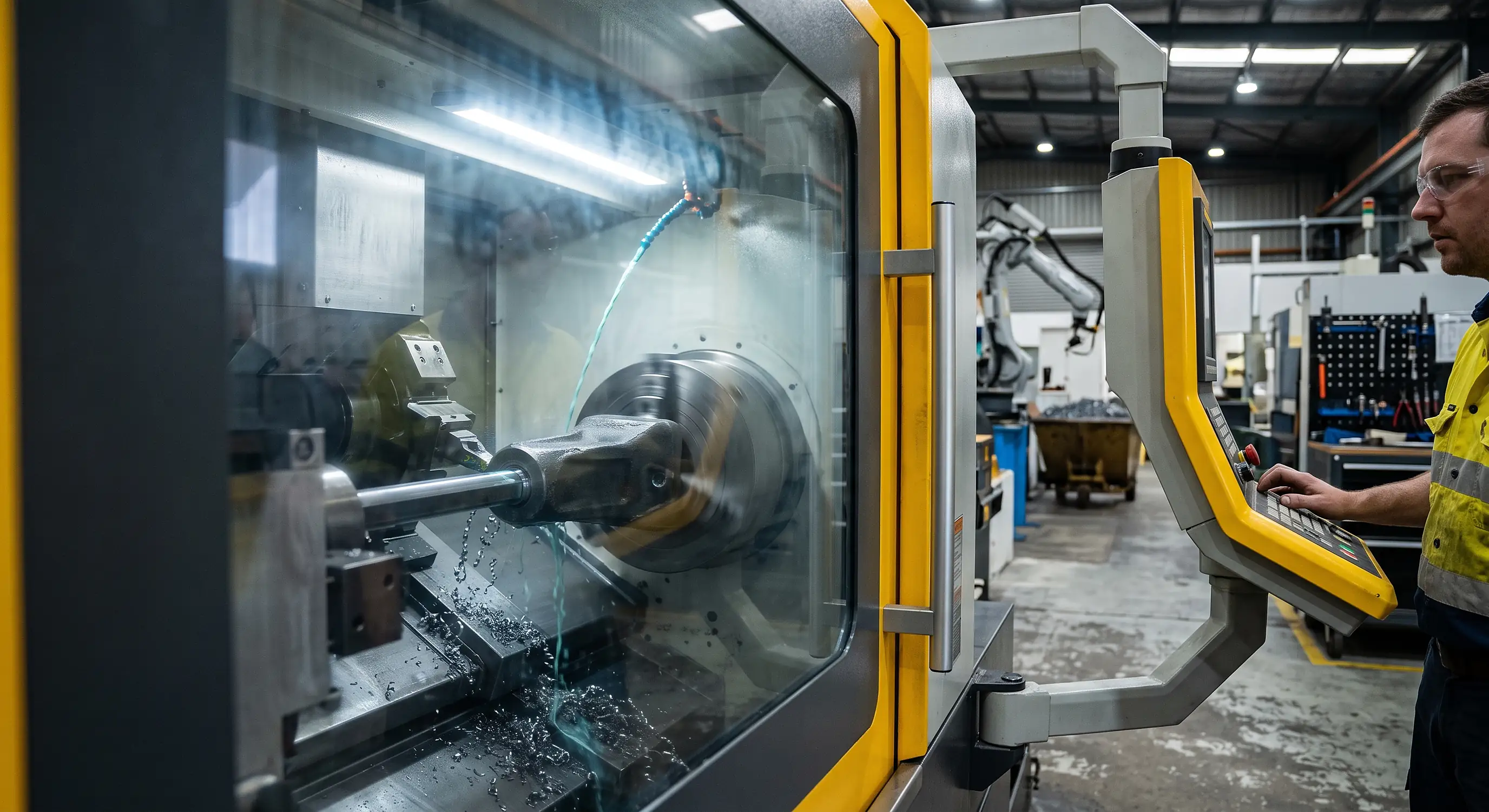
High-precision lathe work for round and cylindrical parts.
.avif)
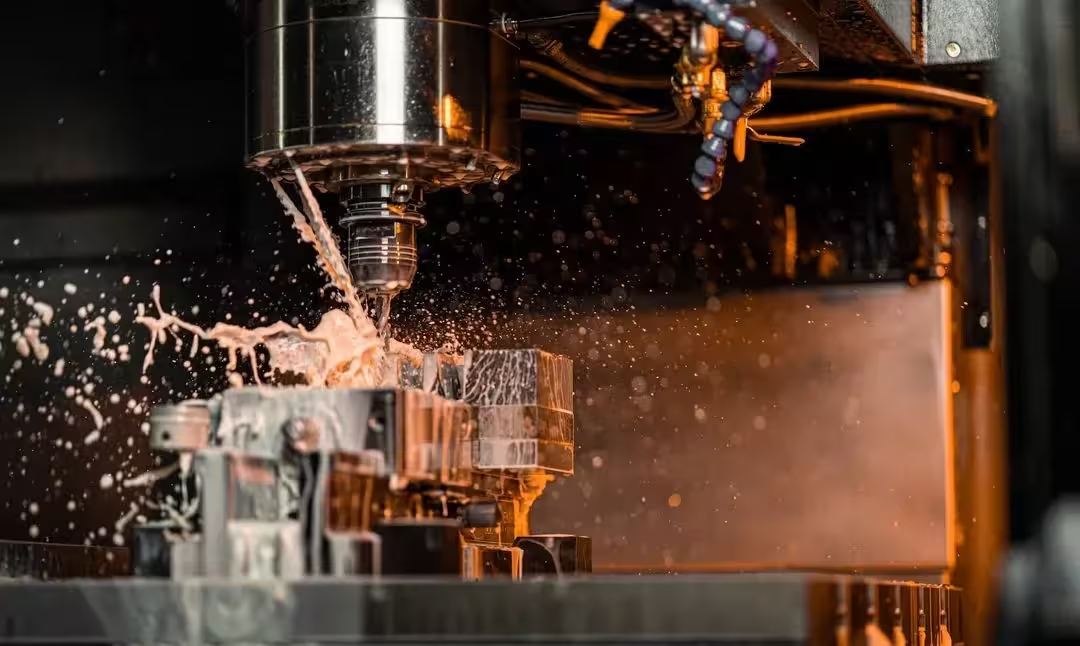
Complex shapes, angles, and custom parts with accuracy.

Reliable, efficient, and consistent production at scale.
.avif)
24-hour turnaround for urgent prototype jobs.

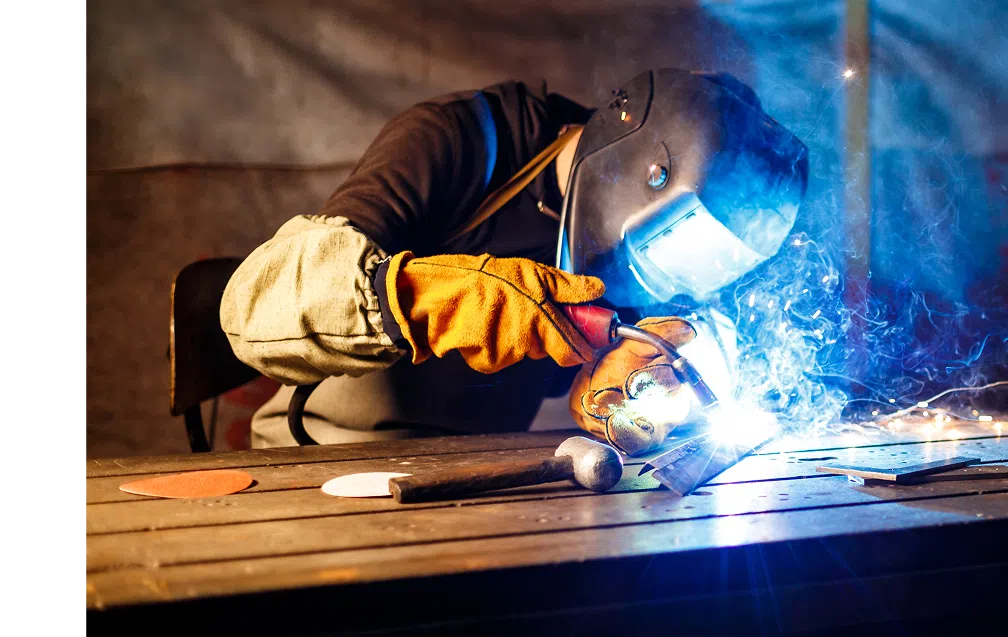
Complete fabrication, finishing, welding, and delivery.

As well as CNC Machining we offer a wide range of manufacturing processes for your requirements.
Quality assurance at every stage in our factory based in Melbourne


.avif)
.avif)
.avif)
.avif)

.avif)


.avif)


.avif)


Send your design through our website or you can email them and we will get back to you within 4 business hours with a quotation.
Once you have accepted our quote, we will get to work in creating your parts to the highest quality and will be manufactured in days!
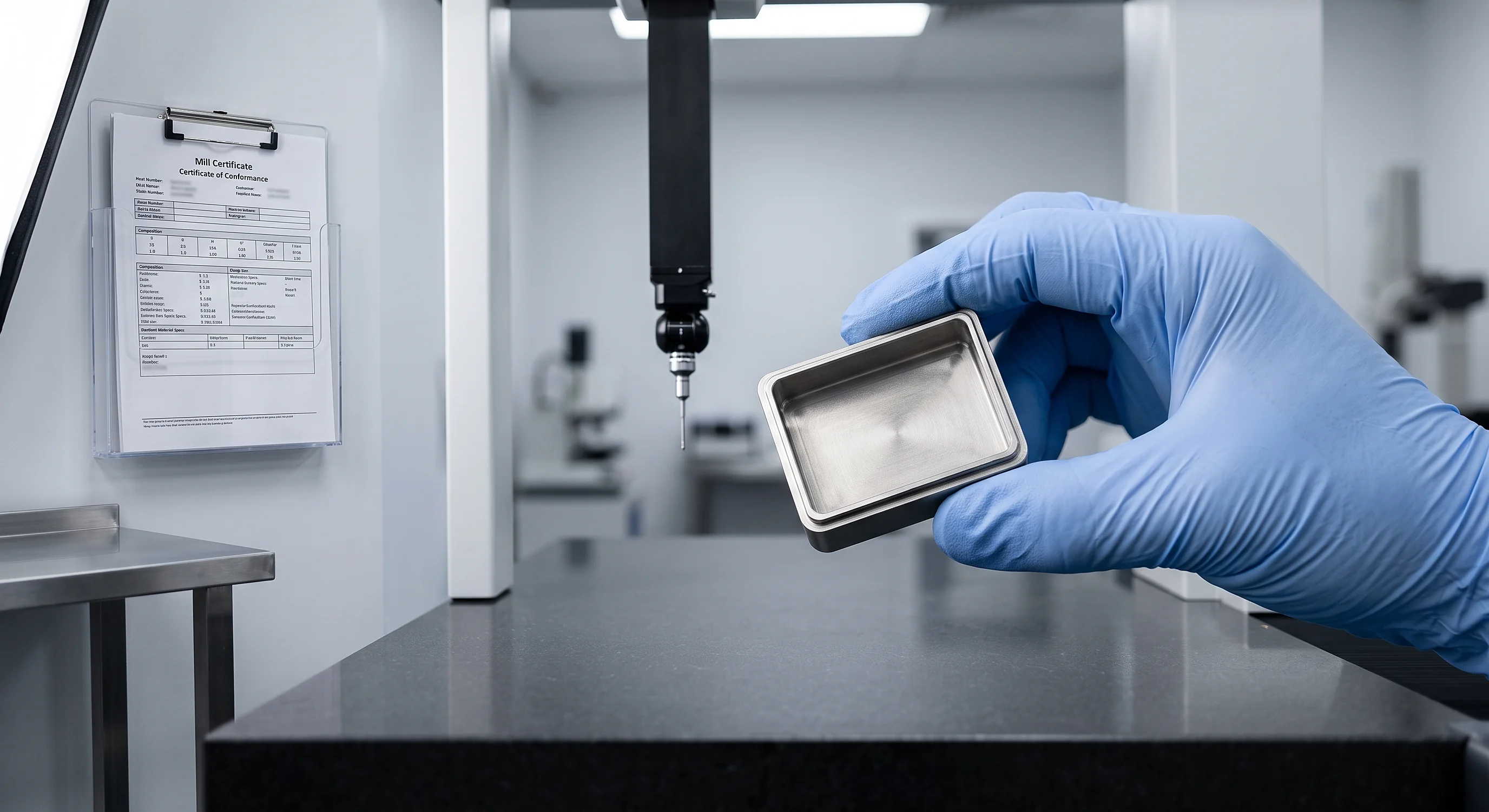
Our expert team of engineers carry out rigorous Quality Control to ensure thorough inspections of your parts and ensure they are right the first time.
We ensure on-time delivery to your doorstep by utilising our own delivery drivers and transport partnerships so we can delivery anywhere you are in the fastest time.
Southside Engineering has over 50 years of experience in servicing some of the largest and most accredited companies throughout Australia, which has enabled us to build a solid reputation throughout the industry.
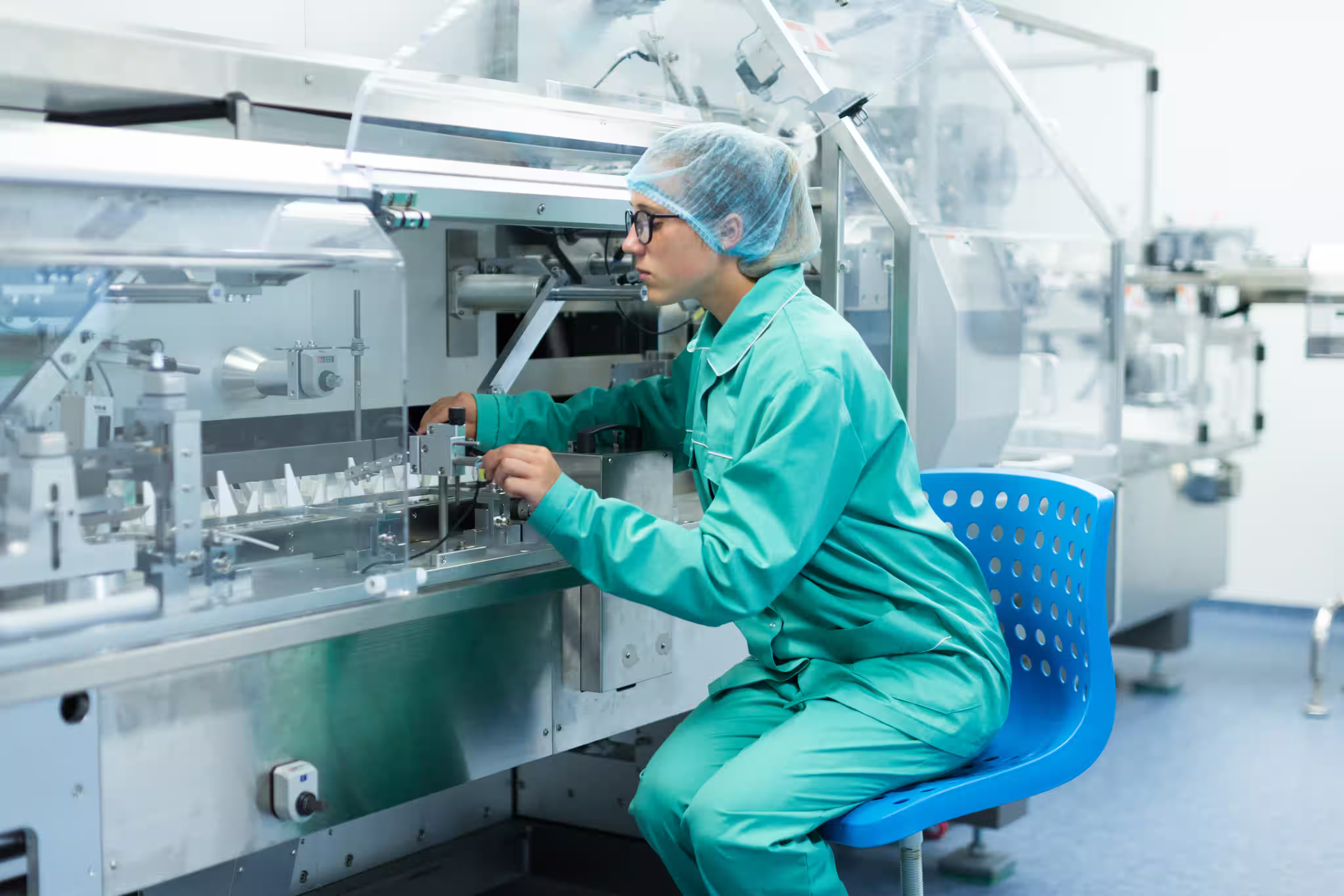
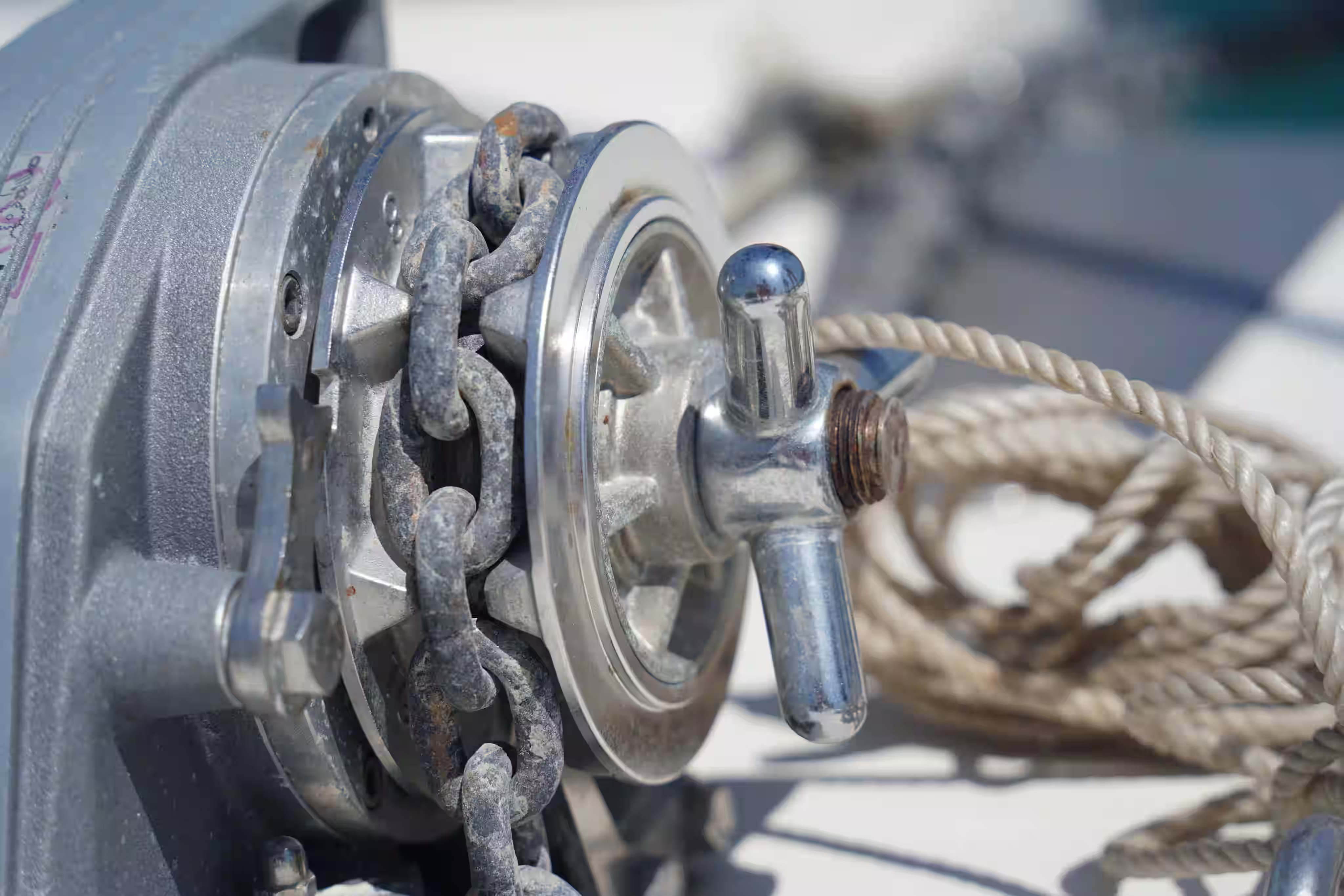
We provide CNC machining and manufacturing solutions for a wide range of Australian industries. These include mining, defence, medical equipment, rail, marine, electronics, agriculture, food and beverage production, construction, and more. Our flexibility allows us to manufacture parts for both highly specialised applications and general industrial use.
We offer a 24-hour rapid prototyping service for urgent projects, helping clients test and refine designs quickly. For larger production runs, our lead times depend on project scope and complexity, but we are known for fast, reliable delivery thanks to our Melbourne-based team and nationwide logistics partners.
Yes. We work on projects ranging from one-off prototypes and small-batch runs to high-volume production and repetition engineering. Our workshop is equipped to scale production seamlessly, giving clients confidence whether they need a single custom part or thousands of identical components.
Our workshop is located in Mordialloc, Victoria, and we proudly serve clients throughout Melbourne and across Australia. With our own delivery drivers for local orders and trusted transport partners nationwide, we ensure components reach you quickly and securely.
Simply use our online quote request form or call us directly. If you provide CAD drawings or specifications, our team can respond with a detailed quote within 24 hours. We also offer our “Best of 3 Quotes” promise, ensuring you receive competitive pricing without compromising on quality.
We work with a wide range of metals and engineering plastics to suit different industry requirements. This includes aluminium, steel, stainless steel, titanium, brass, and copper, as well as advanced plastics such as Nylon, PEEK, and ABS. Our material expertise ensures your components meet the durability, performance, and compliance standards required for their application.
Yes. In addition to CNC machining, we offer end-to-end manufacturing services, including powder coating, electroplating, TIG/MIG welding, laser cutting, pressing, bending, tool making, EDM, and heat treatment. These services allow us to deliver fully finished components, reducing the need for multiple suppliers and helping you save time and cost.
If you have any questions about our services, please don’t hesitate to reach out. We’re always happy to help!
Quality assurance at every stage in our factory based in Melbourne


At the heart of modern precision manufacturing lie two fundamental CNC processes: milling and turning. While both remove material using computer-controlled precision, they work in fundamentally different ways. Understanding the distinction between these processes is crucial for selecting the right manufacturing method for your components.
This guide explains how CNC milling and turning work, when to use each process, and how Melbourne manufacturers like Southside Engineering combine both capabilities to deliver complete precision engineering solutions.
CNC milling is characterised by the use of rotating multi-point cutting tools that advance into a stationary or semi-stationary workpiece to remove material across multiple planes. The mechanical essence of milling lies in its versatility. Because the cutting tool can move along three, four, or five axes, the process is uniquely capable of producing prismatic parts with complex internal pockets, non-rotationally symmetric contours, and intricate 3D surfaces.
In a milling centre, the spindle is the primary source of cutting power. These spindles are engineered to rotate at high speeds, typically ranging from 6,000 to 24,000 RPM, though ultra-precision units can exceed 30,000 RPM for micro-machining or soft-material applications. The mechanical stability of the spindle is paramount. The intermittent nature of milling (where each cutter tooth engages and disengages from the material) creates cyclic loading that can induce vibration and chatter.
To mitigate these forces, milling machines utilise robust spindles with high-quality bearings and tapered tool holders to ensure concentricity and minimise runout. Even a minor runout of 0.01mm can significantly reduce tool life and degrade surface finish.
The versatility of milling is expressed through various specific operations tailored to different feature requirements:
The strategy employed during operations has profound implications for final part quality. Climb milling, where the cutter rotation matches the feed direction, generally yields superior surface finish and longer tool life because the chip starts at its maximum thickness and tapers off, reducing heat at the cutting edge. However, this strategy requires highly rigid machine setups to prevent the tool from pulling the workpiece.
CNC turning, fundamentally executed on a lathe, operates on a kinematic principle that is the inverse of milling. In this process, the workpiece is clamped in a rotating chuck or collet and spun at high speed, while a stationary single-point cutting tool is fed into the material to remove layers along its circumference. This process is the gold standard for producing rotationally symmetric components, including shafts, rods, bushings, and fasteners.
The architecture of a CNC turning centre is designed to support high-speed rotation and resist the continuous cutting forces inherent in turning. The headstock houses the main spindle and its drive motor, providing the necessary torque and stability for the rotating workpiece. Lathe spindles typically operate at medium speeds with high torque, generally between 3,000 and 6,000 RPM, enabling them to handle the heavy material-removal rates required for large-diameter bar stock.
Workholding is critical in turning. Three-jaw chucks are most common, providing self-centring capabilities for round parts, while four-jaw chucks allow independent adjustment of each jaw to hold irregular or off-centre workpieces. For smaller, high-precision parts, collet chucks offer superior gripping and reduced runout. To support long, slender workpieces that might otherwise deflect under cutting pressure, a tailstock provides secondary support at the free end of the material.
One of the primary advantages of turning cylindrical parts is the cut quality. Turning involves continuous contact between the tool and the workpiece, leading to steady-state cutting conditions that minimise vibrations and produce exceptionally smooth surface finishes. Modern CNC lathes can achieve surface finishes as fine as 0.8 μm Ra and maintain diameter tolerances within ±0.005mm. This level of precision is difficult to replicate in milling, where intermittent tool engagement creates a scalloped effect that often necessitates secondary finishing operations.
While turning is primarily associated with reducing part diameter, the process encompasses several critical operations:
The decision between milling and turning is rarely arbitrary. It is a calculated choice based on the intersection of geometry, volume, and material properties. While some parts clearly fall into one category (a square housing is a milling job, and a transmission shaft is a turning job), many components require a nuanced evaluation of both methods.
The fundamental rule is simple: if your part is primarily cylindrical or has rotational symmetry, turning is typically the most efficient process. If your part has complex features on multiple sides, internal pockets, or non-symmetric shapes, milling is the better choice.
For example, Southside Engineering uses CNC turning to produce components such as shafts, pins, bushings, and spacers for mining equipment and agricultural machinery. The same facility uses CNC milling to produce brackets, housings, mounting plates, and complex components that require features on multiple faces.
Still unsure? Schedule a consultation with our CNC specialists to determine the optimal manufacturing approach.
The standard configuration of a CNC mill involves three linear axes: X, Y, and Z. The X-axis typically represents horizontal worktable movement, the Y-axis transverse movement, and the Z-axis vertical spindle movement. However, modern manufacturing increasingly demands 4-axis and 5-axis capabilities.
Three-axis milling is suitable for relatively simple components, such as brackets or housing plates. While versatile, it often requires multiple setups to machine different sides of parts, introducing potential alignment errors with each repositioning.
A 4-axis mill incorporates an additional rotary axis (the A-axis), allowing the workpiece to rotate. This facilitates machining of undercuts and angled features without multiple setups, essential for machining features on the periphery of a part without manual repositioning.
The 5-axis milling machine represents the pinnacle of prismatic machining. By adding two rotational axes, the machine can orient the tool or workpiece to virtually any angle. This enables machining of all five sides of a part in a single setup, significantly reducing cumulative error from multiple clamping operations. Such configurations are indispensable for manufacturing components with complex organic shapes, such as turbine blades and medical implants.
Southside Engineering's multi-axis CNC capabilities enable customers to design parts for function rather than being constrained by manufacturing limitations. If the geometry can be modelled in CAD, it can be machined with precision.
The physical limit of any CNC process is the cutting tool's performance at the point of engagement. Tooling must possess three critical properties: hardness (wear resistance), toughness (breakage resistance), and hot hardness (the ability to maintain these properties at elevated temperatures).
The choice of tool material is often dictated by chemical compatibility between the tool and workpiece. For instance, PCD is the hardest known cutting material, making it ideal for abrasive high-silicon-aluminium or carbon-fibre composites. However, PCD cannot be used to machine ferrous metals like steel or cast iron because the carbon in the diamond reacts with iron at high temperatures to form iron carbide, which causes the tool to chemically dissolve.
For high-heat ferrous applications, ceramic tools are often employed. Ceramics such as aluminium oxide or silicon nitride retain hardness even at extremely high temperatures, allowing them to operate at cutting speeds far exceeding those of carbide. However, their inherent brittleness makes them unsuitable for interrupted cuts (such as those in milling) unless the setup is extremely rigid.
Melbourne's South East manufacturing corridor is home to some of Australia's most advanced CNC milling and turning facilities. Southside Engineering, based in Mordialloc since 1973, operates both multi-axis milling centres and precision turning centres within one facility, enabling seamless process selection and execution.
When searching for "CNC machining near me" or precision engineering Melbourne services, local manufacturers offer distinct benefits:
Same-Day Consultations: Meet face-to-face with engineers who will machine your parts. Review CAD models together and discuss Design for Manufacturability optimisations on the spot.
Rapid Prototyping: 24-48 hour turnaround for simple to moderate complexity parts. No 12-week overseas shipping delays or customs clearance bottlenecks.
First Article Inspection: Inspect parts in person during FAI. Make real-time decisions about tolerances, finishes, and functional testing.
Iterative Design Collaboration: Weekly design changes are normal in product development. Local CNC milling Melbourne and CNC turning Melbourne facilities accommodate iteration at minimal cost compared to offshore manufacturers, who charge setup fees for every revision.
Industry-Specific Expertise: Melbourne manufacturers serve demanding sectors including defence, mining, medical equipment, rail, and heavy trucks — industries where precision and traceability are non-negotiable.
Interested in mill-turn efficiency? Get a quote for your next complex component.
Problem: Milled surfaces show excessive tool marks, chatter marks, or inconsistent finish quality.
Solution: Check for proper tool engagement. Use climb milling for better surface finish where possible. Verify that spindle speeds and feed rates are appropriate for the material. Ensure machine rigidity and proper workholding to eliminate vibration. Consider using finishing passes with minimal material removal to reduce cutting forces. For critical surfaces, specify surface finish requirements (Ra values) on drawings.
Problem: Turned diameters are out of tolerance or vary across production runs.
Solution: Check for tool wear and replace inserts regularly. Verify that the workpiece is securely held in the chuck and that the clamping force is sufficient. For long, slender parts, use a tailstock support to prevent deflection. Monitor for thermal drift during long production runs. Ensure coolant is properly directed at the cutting zone to manage heat. Implement in-process inspection to catch issues early.
Problem: Cutting tools break prematurely during machining operations.
Solution: Verify that programmed speeds and feeds are appropriate for the tool material and workpiece. Check for proper tool engagement (an overly aggressive entry can shock-load tools). Ensure adequate coolant flow to manage heat and chip evacuation. For deep pockets or holes, use peck drilling or helical interpolation to manage chip evacuation. Consider using more robust tool materials (carbide instead of HSS) for harder materials.
Problem: Uncertainty about whether to specify milling or turning for components with both cylindrical and complex features.
Solution: Consult with your CNC manufacturing partner early in the design phase. Southside Engineering provides Design for Manufacturability (DFM) support to help optimise part geometry and process selection. For parts that require both processes, consider mill-turn capabilities, or accept that parts may require operations on both machine types. Design parts to minimise the number of setups required across both processes.
CNC milling and turning are not merely methods of shaping metal. They are the fundamental mechanisms through which engineers' digital ideas are realised as physical components. Milling offers the geometric freedom to create complex, prismatic parts that form the structural core of modern technology, while turning provides the rotational efficiency and precision required for the moving components of our world.
Since 1973, Southside Engineering has maintained comprehensive capabilities in both CNC milling and turning processes. Based in Mordialloc at the heart of Melbourne's manufacturing corridor, the facility offers state-of-the-art equipment for both processes, including multi-axis milling centres (3, 4, and 5-axis configurations), precision CNC turning centres with live tooling, Swiss-style turning for micro-components, and comprehensive tooling expertise across all material types.
Southside Engineering's ±0.01mm precision capability serves the most demanding applications in defence, medical, mining, and transport sectors. The facility provides complete process selection support, helping customers choose the optimal manufacturing method for their components based on geometry, material, volume, and tolerance requirements.
Whether your components require CNC milling, turning, or both processes, Southside Engineering provides the expertise and equipment to deliver precision-engineered parts on time and to specification. Contact Southside Engineering today. Submit your CAD files or technical drawings for detailed quotes and process recommendations. Speak directly with experienced engineers about the best manufacturing approach for your specific components.

Melbourne has become one of Australia's leading hubs for precision CNC manufacturing and rapid prototyping. The city's Southeast region, particularly areas such as Mordialloc, Dandenong, and Mitcham, accounts for 44% of Victoria's total manufacturing output.
Whether you're searching for "CNC machining near me" or need reliable small-batch production, Melbourne offers world-class precision engineering with the speed and quality control that only local manufacturing can deliver. This guide covers everything you need to know about CNC manufacturing, prototyping services, and how to choose the right manufacturing partner in Melbourne.
Melbourne's manufacturing sector generates over $30 billion annually and employs the largest manufacturing workforce in Australia. The South East region, including Mordialloc, is the country's manufacturing heartland.
The concentration of CNC engineering expertise in Melbourne's South East isn't random. It's the result of over 50 years of accumulated knowledge, specialised equipment, and connected supply chains. Southside Engineering, based in Mordialloc since 1973, is part of this manufacturing corridor. Companies here have immediate access to laser cutting, sheet metal fabrication, and finishing services, all within 20 minutes.
When searching for CNC machining near me, Melbourne offers several clear benefits. Australian-based quality control ensures tolerances to ±0.01mm. Same-day consultations and 24-hour prototype turnaround are available for urgent projects. Local facilities provide end-to-end capability from machining through assembly and finishing. Manufacturers work with a range of materials, including alumunium, stainless steel, titanium, brass, and engineering plastics such as PEEK and Nylon.
CNC (Computer Numerical Control) manufacturing uses computer-controlled machine tools to create precisely engineered components. Unlike manual machining, CNC systems follow programmed instructions to produce complex shapes, achieve tight tolerances, and maintain repeatable accuracy across production runs.
Melbourne's CNC engineering sector offers comprehensive manufacturing services. CNC milling creates complex parts, housings, and detailed surface finishes by removing material with rotating cutting tools. CNC turning produces precision shafts, pins, bushings, and cylindrical components on computer-controlled lathes. Multi-axis machining enables the production of complex shapes through simultaneous 4- and 5-axis operations. High-volume machining scales from prototype to production with optimised cycle times.
CNC machining facilities in Australia work with a wide range of materials. Aluminium alloys (6061-T6, 6063, 7075) offer high strength-to-weight ratios and excellent thermal conductivity. Stainless steel grades (303, 304, 316L) provide corrosion resistance and durability. Advanced metals such as titanium and brass meet the biocompatibility and electrical conductivity requirements. Engineering plastics, including PEEK, POM, and Nylon 6, deliver low friction and chemical resistance.
Understanding tolerance capabilities is crucial when selecting CNC mill providers in Australia. Standard tolerances of ±0.1mm suit most industrial applications. Precision tolerances of ±0.05mm work for close-fitting assemblies. Ultra-precision at ±0.01mm is essential for aerospace, medical, and defence applications. Tighter tolerances increase machining time and cost, so experienced engineers apply precision only where functionally necessary.
Small-batch manufacturing in Melbourne follows a structured approach designed to reduce waste, speed up time-to-market, and ensure quality at every stage.
Every project starts with understanding requirements. Engineers evaluate functional specifications, material suitability, tolerance needs, production volume, timeline, and budget. For Southside Engineering clients, this includes a Design for Manufacturing (DFM) review. Engineers identify potential production challenges before they become expensive mistakes.
Melbourne's rapid prototyping services excel at creating initial units within 24-48 hours. This phase tests the design's form, fit, and function, validates material performance, checks assembly procedures, and gathers user feedback. Southside Engineering's rapid prototyping service enables engineers to test designs in physical environments before committing to larger runs.
Once validated, small-batch production begins. Typical batch sizes range from 5 to 1,000 units, depending on market testing needs, tooling costs, inventory strategies, and design maturity. Every component undergoes Australian-based quality inspection, including dimensional verification, surface finish analysis, material certification, and functional testing where applicable.
Get started: Upload your CAD files for a small-batch quote today.
Speed of iteration often determines product success. Rapid prototyping allows engineers to validate concepts before committing to tooling, test multiple variations quickly, identify manufacturing challenges early, and demonstrate a proof of concept to investors.
For prototypes requiring production-grade materials, CNC machining remains the gold standard. Southside Engineering's rapid CNC prototyping delivers machined parts in final materials like aluminium, stainless steel, and engineering plastics. Surface finishes match production specifications with a 24-48 hour turnaround for simple shapes and full dimensional inspection included.
Melbourne facilities provide multiple 3D printing options. FDM (Fused Deposition) creates low-cost functional prototypes in 1-3 days. SLA/DLP (Stereolithography) produces high-resolution aesthetic models in 3-5 days. SLS (Selective Laser Sintering) makes durable nylon parts in 3-7 days. Metal 3D printing creates titanium and aluminium prototypes in 5-14 days.
Vacuum casting bridges prototyping and mass production. It's ideal for producing 5-100 identical parts that replicate injection-moulded properties without the expense of steel tooling. The process takes approximately 3 weeks total for 20-50 parts.
Melbourne's CNC manufacturing ecosystem supports diverse sectors with unique requirements for precision, materials, and compliance. Southside Engineering specialises in delivering industry-specific solutions across:
Additional Sectors: Agriculture | Conveyors & Material Handling | Furniture | Security Containment | Construction | General Manufacturing & Prototyping
Each industry page details specific capabilities, materials, case studies, and compliance standards.
Can't find your industry? We work with emerging sectors and custom applications. Contact us to discuss your requirements.
Pricing for CNC machining varies significantly based on complexity, material, volume, and precision requirements. Understanding cost drivers helps you budget accurately and make informed design decisions.
Typical CNC Machining Cost Ranges (Melbourne, 2025)
Optimise tolerances by specifying ±0.1mm as the default; use ±0.05mm or tighter only on critical dimensions. Consider aluminium instead of stainless steel for non-corrosive environments. Incremental volume discounts start at 10 units. Eliminate undercuts, reduce tool changes, and standardise hole sizes through design simplification. Request a free DFM review to catch expensive design mistakes early.
Get accurate pricing: Submit your CAD files for a detailed quote within 4 hours.
Melbourne's manufacturing ecosystem offers a unique combination of technical excellence, geographical convenience, and collaborative expertise. For businesses seeking CNC machining solutions in Australia, whether for rapid prototyping, small-batch production, or precision engineering, the city offers world-class capabilities with the responsiveness that only local manufacturing delivers.
Since 1973, Southside Engineering has been at the forefront of Melbourne's evolution in precision manufacturing. Based in Mordialloc's manufacturing heartland, the company combines 50+ years of engineering experience with ±0.01mm precision capability. Comprehensive services, from CNC milling and turning to assembly, welding, and finishing, are available under one roof. Rapid turnaround, 24-hour prototyping, and fast lead times for production runs ensure your project stays on schedule. Australian quality control means every component is inspected locally for accuracy and reliability.
Ready to discuss your CNC manufacturing project? Submit your CAD files or PDF drawings through the online quote form at www.ssengineering.com.au. Receive detailed pricing and lead-time estimates, typically within 4 hours. Speak directly with experienced engineers about design optimisation and manufacturability.

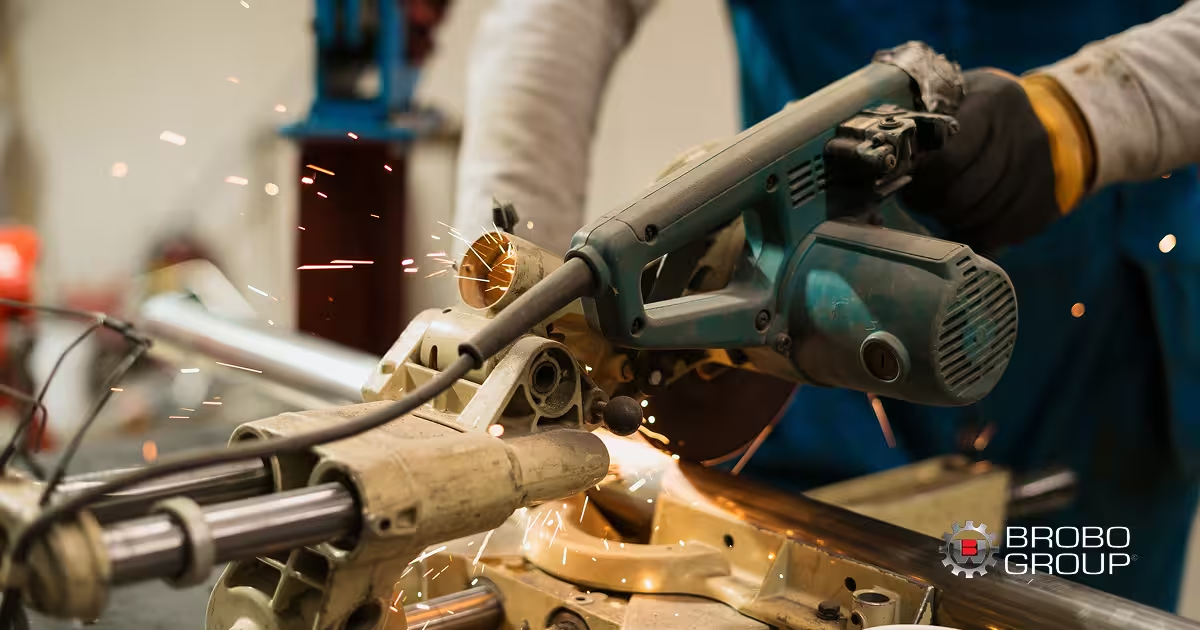
Brobo Group (Brobo Waldown) — an iconic Australian manufacturer established in 1947 — produces premium cold saws, pedestal drills, grinders, and specialised industrial machinery. Their cutting equipment is relied upon across automotive, mining, defence, water, gas, and general manufacturing sectors.
To maintain Brobo’s long-standing reputation for durability, accuracy, and safety compliance under Australian OH&S standards, their machinery requires:
Critical components such as lead screws, brass vice nuts, and custom machined assemblies must be manufactured with extreme consistency to support smooth feed control, rigid clamping, and the clean, burr-free cutting performance that Brobo’s cold saws are known for.
With Brobo continuing to expand its global presence, they needed a machining partner capable of delivering high-tolerance, Australian-made components with a reliable ongoing supply.
Southside Engineering supports Brobo Group as a trusted contract manufacturing partner — supplying key CNC-machined components that meet their strict performance, durability, and safety requirements.
Our team provides:
Every part undergoes:
This ensures that each component integrates seamlessly into Brobo’s machinery — supporting reliability from the factory floor to the end user.
Our ongoing partnership helps Brobo Group maintain the precision, longevity, and cutting performance their machinery is known for.
Results:
With precision parts delivered on schedule, Brobo can focus on producing world-class saws and machinery backed by components manufactured to the highest standard.
Result Images:
Southside Engineering is proud to support one of Australia’s most respected industrial machinery manufacturers.
Our precision CNC machining ensures Brobo Group receives:
From lead screws to custom hardware, we supply the precision and consistency that Brobo Group’s cold saws and industrial machines rely on — helping them continue their 75+ year legacy of engineering excellence.