Introduction
Melbourne has changed from a twentieth-century automotive manufacturing hub into Australia's leading centre for high-value precision engineering. Victoria now contributes around $8.4 billion to the Australian economy through advanced manufacturing, supporting over 24,300 specialised workers in aerospace and defence alone.
This guide explains the full range of CNC engineering services available in Melbourne, from multi-axis CNC milling and turning to quality standards and material options. Whether you are looking for a CNC machine shop in Melbourne or want to understand how precision manufacturing works, this guide will help you find the right partner for your project.
Summary
Key Takeaways:
- CNC engineering services use computer-controlled precision to achieve micron-level accuracy that is impossible with manual machining methods.
- Multi-axis CNC milling (3, 4, and 5-axis) and CNC turning enable complex geometries for aerospace, medical, and defence applications.
- Melbourne CNC machine shops work across a wide range of materials, from aluminium alloys and stainless steel to titanium and biocompatible polymers like PEEK.
- Quality standards, including ISO 9001, AS9100D, and AS/NZS 5131 ensure full traceability and compliance for regulated industries.
- Design for Manufacturability (DFM) support reduces costs by improving part geometry during the design phase, before CNC machining begins.
Understanding CNC Engineering Services
CNC (Computer Numerical Control) machining is a process where pre-programmed software controls factory tools and machinery to remove material from a workpiece. Unlike manual machining, CNC processes run automatically at high speed with a level of accuracy and repeatability that cannot be achieved by hand.
Core CNC Machining Processes
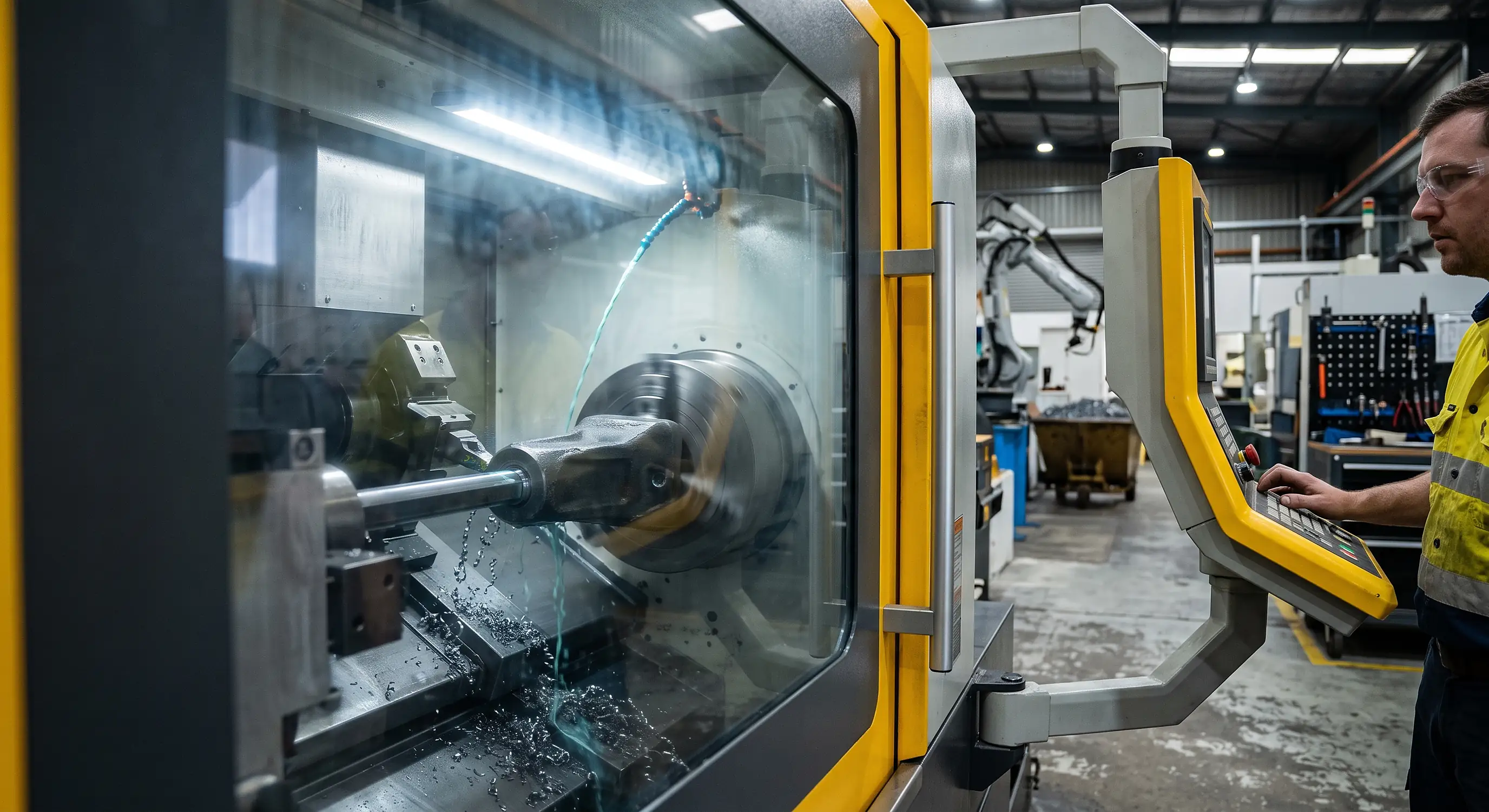
CNC milling uses rotating cutting tools to remove material from a fixed workpiece. It is used for complex parts, housings, and detailed surface finishes. CNC turning spins the workpiece against a stationary cutting tool to produce cylindrical components such as shafts, pins, and flanges. Modern CNC turning centres in Melbourne often include live tooling, which allows the lathe to drill or mill while the part stays in the chuck. This removes the need to transfer the part to a separate machine and reduces the chance of tolerance errors building up across setups.
Specialised CNC Capabilities
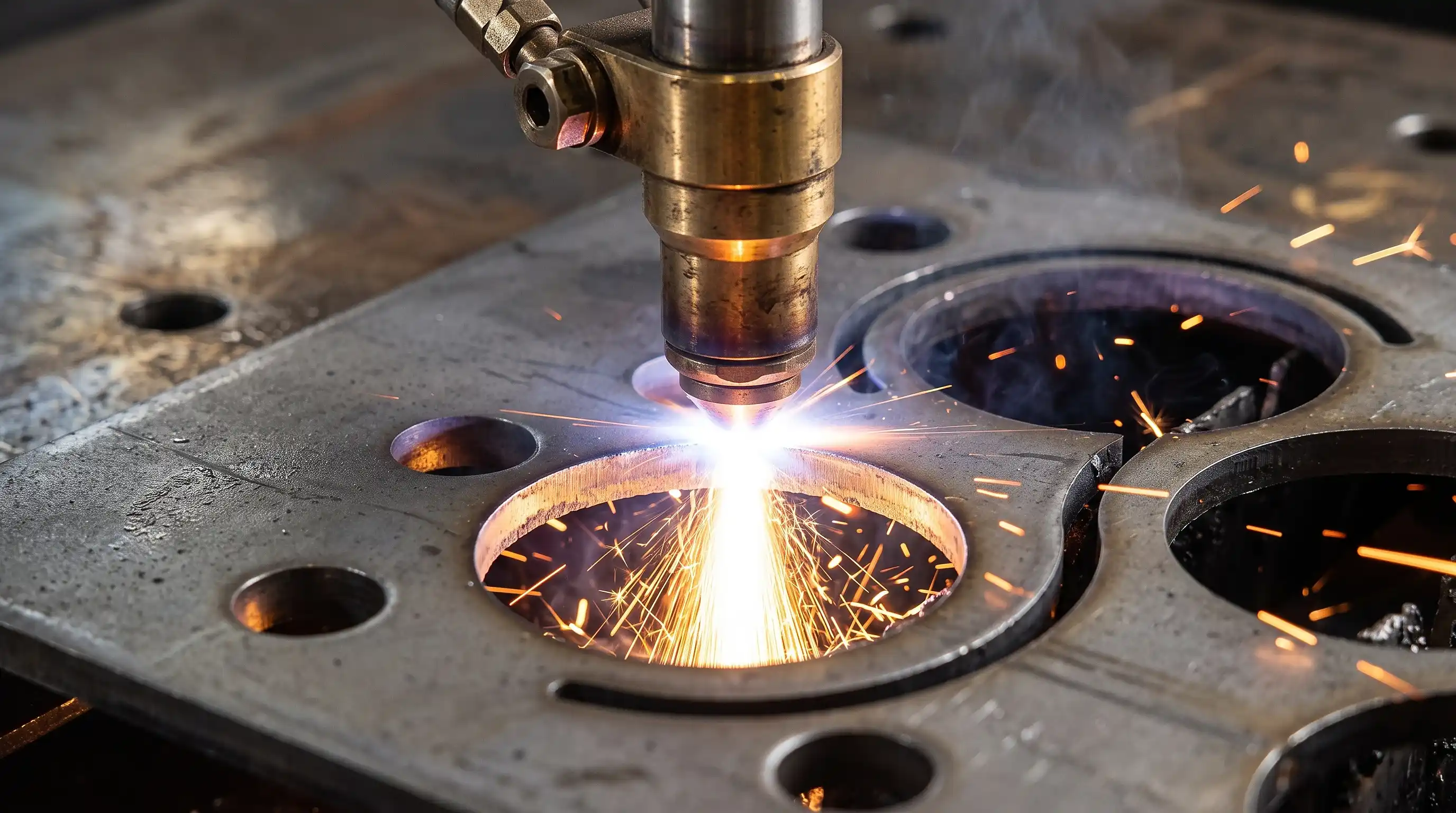
Swiss-style CNC turning supports long, slender parts using a sliding headstock. Melbourne machine shops in Mordialloc produce micro-components with diameters as small as 1mm held to +-0.002mm. Electrical Discharge Machining (EDM) handles materials too hard for cutting tools, using controlled electrical sparks to erode hardened steels and titanium without introducing heat stress.
Multi-Axis CNC Milling and Turning Capabilities
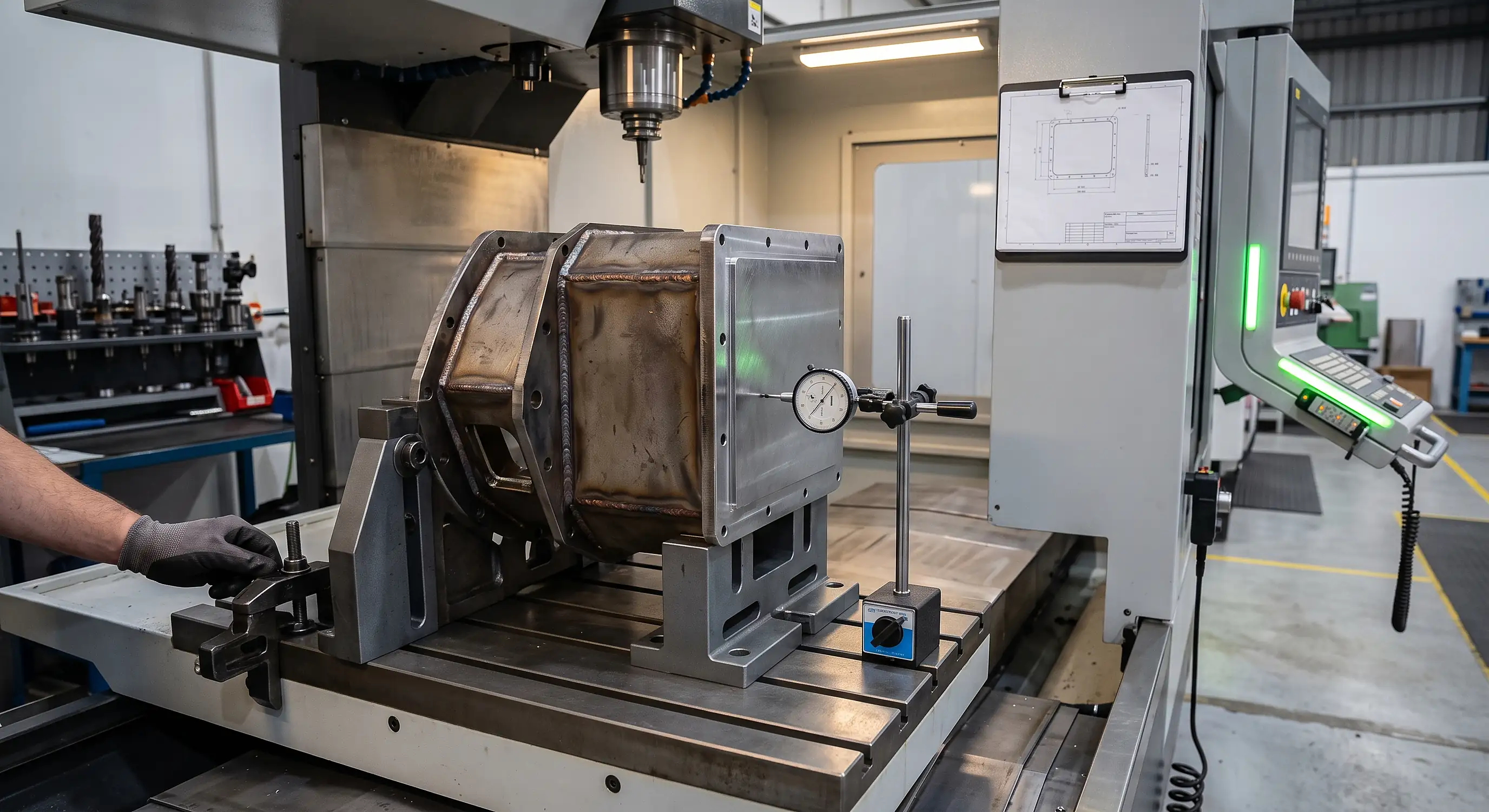
The number of axes a CNC machine operates on defines what can be manufactured without manual repositioning. 3-axis CNC milling covers brackets and housing plates but needs multiple setups for complex parts. 4-axis adds a rotational A-axis for undercuts and angled features. 5-axis adds a B-axis so the tool can approach the workpiece from any direction, enabling complex organic shapes like turbine impellers. Southside Engineering uses advanced 5-axis systems for defence work where geometric precision is required for certification. CNC turning is best for cylindrical and symmetrical parts, while Swiss-style turning handles extreme precision on small, slender components.
| Process |
Axis Capability |
Best Used For |
| 3-Axis CNC Milling |
X, Y, Z |
Cost-effective production of prismatic parts |
| 4-Axis CNC Milling |
X, Y, Z + A |
Angled features and undercuts, fewer setups |
| 5-Axis CNC Milling |
X, Y, Z + A, B |
Complex organic shapes, single-setup accuracy |
| CNC Turning |
X, Z + Spindle |
Cylindrical and symmetrical components |
| Swiss CNC Turning |
Sliding Headstock |
Extreme precision for small, slender parts |
Need multi-axis CNC milling or CNC turning in Melbourne? Get a quote from Southside Engineering within 4 hours.
Material Options and Machinability
Choosing the right material for CNC engineering means balancing mechanical performance, machinability, and cost. Melbourne CNC machine shops have deep experience across a wide range of metals and engineering plastics.
- Aluminium Alloys (6061-T6, 6063, 7075) - The most widely processed metal in Melbourne CNC machine shops. High strength-to-weight ratio and easy to machine at speed. Default choice for aerospace and automotive applications.
- Stainless Steel (303, 304, 316L, 17-4 PH) - Used in medical and marine applications. Grade 316L offers the best corrosion resistance for implants and marine environments.
- Titanium (Grade 5, Ti6Al4V) - For mission-critical aerospace and defence parts. Low thermal conductivity makes it challenging to machine. Southside Engineering has developed specific process parameters to handle titanium safely.
- Engineering Plastics (PEEK, POM, Nylon) - Used where metals are not suitable. PEEK is biocompatible and common in medical applications. Offers low friction, chemical resistance, and high dielectric strength.
Industry Applications and Compliance Standards
Melbourne's CNC engineering sector serves some of the most regulated industries in the world. Success requires not just technical capability, but a strong commitment to quality management systems and the right certifications.
Defence and National Security
Victoria has over 400 businesses supplying the Australian Defence Organisation. CNC machining companies producing components for land vehicles, maritime platforms, and aerospace systems must comply with AS9100D and ISO 9001:2015. Parts must meet build-to-print specifications and withstand extreme heat, vibration, and corrosive conditions.
Healthcare and Medical Technology
Melbourne's medical technology cluster produces orthopaedic screws, dental implants, and miniature valve components using Swiss-style CNC turning. Surface finishes as fine as Ra 0.2 micron are required for biocompatibility and to reduce the risk of infection or mechanical failure.
Quality Management and Inspection
In precision CNC manufacturing, verifying part geometry is just as important as machining it. Melbourne CNC engineering firms invest heavily in metrology to give clients full confidence that every part meets its specification.
Coordinate Measuring Machines (CMM)
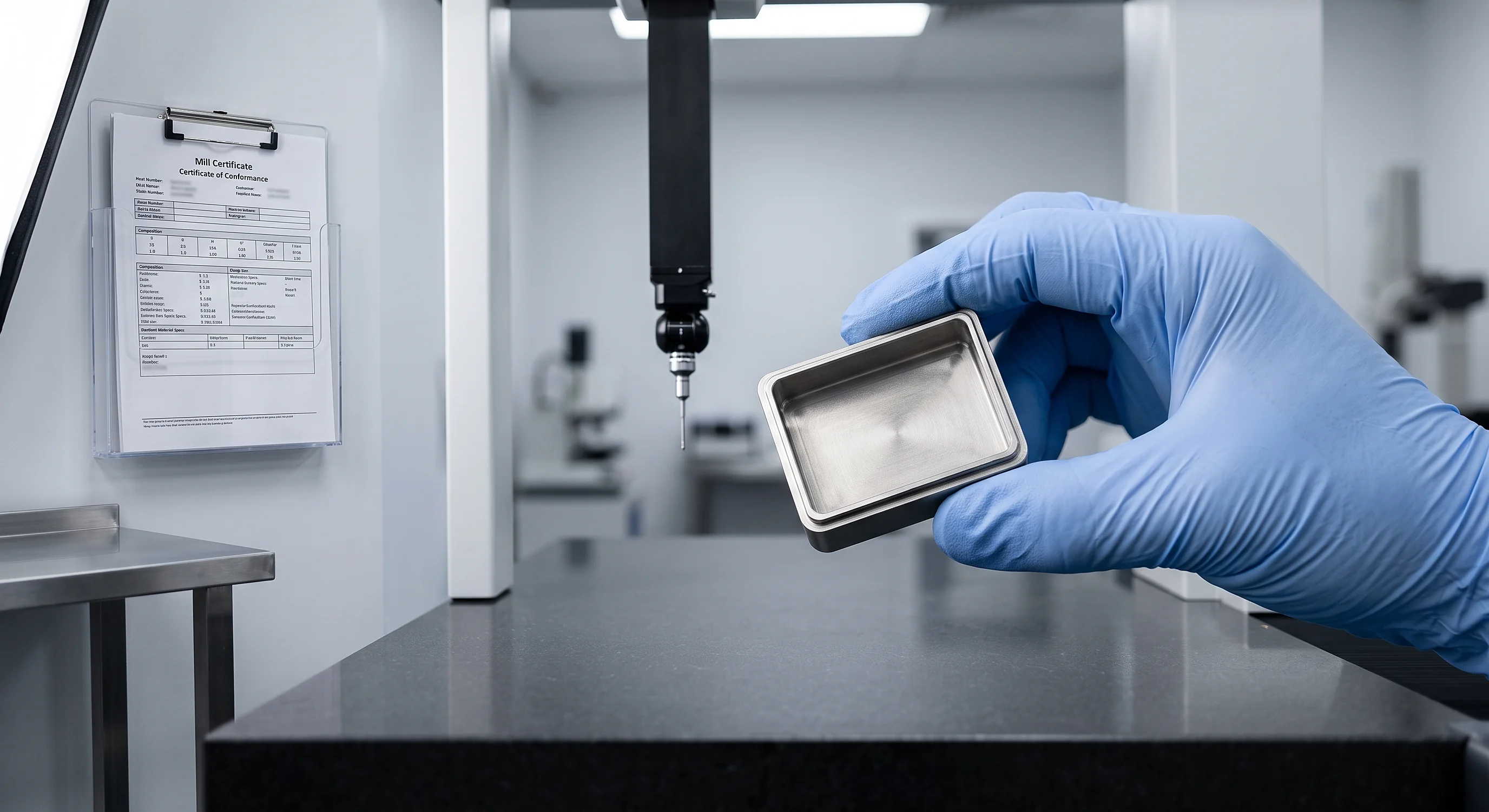
CMMs use high-precision probes to map the X, Y, and Z coordinates of a part's surfaces, verifying features that cannot be checked with hand tools. Leading Melbourne CNC machine shops use CMM systems with repeatable measurement accuracy down to 2 microns. These systems are integrated into ISO 9001 or AS9100 quality management systems, providing a full traceability record from raw material certificate through to final inspection report.
Australian Standards and Technical Governance
Victorian CNC manufacturers also follow AS/NZS 5131:2016 for steel fabrication tolerances and AS/NZS 1554 for welding procedures and non-destructive testing. These standards ensure Melbourne-made parts are safe, durable, and compatible with Australian infrastructure requirements.
Looking for a CNC machine shop in Melbourne with full quality management? Contact Southside Engineering.
Design for Manufacturability (DFM) and Common Challenges
DFM brings production knowledge into the design phase to simplify CNC manufacturing and reduce costs. Key principles: apply tight tolerances (+-0.01mm) only to critical mating surfaces, use +-0.1mm as the default, keep pocket depth to no more than four times its width, and maintain minimum wall thickness of 0.5mm for metals and 1.0mm for plastics. Every extra 0.01mm of tolerance beyond what is needed adds 20-50% to machining time.
Common pitfalls to avoid: choosing materials based only on mechanical properties without thinking about machinability (consult your CNC engineering partner early); not specifying Ra surface finish values on drawings (use Ra 3.2 micron as standard, Ra 0.8 micron for precision, Ra 0.4 micron only for sealing or medical surfaces); and failing to define inspection requirements at the quoting stage. State upfront whether you need CMM reports, material certifications, or compliance with ISO 9001, AS9100D, or ISO 13485 to avoid delays later.
Southside Engineering provides full DFM reviews and material guidance before CNC manufacturing begins.
Conclusion
Melbourne's CNC engineering sector represents one of the most capable precision manufacturing environments in Australia. From multi-axis CNC milling of complex aerospace components to Swiss-style CNC turning for medical micro-components, the city's machine shops are equipped with the technology, materials, knowledge, and quality systems to handle the most demanding projects.
Why Choose Southside Engineering
Since 1973, Southside Engineering has been part of Melbourne's precision manufacturing community, based in Mordialloc at the heart of Victoria's manufacturing corridor. We offer multi-axis CNC milling (3, 4, and 5-axis), CNC turning with live tooling, Swiss-style CNC turning for micro-components, material expertise across aluminium, stainless steel, titanium, and engineering plastics, and full quality management aligned with ISO 9001 and Australian standards. Our +-0.01mm precision capability serves defence, aerospace, medical, mining, and transport sectors, with complete end-to-end service from design consultation through to finishing.
Ready to start your precision manufacturing project? Submit your CAD files or PDF drawings for a quote within 4 hours. Visit SouthSide Engineering.