Introduction
Melbourne has become one of Australia's leading hubs for precision CNC manufacturing and rapid prototyping. The city's Southeast region, particularly areas such as Mordialloc, Dandenong, and Mitcham, accounts for 44% of Victoria's total manufacturing output.
Whether you're searching for "CNC machining near me" or need reliable small-batch production, Melbourne offers world-class precision engineering with the speed and quality control that only local manufacturing can deliver. This guide covers everything you need to know about CNC manufacturing, prototyping services, and how to choose the right manufacturing partner in Melbourne.
Why Choose Melbourne for CNC Manufacturing?
Melbourne's manufacturing sector generates over $30 billion annually and employs the largest manufacturing workforce in Australia. The South East region, including Mordialloc, is the country's manufacturing heartland.
Strategic Location Benefits
The concentration of CNC engineering expertise in Melbourne's South East isn't random. It's the result of over 50 years of accumulated knowledge, specialised equipment, and connected supply chains. Southside Engineering, based in Mordialloc since 1973, is part of this manufacturing corridor. Companies here have immediate access to laser cutting, sheet metal fabrication, and finishing services, all within 20 minutes.
Key Advantages of CNC Machining Melbourne
When searching for CNC machining near me, Melbourne offers several clear benefits. Australian-based quality control ensures tolerances to ±0.01mm. Same-day consultations and 24-hour prototype turnaround are available for urgent projects. Local facilities provide end-to-end capability from machining through assembly and finishing. Manufacturers work with a range of materials, including alumunium, stainless steel, titanium, brass, and engineering plastics such as PEEK and Nylon.
Understanding CNC Machining Services
CNC (Computer Numerical Control) manufacturing uses computer-controlled machine tools to create precisely engineered components. Unlike manual machining, CNC systems follow programmed instructions to produce complex shapes, achieve tight tolerances, and maintain repeatable accuracy across production runs.
Core CNC Capabilities
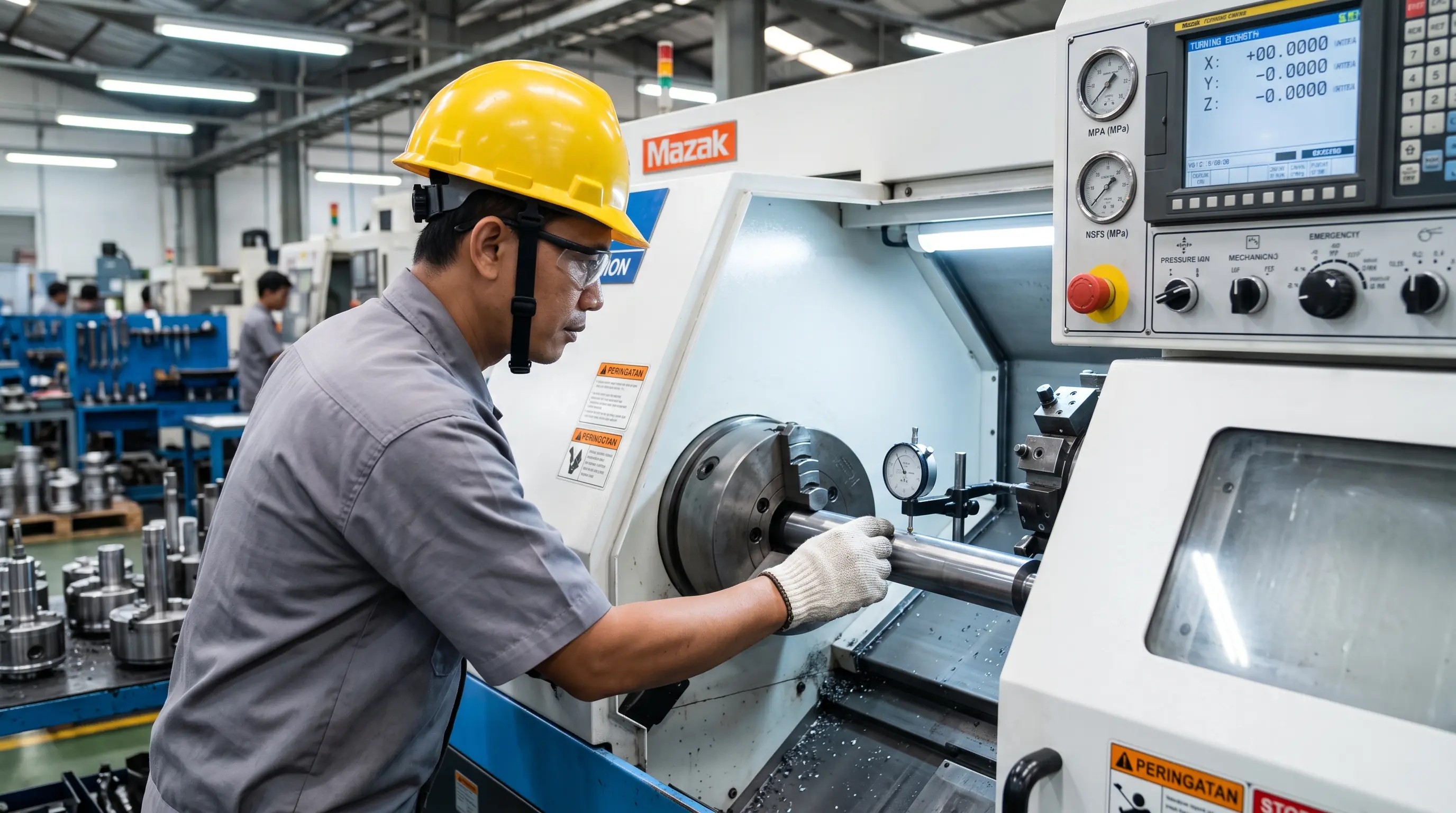
Melbourne's CNC engineering sector offers comprehensive manufacturing services. CNC milling creates complex parts, housings, and detailed surface finishes by removing material with rotating cutting tools. CNC turning produces precision shafts, pins, bushings, and cylindrical components on computer-controlled lathes. Multi-axis machining enables the production of complex shapes through simultaneous 4- and 5-axis operations. High-volume machining scales from prototype to production with optimised cycle times.
Material Options
CNC machining facilities in Australia work with a wide range of materials. Aluminium alloys (6061-T6, 6063, 7075) offer high strength-to-weight ratios and excellent thermal conductivity. Stainless steel grades (303, 304, 316L) provide corrosion resistance and durability. Advanced metals such as titanium and brass meet the biocompatibility and electrical conductivity requirements. Engineering plastics, including PEEK, POM, and Nylon 6, deliver low friction and chemical resistance.
Precision Standards
Understanding tolerance capabilities is crucial when selecting CNC mill providers in Australia. Standard tolerances of ±0.1mm suit most industrial applications. Precision tolerances of ±0.05mm work for close-fitting assemblies. Ultra-precision at ±0.01mm is essential for aerospace, medical, and defence applications. Tighter tolerances increase machining time and cost, so experienced engineers apply precision only where functionally necessary.
The Small-Batch Production Process
Small-batch manufacturing in Melbourne follows a structured approach designed to reduce waste, speed up time-to-market, and ensure quality at every stage.
Discovery and Technical Review
Every project starts with understanding requirements. Engineers evaluate functional specifications, material suitability, tolerance needs, production volume, timeline, and budget. For Southside Engineering clients, this includes a Design for Manufacturing (DFM) review. Engineers identify potential production challenges before they become expensive mistakes.
Rapid Prototyping Phase
Melbourne's rapid prototyping services excel at creating initial units within 24-48 hours. This phase tests the design's form, fit, and function, validates material performance, checks assembly procedures, and gathers user feedback. Southside Engineering's rapid prototyping service enables engineers to test designs in physical environments before committing to larger runs.
Small-Batch Production
Once validated, small-batch production begins. Typical batch sizes range from 5 to 1,000 units, depending on market testing needs, tooling costs, inventory strategies, and design maturity. Every component undergoes Australian-based quality inspection, including dimensional verification, surface finish analysis, material certification, and functional testing where applicable.
Get started: Upload your CAD files for a small-batch quote today.
Rapid Prototyping Options in Melbourne
Speed of iteration often determines product success. Rapid prototyping allows engineers to validate concepts before committing to tooling, test multiple variations quickly, identify manufacturing challenges early, and demonstrate a proof of concept to investors.
CNC Machining for Prototypes
For prototypes requiring production-grade materials, CNC machining remains the gold standard. Southside Engineering's rapid CNC prototyping delivers machined parts in final materials like aluminium, stainless steel, and engineering plastics. Surface finishes match production specifications with a 24-48 hour turnaround for simple shapes and full dimensional inspection included.
3D Printing Technologies
Melbourne facilities provide multiple 3D printing options. FDM (Fused Deposition) creates low-cost functional prototypes in 1-3 days. SLA/DLP (Stereolithography) produces high-resolution aesthetic models in 3-5 days. SLS (Selective Laser Sintering) makes durable nylon parts in 3-7 days. Metal 3D printing creates titanium and aluminium prototypes in 5-14 days.
Vacuum Casting
Vacuum casting bridges prototyping and mass production. It's ideal for producing 5-100 identical parts that replicate injection-moulded properties without the expense of steel tooling. The process takes approximately 3 weeks total for 20-50 parts.
Industries We Serve
Melbourne's CNC manufacturing ecosystem supports diverse sectors with unique requirements for precision, materials, and compliance. Southside Engineering specialises in delivering industry-specific solutions across:
High-Precision Industries:
- Defence – Mission-critical components, weapon system housings, secure containment hardware
- Medical Equipment – Biocompatible materials (316L, titanium, PEEK), surgical instruments, diagnostic equipment
- Oil & Gas – High-pressure valve components, corrosion-resistant fittings, downhole tools
Heavy Industry & Transport:
- Mining – Wear-resistant brackets, hardened steel components, heavy machinery replacement parts
- Rail – Vibration-resistant brackets, safety-critical fasteners, bogie components
- Marine – Corrosion-resistant fittings, marine-grade aluminium and stainless steel parts
- Heavy Trucks & Commercial Vehicles – Chassis components, suspension parts, custom brackets
Specialised Manufacturing:
Additional Sectors: Agriculture | Conveyors & Material Handling | Furniture | Security Containment | Construction | General Manufacturing & Prototyping
Each industry page details specific capabilities, materials, case studies, and compliance standards.
Can't find your industry? We work with emerging sectors and custom applications. Contact us to discuss your requirements.
How Much Does CNC Machining Cost in Melbourne?
Pricing for CNC machining varies significantly based on complexity, material, volume, and precision requirements. Understanding cost drivers helps you budget accurately and make informed design decisions.
Typical CNC Machining Cost Ranges (Melbourne, 2025)
- Oil & Gas – High-pressure valve components, corrosion-resistant fittings, downhole tools
| Service Type |
Simple Parts |
Moderate Complexity |
Complex Parts |
| CNC Milling (single unit) |
$150-$400 |
$400-$1,200 |
$1,200-$5,000+ |
| CNC Turning (single unit) |
$100-$300 |
$300-$800 |
$800-$2,500+ |
| Rapid Prototype (aluminum) |
$200-$500 |
$500-$1,500 |
$1,500-$4,000+ |
| Small Batch (10-50 units) |
$80-$200/unit |
$200-$600/unit |
$600-$2,000+/unit |
Note: These are indicative ranges. Actual quotes depend on specific requirements.
Primary Cost Factors
- Material Selection: Aluminium 6061 provides a baseline cost with excellent machinability. Stainless steel 316L runs 40-60% higher. Titanium costs 200-300% more than aluminium. Engineering plastics like PEEK cost 150-200% more than aluminium.
- Complexity & Features: Deep pockets requiring long tools add 15-25%. Tight tolerances (±0.01mm vs ±0.1mm) increase costs 40-60%. Multi-axis setups add 50-100%. Secondary operations, such as threading, add $50- $200 per operation.
- Production Volume: Prototypes (1 unit) carry full setup costs. Small batches (10-50) see 30-40% lower per-unit cost. Medium runs (100-500) achieve 50-60% savings. High volume (1,000+) reduces per-unit costs by 70-80%.
- Lead Time Requirements: Standard 4-6 week delivery provides baseline pricing. Rush 2-week service adds 20-30%. Express 1-week adds 50-75%. Emergency 24-48 hours adds 100-150%.
Cost-Saving Strategies
Optimise tolerances by specifying ±0.1mm as the default; use ±0.05mm or tighter only on critical dimensions. Consider aluminium instead of stainless steel for non-corrosive environments. Incremental volume discounts start at 10 units. Eliminate undercuts, reduce tool changes, and standardise hole sizes through design simplification. Request a free DFM review to catch expensive design mistakes early.
Get accurate pricing: Submit your CAD files for a detailed quote within 4 hours.
Conclusion: Your CNC Manufacturing Partner in Melbourne
Melbourne's manufacturing ecosystem offers a unique combination of technical excellence, geographical convenience, and collaborative expertise. For businesses seeking CNC machining solutions in Australia, whether for rapid prototyping, small-batch production, or precision engineering, the city offers world-class capabilities with the responsiveness that only local manufacturing delivers.
Since 1973, Southside Engineering has been at the forefront of Melbourne's evolution in precision manufacturing. Based in Mordialloc's manufacturing heartland, the company combines 50+ years of engineering experience with ±0.01mm precision capability. Comprehensive services, from CNC milling and turning to assembly, welding, and finishing, are available under one roof. Rapid turnaround, 24-hour prototyping, and fast lead times for production runs ensure your project stays on schedule. Australian quality control means every component is inspected locally for accuracy and reliability.
Get Started Today
Ready to discuss your CNC manufacturing project? Submit your CAD files or PDF drawings through the online quote form at www.ssengineering.com.au. Receive detailed pricing and lead-time estimates, typically within 4 hours. Speak directly with experienced engineers about design optimisation and manufacturability.