Introduction
Every CNC milling project starts with a material choice that affects performance, finish, and cost. Choosing well means a reliable part; choosing poorly risks failure, overspending, or unusable components.
There are dozens of metals and plastics for CNC machining, each with unique strengths, trade-offs, and costs. For most projects in our workshop, the choice typically comes down to four groups: aluminium, steel (mild and stainless), brass, and engineering plastics. These meet the needs of most Australian manufacturers, fabricators, and product developers.
This guide offers a machinist’s perspective. We focus on the grades we machine most at our Mordialloc workshop, the real-world trade-offs, and practical insights to help you choose confidently.
Summary
Key Takeaways
- Aluminium (especially 6061-T6) is the most popular CNC milling material because it machines quickly, costs less per part, and suits a wide range of structural and cosmetic applications.
- Mild steel offers raw strength at the lowest material cost, while stainless steel adds corrosion resistance for food, medical and marine environments — though it takes longer to machine and wears tooling faster.
- Brass (particularly C360) produces exceptionally clean cuts with minimal burr, making it ideal for fittings, valves and electrical connectors that demand tight tolerances and smooth sealing surfaces.
- Engineering plastics like PEEK, nylon and acetal solve problems where metal falls short — chemical resistance, electrical insulation, low friction, and significant weight savings.
- The right material choice is driven by how the part will actually be used: its operating environment, the loads it must carry, the tolerances it needs to hold, and your budget.
1. How to Think About Material Selection
Instead of jumping to alloys, first assess your part's needs. Matching material properties to application demands is key—not simply picking the strongest or cheapest option.
From our CNC machining experience in fabrication, mining, food processing, marine, and custom projects, the key factors typically fall into a few categories:
- Operating environment – will the part be exposed to moisture, chemicals, heat, UV, or abrasive conditions? A mounting bracket inside a dry control panel has very different material requirements from a valve body in a dairy processing line
- Mechanical loads – does the part need to carry structural weight, resist impact, handle vibration, or provide a bearing surface? Different applications, such as load-bearing shafts and cover plates, require distinct materials.
- Required tolerances – some materials hold tight tolerances more easily than others. Brass and aluminium are dimensionally stable and straightforward to machine to ±0.01 mm. Some plastics can move with temperature and humidity, which needs to be factored in
- Surface finish and appearance – if the part is visible or needs a specific surface roughness for sealing, the material choice affects what finishes are practical and cost-effective
- Cost and lead time – exotic materials like titanium or PEEK cost significantly more than aluminium or mild steel, both in raw material and machining time. If the application doesn’t demand those properties, there’s no reason to pay for them
- Compliance – medical, food, and aerospace applications may require specific certified material grades, which narrows the field from the start
A practical approach is to list the must-haves first, then consider nice-to-haves. By following this framework, you can quickly narrow dozens of possible materials down to two or three realistic options, saving time and reducing decision stress.
2. Aluminium: The Default Starting Point
If you’re not sure where to start, aluminium is almost always a good place to begin. For most users, it cuts quickly, delivers clean finishes, offers a strong strength-to-weight ratio, and resists corrosion—characteristics that keep costs low and parts lasting longer without extra steps.
For the machine shop, aluminium is efficient to work with. It’s soft enough that tooling lasts well, feed rates can be pushed higher, and cycle times stay short—all of which keeps your per-part cost down. It’s also lightweight (roughly a third the density of steel), which matters for anything that moves, gets carried, or needs to minimise load on a structure.
Common Grades
- 6061-T6 – this is the workhorse. It offers a good balance of strength, weldability, and corrosion resistance, making it suitable for brackets, enclosures, mounting plates, structural frames, and general-purpose components. With a yield strength around 276 MPa and excellent machinability, it’s the grade we reach for most often
- 7075-T6 – significantly stronger than 6061 (yield strength around 503 MPa) with a higher hardness, but less weldable and slightly more expensive. It’s the go-to for jigs, fixtures, aerospace-adjacent parts, and anything where maximum strength at minimum weight is the priority
- 5083 – the marine and chemical processing choice. It has the best corrosion resistance of the common aluminium alloys and handles saltwater and industrial chemicals well. Slightly lower strength than 6061 but tougher in harsh environments
- 2024 – a high-fatigue-resistance alloy often used where the part will see repeated loading cycles. Common in transport and structural applications, though it has lower corrosion resistance than the 6000-series grades
Finishing Options
Aluminium takes well to a range of secondary processes. Anodising (clear or coloured) is the most common, adding a hard oxide layer that improves both wear resistance and appearance. Powder coating provides thicker protection for outdoor or industrial parts. Bead blasting gives a uniform matte texture, and polishing can bring the surface up to a near-mirror finish for cosmetic components.
One thing worth noting: if you’re planning to anodise, the alloy grade matters. 6061 anodises cleanly and consistently. 7075 can show a slightly yellowish tint, and 2024 can be inconsistent from batch to batch. If colour-matched anodising is important, raise it early.
When Aluminium Is the Right Choice
- Lightweight structural parts where steel would be unnecessarily heavy
- Prototypes and first-run production where fast machining reduces cost
- Components exposed to moisture, mild chemicals, or outdoor weather
- Parts that will be anodised, powder-coated, or need a decorative finish
- Heat sinks and thermal management components (aluminium conducts heat well)
Need aluminium CNC milling in Melbourne? Get a quote from Southside Engineering →
3. Steel: When Strength and Hardness Come First
When a part needs to carry heavy loads, withstand impact, or withstand abrasive conditions, steel is usually the answer. It machines more slowly than aluminium – harder materials wear tooling faster and require lower feed rates – but the mechanical properties make the extra time worthwhile for structural and heavy-duty applications.
Steel comes in a wide range of grades, but for CNC machining, the practical choice usually falls between mild (carbon) steel for strength at low cost and stainless steel when corrosion resistance is essential.
Mild Steel (Carbon Steel)
Mild steel is the most affordable structural metal and the backbone of Australian fabrication. It’s strong, weldable, and readily available in a range of plate and bar sizes. The trade-off is that it has no inherent corrosion resistance, so it generally needs to be painted, powder-coated, zinc-plated, or galvanised for any environment where moisture is present.
- 1018 – a low-carbon, general-purpose steel with excellent machinability and weldability. Yield strength is around 370 MPa. Used for brackets, fixtures, mounting plates, and fabrication sub-assemblies where corrosion isn’t a primary concern
- 1045 – a medium-carbon steel with higher strength and hardness (yield ~450 MPa). Well-suited to shafts, gears, studs, and load-bearing components. It can be heat-treated for additional hardness
- 4140 – a chromium-molybdenum alloy steel with excellent toughness and fatigue resistance. Used for high-stress applications like axles, crankshafts, and structural components that will see repeated loading
Stainless Steel
Stainless steel adds chromium (at least 10.5%) to the mix, forming a passive oxide layer that protects against rust and corrosion. This makes it essential for food processing, medical devices, marine hardware, chemical handling, and any environment where parts are regularly washed, sterilised or exposed to corrosive substances.
The trade-off is machinability. Stainless steel requires more effort and time to machine, which increases costs. However, if your project must withstand regular cleaning, harsh chemicals, or moisture, the investment ensures lasting performance and peace of mind.
- 304 – the most widely used stainless grade. Good all-round corrosion resistance, excellent weldability, and suitable for kitchen equipment, architectural fittings, general industrial components, and non-contact food equipment
- 316 – the step up when you need resistance to chlorides, acids, and aggressive cleaning chemicals. The added molybdenum gives it superior performance in marine, dairy, pharmaceutical, and chemical processing environments. If in doubt between 304 and 316 for food or medical work, 316 is the safer choice
- 303 – a free-machining stainless grade optimised for high-volume CNC production. It machines significantly faster than 304 or 316 but has slightly lower corrosion resistance. Ideal for fittings, fasteners, and precision-turned parts where machining speed matters
When Steel Is the Right Choice
- Heavy structural loads, impact resistance, or high-vibration environments
- Components in fabrication assemblies that will be welded into larger structures
- Food, medical, marine, or chemical environments requiring corrosion resistance (stainless)
- Parts that will be heat-treated for additional hardness or wear resistance
- Cost-sensitive structural parts where aluminium’s higher material cost isn’t justified
4. Brass: Precision, Clean Cuts, and Corrosion Resistance
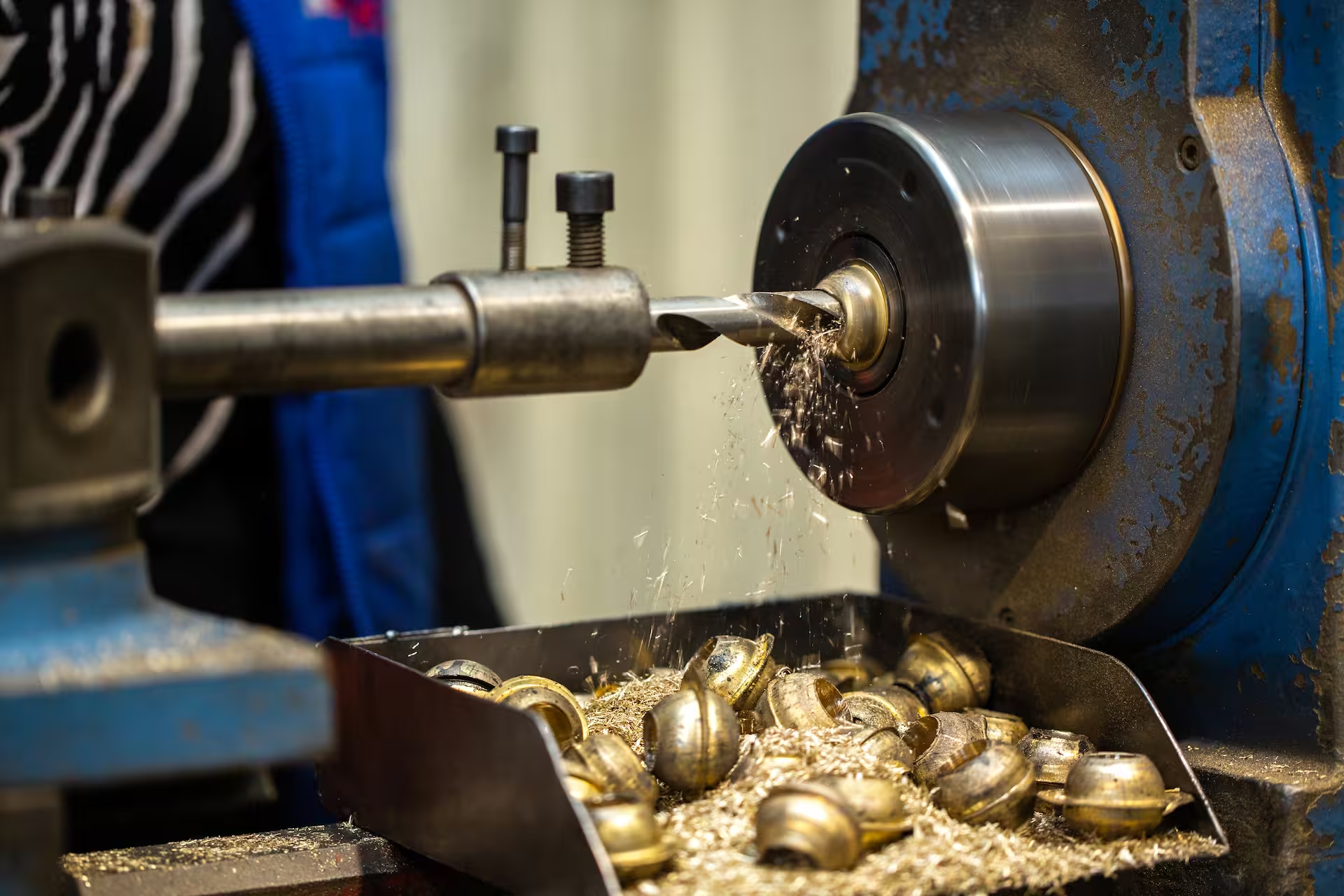
Brass, a copper-zinc alloy, occupies a unique position among CNC milling materials. It machines beautifully – producing clean, burr-free cuts with an excellent surface finish straight off the tool – which means less post-processing, tighter tolerances, and faster turnaround on precision components. It’s a material we work with regularly on our CNC turning and CNC milling machines.
It’s also naturally corrosion-resistant, non-sparking, and has useful antimicrobial properties. Its warm gold colour gives it a visual appeal that makes it popular for architectural and decorative hardware, while its electrical conductivity makes it a standard for connectors and terminals.
Common Grades
- C360 (free-cutting brass) – the most machinable brass grade and one of the most machinable metals full stop. It’s the benchmark for fittings, valves, connectors, bushings, and any turned or milled component where surface finish and dimensional accuracy are priorities. Yield strength around 275 MPa with excellent elongation
- C260 (cartridge brass) – a 70/30 copper-zinc alloy with good formability and corrosion resistance. Often used for decorative and architectural components
- C932 (bearing bronze) – technically a bronze rather than a brass, but commonly requested alongside brass work. It offers good strength and wear resistance, making it ideal for bearings, bushings, pump components, and hydraulic fittings
Why Brass Machines So Well
Brass forms short, broken chips during cutting rather than long stringy swarf, which means the machine runs cleanly with minimal chip-clearing issues. The material doesn’t work harden the way stainless does, so tooling lasts well, and consistent results come batch after batch. For high-precision turned parts — fittings, valve seats, and threaded connectors — it’s hard to beat.
When Brass Is the Right Choice
- Fittings, valves, and connectors that need smooth sealing surfaces
- Electrical terminals and connectors requiring good conductivity
- Plumbing and hydraulic components
- Decorative or visible hardware where appearance matters
- High-precision parts with tight tolerances where a burr-free finish reduces secondary operations
5. Engineering Plastics: When Metal Isn’t the Answer
There are applications where metal is simply the wrong material. When you need electrical insulation, chemical resistance, lightweight performance, low friction, or biocompatibility, engineering plastics offer properties that no metal can match. CNC-machined plastics also give you tolerances that injection moulding can’t achieve at low volumes, making them ideal for prototypes, custom components, and specialised one-off parts.
The key difference from machining metals is that plastics behave differently under the tool. Some absorb moisture and swell. Some soften with heat and require slower feed rates or air cooling. And some are dimensionally sensitive to temperature changes, which means tolerances need to be realistic for the material. A good machine shop will factor all of this in.
Common Grades
- PEEK (Polyether Ether Ketone) – the high-performance option. It handles continuous operating temperatures up to 250°C, resists most chemicals, absorbs virtually no moisture, and is biocompatible. Used for medical implant components, semiconductor equipment, aerospace parts and food processing. The trade-off is cost — PEEK bar stock is expensive, which makes it a material you choose when the application genuinely demands it
- Acetal / Delrin (POM) – one of the easiest plastics to machine, with excellent dimensional stability, low friction, and good strength. It’s the go-to for precision gears, rollers, bushings, conveyor components, and any part that needs to slide or rotate with minimal wear
- Nylon (Polyamide) – strong, tough, and self-lubricating. Common grades include Nylon 6 and Nylon 66, used for bushings, gears, bearings, wear pads, and food processing guides. It absorbs more moisture than Acetal, which can affect dimensions in humid environments
- ABS – impact-resistant and easy to machine. Widely used for enclosures, housings, prototypes, jigs, and fixtures
- UHMWPE – extremely wear-resistant and self-lubricating, with FDA approval for food contact. Used for guide rails, wear strips, and conveyor components in food processing
When Engineering Plastics Are the Right Choice
- Electrical insulation is a hard requirement
- Chemical resistance to acids, solvents, cleaning agents, or other aggressive substances
- Weight reduction where the metal is heavier than the application needs
- Low-friction or self-lubricating wear parts like bushings, guides, and rollers
- Biocompatible or food-safe components where material certification matters
- One-off or low-volume parts where injection moulding isn’t viable
Not sure whether your part needs metal or plastic? Talk to Southside Engineering — we machine both. →
6. Material Comparison at a Glance
The table below summarises the key differences across the most common CNC milling materials. Use it as a starting point, but remember that the right choice always depends on the specific application.
| Material |
Strength |
Machinability |
Corrosion |
Weight |
Relative Cost |
| Aluminium 6061 |
Moderate |
Excellent |
Good |
Light |
Low |
| Aluminium 7075 |
High |
Good |
Medium |
Light |
Medium |
| Mild Steel 1018 |
Moderate |
Excellent |
Low |
Heavy |
Low |
| Mild Steel 1045 |
High |
Good |
Low |
Heavy |
Low |
| Stainless 304 |
High |
Fair |
Good |
Heavy |
Medium |
| Stainless 316 |
High |
Fair |
Excellent |
Heavy |
High |
| Brass C360 |
Moderate |
Excellent |
Good |
Medium |
Medium |
| PEEK |
Moderate |
Good |
Excellent |
Very Light |
High |
| Nylon |
Low–Med |
Good |
Good |
Very Light |
Low |
| Acetal (Delrin) |
Moderate |
Excellent |
Good |
Very Light |
Low–Med |
A few things this table doesn’t capture: lead time (exotic materials or non-stock grades take longer to source), minimum order sizes for raw material, and the impact of secondary processes like heat treatment or anodising on the final cost and timeline. These are all things we can advise on when you send through your drawings.
7. Surface Finish and Secondary Processes
The material you choose also determines what finishing options are available and practical. Surface finish matters both for function (sealing faces, bearing surfaces, and hygiene) and for appearance (customer-facing products and architectural hardware).
Here’s a quick overview of common finishes by material:
- Aluminium – anodising (clear, black, colour), powder coating, bead blasting, polishing, chromate conversion
- Mild steel – powder coating, zinc plating, electroplating, painting, hot-dip galvanising
- Stainless steel – passivation, electropolishing, mechanical polishing, bead blasting
- Brass – polishing (to a high shine), lacquering, nickel plating, left natural (develops a patina over time)
- Engineering plastics – generally used as-machined. Some can be vapour-smoothed or polished for cosmetic applications
If your part has threads, it’s also worth considering how they’ll be finished. For lightly loaded threads, a machined-in thread is fine. For threads that will see repeated use or significant stress, a Helicoil or keyed insert can significantly extend the part’s service life.
8. How to Choose: A Practical Framework
If you’re still weighing up options, here’s a simple framework that covers most situations:
Start with the environment. If the part will face moisture, chemicals, or food contact, that typically rules out mild steel and points you towards stainless, aluminium, or an appropriate plastic.
Then consider the loads. Heavy structural loads and impact favour steel. Moderate loads where weight matters point to aluminium. Light loads or sliding/rotating applications often suit plastics.
Factor in tolerances and finish. If you need very tight tolerances and a clean surface finish with minimal post-processing, aluminium and brass are the easiest to work with. Stainless is achievable but costs more in machining time.
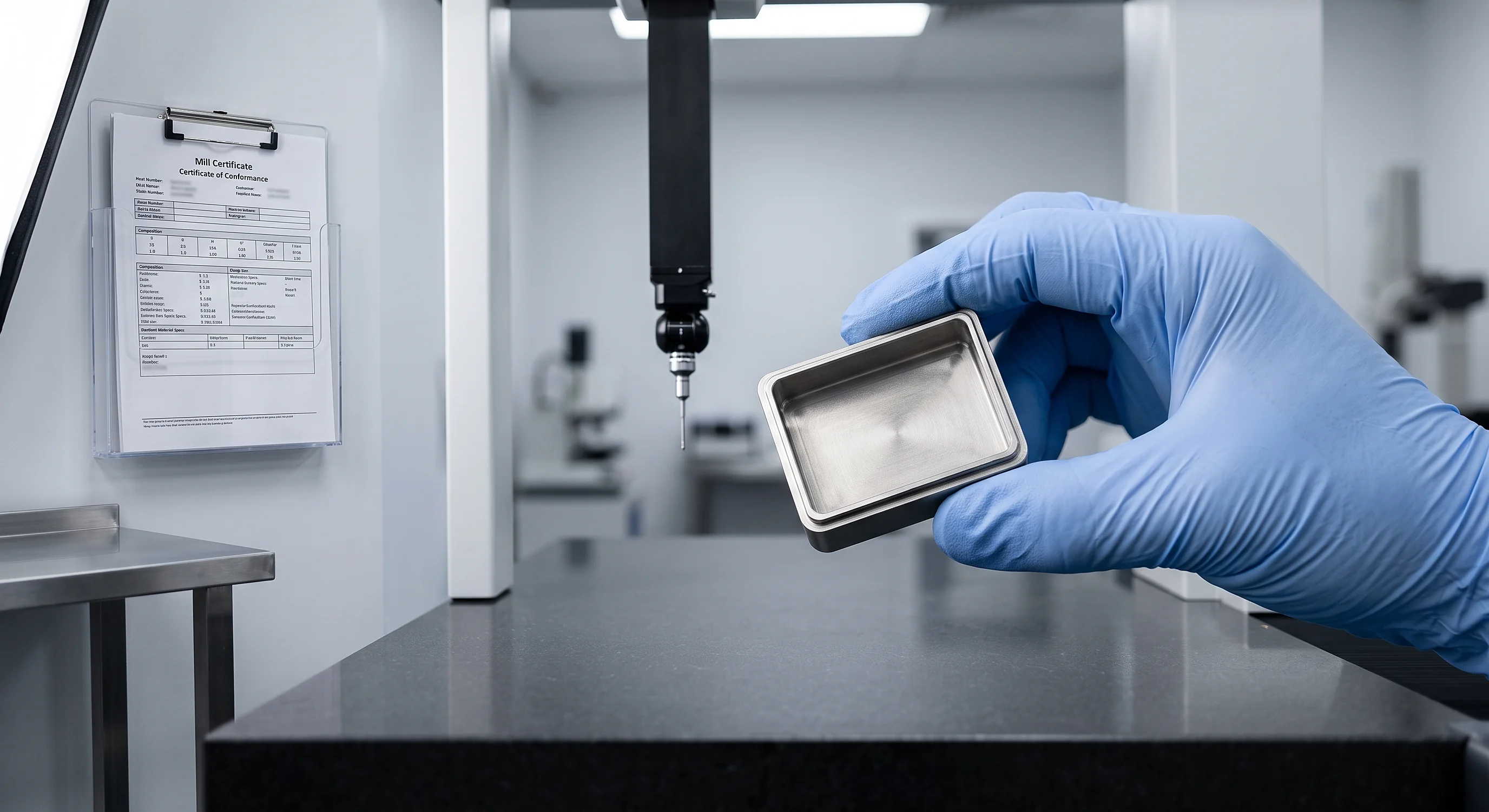
Check for compliance requirements. Medical, food, and aerospace applications often mandate specific material grades with traceable certification. This narrows the field before you even consider properties.
Then look at the budget. If two materials both meet the functional requirements, the one that machines faster and costs less in raw material is usually the right call. There’s no engineering benefit in using 316 stainless when 6061 aluminium does the job.
And if you’re unsure, send us the drawing with a note about the application. Our CNC machinist Melbourne team will recommend a material based on what we’ve seen work in similar situations – no charge, no obligation.
Have a CNC milling project and need material advice? Get a quote from Southside Engineering →
9. Why a Local Melbourne Machine Shop Matters
Choosing the right material is only half the equation. You also need a machining manufacturer that stocks common grades, knows how each material behaves under the tool, and can advise when your drawing calls for something that’ll work better in a different alloy.
A local CNC Melbourne machine shop gives you practical advantages that offshore or interstate suppliers can’t match. Faster lead times, because the part doesn’t spend days in transit. Direct communication, because you can pick up the phone or visit the workshop. And same-day resolution when something needs to change mid-job, rather than waiting for a reply across time zones. Across the machining industry, local partnerships consistently outperform distant ones for responsiveness and quality.
Southside Engineering is based in Mordialloc, in Melbourne’s south-east manufacturing corridor. We’ve been providing CNC machining Melbourne manufacturers rely on since 1973 — over 50 years of metal machining for Australian industry. Whether you’re looking for CNC machining Australia-wide or a local partner, we serve fabricators, food manufacturers, medical device companies, mining operations and custom project clients. As a trusted machining workshop in Australia, we hold tolerances to ±0.01 mm, offer 24-hour prototyping for urgent work, and return quotes within 4 hours of receiving drawings.
10. Conclusion
Material selection shapes every aspect of a CNC manufacturing project — from how quickly the part can be machined to how it performs in service to what it ultimately costs. Aluminium offers the best all-round balance of machinability, weight and cost for most applications. Steel provides the strength and toughness needed for heavy-duty structural work. Brass delivers precision and clean finishes for fittings and connectors. And engineering plastics solve the problems where metal simply isn’t the right tool for the job.
The key is to start with the application, not the material. Understand what your part needs to do, the environment it’ll operate in, and the tolerances it needs to hold — and the right material choice will usually become clear.
Southside Engineering machines all of the materials covered in this guide from our Mordialloc workshop. Whether you need CNC machining near me for a quick prototype or a production run, send us your drawings. We’ll come back with a recommendation and a quote within 4 hours.
Ready to get started? Request a quote from Southside Engineering →