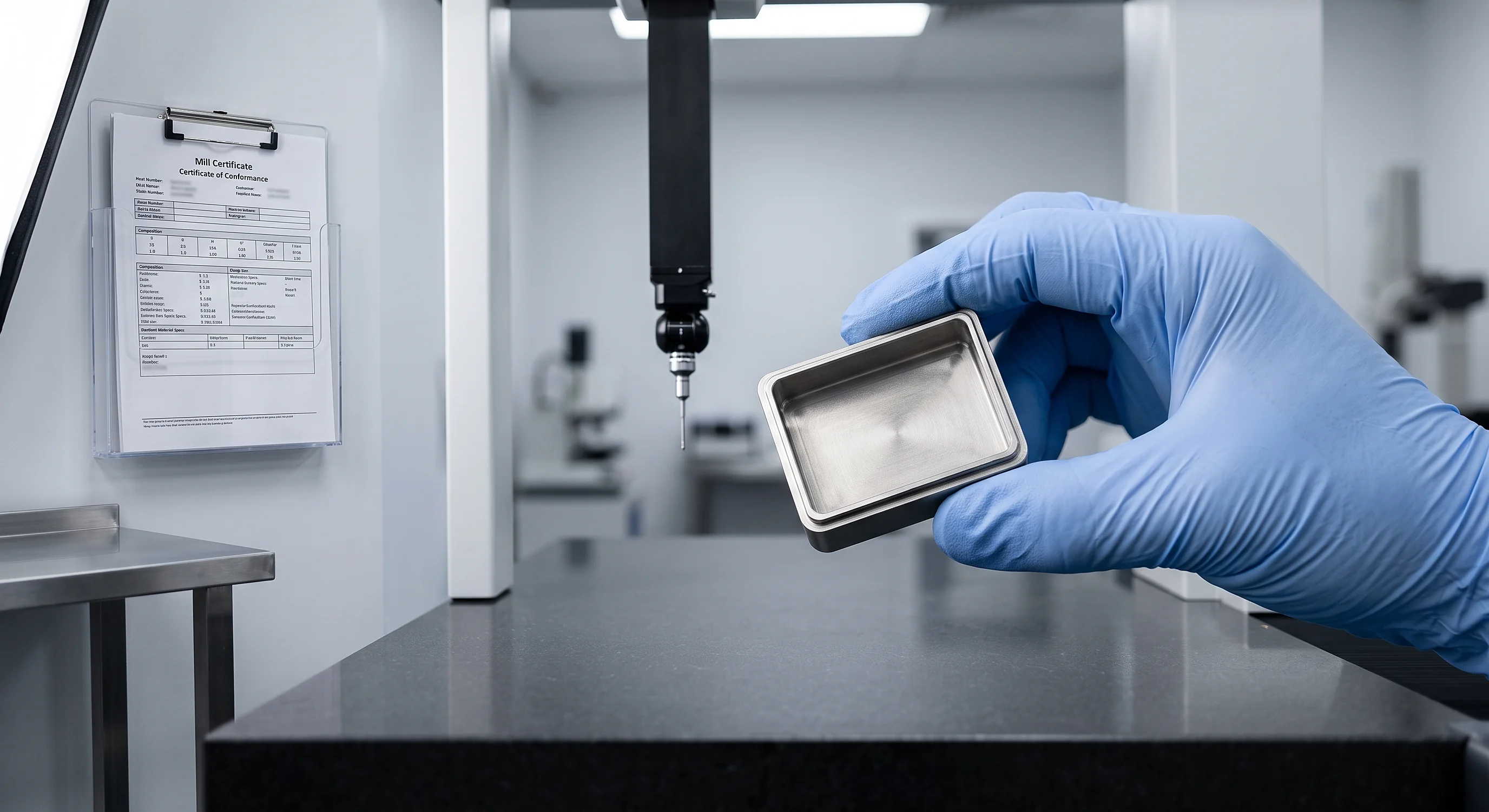
100% Australian Owned & Operated

Finding a CNC Machine Shop That Understands Fabrication Workflows

Not every machine shop understands how fabricators work. Here’s how to find one that fits into your workflow instead of slowing it down.
Southside Team
April 23, 2026
8 min read
Technician using caliper to measure a metal part on a CNC milling machine.

Introductions

Fabricators don’t just need machined parts. They need machined parts that arrive on time, fit their assemblies on the first attempt, and come from a machine shop that understands how fabrication projects actually flow. The wrong machining partner creates bottlenecks — late parts, tolerance mismatches, and rework that blows out project timelines and margins.

This guide is for fabrication businesses looking for a CNC machining partner in Melbourne. It covers what to look for, what to avoid, and how the right machine shop integrates with your workflow rather than disrupting it. It’s based on over 50 years of CNC machining services delivered alongside Australian fabricators from our Mordialloc workshop.

Summary

Key Takeaways

  • Fabricators need a CNC machining partner who understands that machined components are one piece of a larger assembly — not a standalone product.
  • The right machine shop works from your CAD files, PDF drawings, or even hand sketches, and delivers parts that integrate with your fabrication workflow without rework.
  • Turnaround time and communication are as important as tolerances. A machine shop that takes two weeks for a simple flange can hold up an entire project.
  • Local proximity matters. A Melbourne-based CNC machinist means same-day pickups, face-to-face problem-solving, and faster response to urgent or revised orders.
  • The best CNC partners for fabricators offer flexible batch sizes, consistent quality across repeat orders, and the ability to handle rush jobs without sacrificing accuracy.

1. Why Fabricators Need a Dedicated CNC Machining Partner

Most fabrication shops are equipped for cutting, welding, bending and assembling. But when a project calls for a precision-machined flange, a threaded adapter, or a close-tolerance mounting plate, those parts typically need to go to a CNC machine shop. That’s the reality of modern metal machining in the fabrication industry — not every operation can be done in-house.

The challenge is that machining is often on the critical path. A fabricated frame might be ready to assemble, but if the machined mounting brackets haven’t arrived yet, the entire job stalls. This is why having a reliable CNC machining services provider — not just any machine shop, but one that understands your timelines and processes — is essential for keeping fabrication projects moving.

Southside Engineering has worked alongside Melbourne fabricators for over 50 years, providing CNC milling and CNC turning services that slot directly into fabrication project timelines. We understand that your machined parts aren’t the end product — they’re a component of a larger build.

2. What to Look for in a CNC Machine Shop

Not all machine shops are a good fit for fabrication work. Here are the key factors that separate a machining partner from a machining vendor in the machining industry:

  • Fabrication awareness – the shop understands that your machined part is going into a welded assembly. They know that a mounting plate needs to match hole patterns on a fabricated frame, and they check for potential fit issues before machining
  • Flexible input formats – a good machining partner works from whatever you provide — CAD files (STEP, IGES, DXF), PDF drawings, marked-up sketches, or even a sample part for reverse engineering
  • Consistent tolerances – for fabrication work, ±0.01 mm to ±0.05 mm is typical. The shop must hold these tolerances consistently across repeat orders, not just on the first batch. This is where [[${L.repetition}|repetition engineering]] matters
  • Turnaround speed – simple components should be ready in 3 to 5 working days. Rush parts should be available within 24 to 48 hours through a [[${L.proto}|rapid prototyping]] service. If a shop can’t commit to timeframes, they’ll become your bottleneck
  • Material range – fabricators work across mild steel, stainless steel, aluminium, brass, copper and engineering plastics. A machining manufacturer that only works with one or two materials will limit your options
  • Communication – a responsive quoting process (ideally within 4 hours), clear lead time commitments, and proactive updates if anything changes during production
  • Quality consistency – parts must be right the first time. A shop that delivers out-of-tolerance parts or inconsistent batches creates rework and delays across your entire project

3. Common Problems with the Wrong Machining Partner

Fabricators who have worked with the wrong CNC machine shop will recognise these issues:

  • Late deliveries – the machined parts arrive after the rest of the assembly is ready, forcing the fabrication team to wait or work out of sequence
  • Tolerance drift on repeat orders – the first batch is perfect, but subsequent orders gradually drift out of spec because the shop doesn’t maintain setup records
  • No understanding of context – the machine shop treats every part as an isolated job. They don’t consider how the part fits into your assembly, which means they miss obvious issues like incompatible hole patterns or incorrect thread specifications
  • Slow quoting – waiting 3 to 5 days for a quote on a simple bracket means your project timeline is already slipping before the part is even made
  • Minimum order requirements – some CNC machining services providers only accept high-volume orders, leaving fabricators who need 5 or 10 pieces without a viable option
  • Poor communication – no updates on job progress, no notification of delays, and difficult to reach when you need to make a change or check on status

These problems compound. A single late delivery can push back an assembly deadline, which delays the entire project handover to your client. Over time, an unreliable machining partner erodes your margins and your reputation.

4. How a Good Machine Shop Integrates with Fabrication Workflows

The best CNC machining partners for fabricators don’t just make parts — they become an extension of your production process. Here’s what that looks like in practice:

Quoting and Planning

You send drawings or CAD files. The machine shop returns a quote within hours, not days, with a clear lead time. If there are potential issues with the design — such as tolerances that will increase cost unnecessarily or features that could be simplified — they flag them before production begins.

Production and Quality

Parts are machined to the agreed tolerances and inspected before dispatch. For repeat orders, the shop maintains setup records through repetition engineering processes so that every batch matches the first. If you order the same flange six months later, it fits identically.

Delivery and Flexibility

Standard turnaround is 3 to 5 working days. Rush orders can be turned around in 24 hours through our rapid prototyping service for urgent site or project needs. The shop handles single pieces through to production runs without requiring minimum order quantities that don’t suit fabrication project volumes.

Ongoing Relationship

Over time, a good machining partner learns your standards, your typical materials, and your project patterns. This reduces quoting time, eliminates repeated clarifications, and means your regular orders are processed faster because the shop already understands your requirements.

Southside Engineering operates as this kind of partner for fabrication businesses across Melbourne. We maintain job records for repeat orders, offer flexible batch sizes, and prioritise clear communication at every stage.

Looking for a CNC machining partner that fits your fabrication workflow? Get a quote from Southside Engineering →

5. The Components Fabricators Need Machined Most Often

From our decades of CNC manufacturing alongside Australian fabrication businesses, these are the components that come through our workshop most regularly:

  • Mounting plates and brackets – precision-drilled and tapped plates that bolt fabricated frames to equipment, structures or vehicles. Hole patterns need to match exactly
  • Flanges and adapters – machined from mild steel, stainless or aluminium to connect pipe runs, shafts or housings within fabricated assemblies
  • Shafts and pins – [[${L.turning}|CNC-turned]] shafts, pivot pins and axles machined to close tolerances for smooth rotation and reliable fit in fabricated frames
  • Bushings and spacers – small but critical components that maintain alignment and spacing between moving parts in fabricated equipment
  • Threaded components – custom studs, standoffs and threaded inserts that standard fasteners can’t replace
  • Wear parts – replaceable components like guide blocks, slide plates and wear strips machined from hardened steel, brass or engineering plastics
  • Jigs and fixtures – machined tooling used by the fabrication shop itself to hold, align and position work during welding and assembly

All of these components can be machined from a range of materials and finished with powder coating, zinc plating, anodising or other treatments depending on the application. We also offer assembly production services for fabricators who want components delivered ready to install.

6. Questions to Ask Before Choosing a CNC Partner

Before committing to a CNC machine shop, ask these questions to determine whether they’re a good fit for your fabrication work:

  • What is your standard turnaround time for simple machined components (flanges, brackets, plates)?
  • Can you work from PDF drawings as well as CAD files? What about hand sketches or sample parts?
  • What materials do you machine? Do you stock common grades of mild steel, stainless and aluminium?
  • Do you have a minimum order quantity, or can you handle single-piece and small-batch orders?
  • How quickly do you return quotes? Can I get a quote within 4 hours for straightforward parts?
  • Do you maintain setup records for repeat orders so that every batch is consistent?
  • Can you handle rush orders within 24 to 48 hours if a project timeline demands it?
  • What tolerances do you hold as standard? Can you achieve ±0.01 mm consistently?
  • Are you based locally? Can I visit the shop or arrange same-day pickup for urgent parts?

A machine shop that answers these questions confidently and backs them up with consistent delivery is the kind of partner that will support your fabrication business long term.

7. Why a Local Melbourne Machine Shop Matters

For fabrication businesses, having a CNC machining partner nearby makes a practical difference that goes beyond convenience. Fabrication projects move quickly, timelines are tight, and when you need a machined component to keep an assembly moving, waiting a week for an interstate or offshore supplier isn’t an option.

A CNC machinist Melbourne fabricators can rely on means same-day pickups, the ability to drop off a marked-up drawing and discuss it face-to-face, and faster resolution when something needs to change mid-job. When you’re searching for CNC machining near me, what you’re really looking for is a CNC Melbourne partner close enough to become part of your production rhythm.

Southside Engineering is based in Mordialloc, in Melbourne’s south-east manufacturing corridor. We’ve been providing CNC machining Melbourne fabricators depend on since 1973 — over 50 years of machining Australia’s fabrication components. We serve a broad range of industries, including heavy equipment, transport, construction, mining, marine and general manufacturing. Tolerances to ±0.01 mm, 24-hour prototyping, and quotes within 4 hours of receiving drawings.

8. Conclusion

Finding the right CNC machine shop is not about finding the cheapest quote. It’s about finding a machining partner that understands fabrication workflows, delivers on time, communicates clearly, and produces parts that fit your assemblies without rework. The right partner saves you time, protects your margins, and keeps your projects moving.

Southside Engineering has been that partner for Melbourne fabricators for over 50 years, from our machine shop in Mordialloc. As a CNC machining services manufacturer with deep fabrication experience, we’re set up to deliver whether you need a one-off flange or a regular supply of machined components. We work with mild steel, stainless, aluminium, brass, copper and engineering plastics — whatever your fabrication project calls for.

We’re a machining manufacturer that understands CNC machining Australia’s fabrication sector depends on — consistent quality, fast turnaround and clear communication. If you’re a fabricator looking for a reliable metal machining partner in Melbourne, send us your drawings. We’ll come back with a quote and a lead time you can build your project schedule around.

Need a reliable CNC machining partner for your fabrication work? Request a quote from Southside Engineering →

Get a Free CNC Project Review
Talk to Melbourne’s machining experts for a quick design review and fast quote
Expert-led consultation
Design & material feedback
100% local manufacturing insight
Get a Free CNC Project Review
Talk to Melbourne’s machining experts for a quick design review and fast quote
Expert-led consultation
Design & material feedback
100% local manufacturing insight

Related Blog Posts

Industries

CNC Machining for Food and Beverage Equipment: Materials, Hygiene and Compliance

Food-grade components leave no room for contamination, corrosion or compromise. Here’s what your CNC machining partner needs to get right.

Introduction

Food and beverage manufacturing is one of the most demanding sectors for precision metal machining. Every component that touches food, liquid or steam must be made from approved materials, machined to surface finishes that prevent bacterial harbourage, and built to withstand daily exposure to high-pressure wash-downs, caustic cleaning chemicals and thermal cycling.

For food equipment manufacturers across Australia, finding a CNC machining services provider — whether you’re searching for CNC Melbourne specialists or CNC machining Australia-wide — that understands these requirements is critical. A general-purpose machining manufacturer can produce a part to tolerance, but if the material grade is wrong, the surface is too rough, or the internal geometry traps residue, the component becomes a food safety liability.

This guide covers the key requirements for CNC machining food and beverage equipment components, from material selection and surface finish standards to common parts and compliance considerations. It’s written from our experience as a CNC machining Melbourne workshop that has supplied food-grade components to processors, OEMs and equipment builders for over 50 years.

Summary

Key Takeaways

  • 316 stainless steel is the industry standard for food-contact CNC components, offering superior resistance to chlorides, acids and CIP cleaning chemicals.
  • Surface finish matters as much as material choice — food-contact surfaces typically require Ra 0.8 μm or better to prevent bacteria accumulating in micro-crevices.
  • Engineering plastics like PEEK, Acetal and UHMWPE are used for non-metallic food-contact components including guides, rollers, wear strips and seals.
  • A CNC machinist working in the food and beverage space needs to understand both the machining tolerances and the hygiene context behind each component.
  • Australian food manufacturers must comply with FSANZ and HACCP requirements, and the materials and finishes used in machined components play a direct role in meeting those standards.

1. Why CNC Machining Matters for Food and Beverage

Food processing and beverage production lines are built from hundreds of precision components — valve bodies, pump housings, fittings, nozzles, shafts, guides and wear parts that keep product moving from mixing through to packaging. These parts operate under constant exposure to water, steam, food acids, caustic wash chemicals and mechanical wear. They need to hold precise dimensions, seal reliably, resist corrosion, and clean up completely during every wash cycle.

Off-the-shelf parts rarely meet the specific dimensional, material or hygiene requirements of custom food processing equipment. That’s where CNC manufacturing comes in. CNC milling and CNC turning allow manufacturers to produce components that are purpose-built for the application — machined from the correct food-grade material, to the exact tolerances required, with surface finishes that support hygienic operation from day one.

The machining industry serves food and beverage in two main ways: producing components for OEMs building new processing equipment, and machining replacement or upgraded parts for existing production lines. In both cases, the requirements go well beyond what a standard metal machining job demands. The machine shop needs to understand not just how to cut the part, but why the material, finish and geometry matter for food safety.

2. Materials for Food-Grade Components

Material selection is the foundation of every food-safe machined component. The material must resist corrosion from food acids and cleaning chemicals, maintain structural integrity under thermal cycling, and in many cases meet specific regulatory requirements for food contact.

Stainless Steel: The Industry Standard

Stainless steel dominates food and beverage CNC machining for good reason. Its chromium content forms a passive oxide layer that resists corrosion, and the austenitic grades (300-series) are non-magnetic, weldable and well-suited to hygienic fabrication.

  • 316 stainless steel – the primary choice for food-contact surfaces in the machining industry. The added molybdenum gives it superior resistance to chlorides, organic acids, and CIP (Clean-in-Place) chemicals — the harsh alkaline and acidic solutions used to clean production lines without disassembly. If you’re machining components for dairy, brewing, sauce production or pharmaceutical processing, 316 is the standard
  • 316L (low carbon) – the preferred option for welded assemblies. The reduced carbon content prevents carbide precipitation at weld zones, which would otherwise create weak points susceptible to intergranular corrosion
  • 304 stainless steel – a cost-effective alternative for non-contact structural components, equipment frames, mounting brackets and housings where the part doesn’t directly touch food

One practical note: stainless is tougher on tooling than aluminium or mild steel. It work-hardens during cutting, generates more heat, and requires slower feed rates. This means higher per-part costs, but for food-contact applications, the material cost is a non-negotiable part of compliance.

Engineering Plastics for Food Applications

Not every food-grade component needs to be metal. Engineering plastics are widely used in food processing for guides, rollers, wear strips, seals, bushings and conveyor components where low friction, chemical resistance or weight savings matter.

  • PEEK – handles continuous temperatures up to 250°C, is autoclavable, chemically inert and FDA-compliant. Used for valve seats, seals and components in high-temperature sterilisation environments
  • Acetal (Delrin / POM) – low friction, excellent dimensional stability and good chemical resistance. A practical choice for conveyor guides, rollers and metering components
  • UHMWPE – extremely wear-resistant, self-lubricating and FDA-approved for food contact. The go-to for guide rails, wear strips and conveyor components in meat, poultry, bakery and general food processing
  • Nylon (food grade) – strong, tough and self-lubricating. Used for gears, bushings and spacers in packaging and bottling machinery

Need food-grade CNC machining in Melbourne? Get a quote from Southside Engineering →

3. Surface Finish: Where Hygiene Starts

In food and beverage manufacturing, surface finish is a hygiene requirement, not a cosmetic preference. Rough or porous surfaces create micro-crevices where bacteria, mould and food residue can accumulate and resist cleaning.

The industry-standard measure is Ra (Roughness Average) — the arithmetic average of the peaks and valleys across a surface, measured in micrometres (μm). For food-contact stainless steel surfaces, the benchmark is:

  • Ra 0.8 μm or better – the widely accepted standard for food-contact surfaces, referenced in 3-A Sanitary Standards and adopted across most Australian dairy, beverage and food processing operations
  • Ra 0.4 μm or finer – required in some dairy, pharmaceutical and high-care processing environments where even stricter hygiene control is necessary

Achieving these finishes is a two-stage process. First, the CNC machining operation itself needs to be set up correctly. Then, secondary finishing processes bring the surface to its final specification.

Beyond surface roughness, the geometry of the part also matters for hygiene. Internal bores, channels and cavities should be machined with smooth, crevice-free transitions to ensure complete drainage and effective CIP cleaning. Dead legs, sharp internal corners and pockets that trap fluid are all design features that a food-aware CNC machinist in Melbourne will flag before production begins.

4. Common Food and Beverage Components We Machine

Southside Engineering produces a wide range of CNC-machined components for food and beverage processing equipment. These include both direct food-contact parts machined from 316 stainless or food-grade plastics, and structural components that support processing lines.

Valves and Flow Control

  • Valve bodies and seats – precision-machined from 316 stainless for leak-free operation in liquid, steam and CIP circuits. Sealing surfaces finished to Ra 0.8 μm or better
  • Fittings and adapters – custom tri-clamp compatible fittings, reducers and adapters machined to sanitary standards

Pumps and Mixing

  • Pump housings and impellers – close-tolerance components for sanitary pumps used in dairy, beverage and sauce production
  • Mixer shafts and agitator components – CNC-turned shafts with polished surfaces for hygienic mixing vessels

Filling and Packaging

  • Filling nozzles and dosing components – precision-bored nozzles for accurate, repeatable filling in bottling and sachet packaging lines
  • Conveyor guides and wear strips – UHMWPE and Acetal components that reduce friction and extend belt life in packaging lines

Cutting and Processing

  • Cutting blades and slicing fixtures – hardened stainless steel components for food cutting, portioning and trimming equipment
  • Inspection and mounting brackets – structural components for sensors, cameras and quality control equipment on production lines

Whether you need a single replacement part machined urgently to get a line running again, or a production run of custom components for new equipment, our CNC machining services cover the full range of food and beverage work.

5. Compliance and Standards in Australia

Food and beverage manufacturers in Australia operate within a regulatory framework that directly affects what materials and finishes are acceptable for processing equipment. While the CNC machining manufacturer isn’t responsible for certifying the end product, the materials and finishes we use play a direct role in compliance.

  • Food Standards Australia New Zealand (FSANZ) – sets the overarching regulatory framework for food safety in Australia, including requirements for materials that come into contact with food during processing
  • HACCP (Hazard Analysis Critical Control Points) – the systematic food safety management approach used by most Australian food manufacturers. HACCP principles influence equipment design, material selection and surface finish specifications
  • 3-A Sanitary Standards – widely referenced in Australia for equipment design, surface finish requirements (Ra 0.8 μm maximum for food-contact surfaces) and cleanability criteria
  • AS 4674:2004 – the Australian standard for the construction of equipment for the food industry, covering design, materials and fabrication requirements
  • FDA 21 CFR – relevant for Australian manufacturers exporting to the US or using food-contact plastics that reference FDA compliance

In practice, what this means for any machining manufacturer working in the food space is straightforward: use the specified material grade, machine to the specified surface finish, avoid design features that trap food residue, and document what was done. As a CNC machining services manufacturer with decades of food-industry experience, Southside Engineering can work from your compliance-driven specifications or advise on material and finish options.

6. Finishing and Post-Processing

The right finishing process protects the component, ensures hygiene compliance and extends service life. For food and beverage components, finishing isn’t optional — it’s part of the specification.

  • Electropolishing – the gold standard for food-contact stainless steel. It electrochemically removes the outer layer of metal, creating an ultra-smooth, passive surface that resists both corrosion and bacterial adhesion
  • Passivation – a chemical treatment that removes free iron from the stainless steel surface after machining, restoring the chromium-rich passive layer that gives stainless its corrosion resistance
  • Mechanical polishing – achieves mirror or satin finishes for components where a specific Ra value is required or where the part is visible on the production line
  • Bead blasting – creates a uniform matte texture for non-contact surfaces such as equipment housings and frames
  • As-machined (plastics) – many food-grade plastics are used without additional finishing. UHMWPE, Acetal and PEEK have inherently low porosity and chemical resistance that make them suitable as-machined

Need food-grade finishing on CNC components? Talk to Southside Engineering about your requirements →

7. What to Look for in a Food-Grade CNC Machinist

Not every machine shop is set up to handle food and beverage work. If you’re sourcing CNC machining near me for food-grade components, here’s what separates a capable food-industry machining partner from a general-purpose shop:

  • Material knowledge – they should discuss 316 vs 304, explain why 316L matters for welded assemblies, and know which plastic grades are FDA-compliant
  • Surface finish capability – they can achieve and verify Ra 0.8 μm or better, and understand why it matters for hygiene
  • Finishing partnerships – if they don’t do electropolishing or passivation in-house, they should have established relationships with finishing suppliers
  • Design awareness – they’ll flag potential hygiene issues — dead legs, sharp internal corners, trapped cavities — before machining begins
  • Traceability – for compliance-sensitive work, they can provide material certificates and documentation
  • Consistent quality on repeat orders – your CNC machining services provider should maintain setup records via [[${L.repetition}|repetition engineering]] so that every batch matches the first

8. Why a Local Melbourne Machine Shop Matters

For food and beverage manufacturers, having a CNC machining partner nearby makes a tangible difference. Production lines don’t wait. When a pump housing fails or a filling nozzle wears out, the cost isn’t just the replacement part — it’s the downtime on the line while you wait for it.

A local CNC machinist Melbourne businesses can visit means faster turnaround on urgent replacement parts, the ability to inspect components in person, and direct communication when specifications change mid-job. For anyone searching for CNC machining near me, proximity also means understanding the Australian regulatory environment, rather than working across time zones with a supplier unfamiliar with FSANZ or AS 4674.

Southside Engineering is based in Mordialloc, in Melbourne’s south-east manufacturing corridor. We’ve provided CNC machining Melbourne manufacturers rely on since 1973 — over 50 years of CNC machining Australia’s food-grade components. We hold tolerances to ±0.01 mm, offer 24-hour prototyping for urgent breakdowns, and return quotes within 4 hours of receiving drawings.

9. Conclusion

CNC machining for food and beverage equipment demands more than dimensional accuracy. It requires the right material, the right surface finish, and an understanding of why those choices matter for food safety and regulatory compliance. From 316 stainless steel valve bodies finished to Ra 0.8 μm, to UHMWPE conveyor guides that handle years of daily wash-downs, every component needs to be machined with hygiene in mind.

The difference between a general metal machining shop and a food-industry capable one comes down to knowledge and attention. Material selection that accounts for corrosion from CIP chemicals. Surface finishes that prevent bacterial harbourage. Design feedback that flags hygiene risks before the first cut. And consistent quality across every batch.

Southside Engineering has been providing CNC machining services to Australian food and beverage manufacturers for over five decades, and we’re proud to be a trusted machining Australia partner for some of Melbourne’s most recognised food brands. If you have a food-grade component that needs to be machined right, send us your drawings. We’ll come back with a material recommendation, surface finish specification and a quote — within 4 hours.

Have a food or beverage equipment project? Request a quote from Southside Engineering →
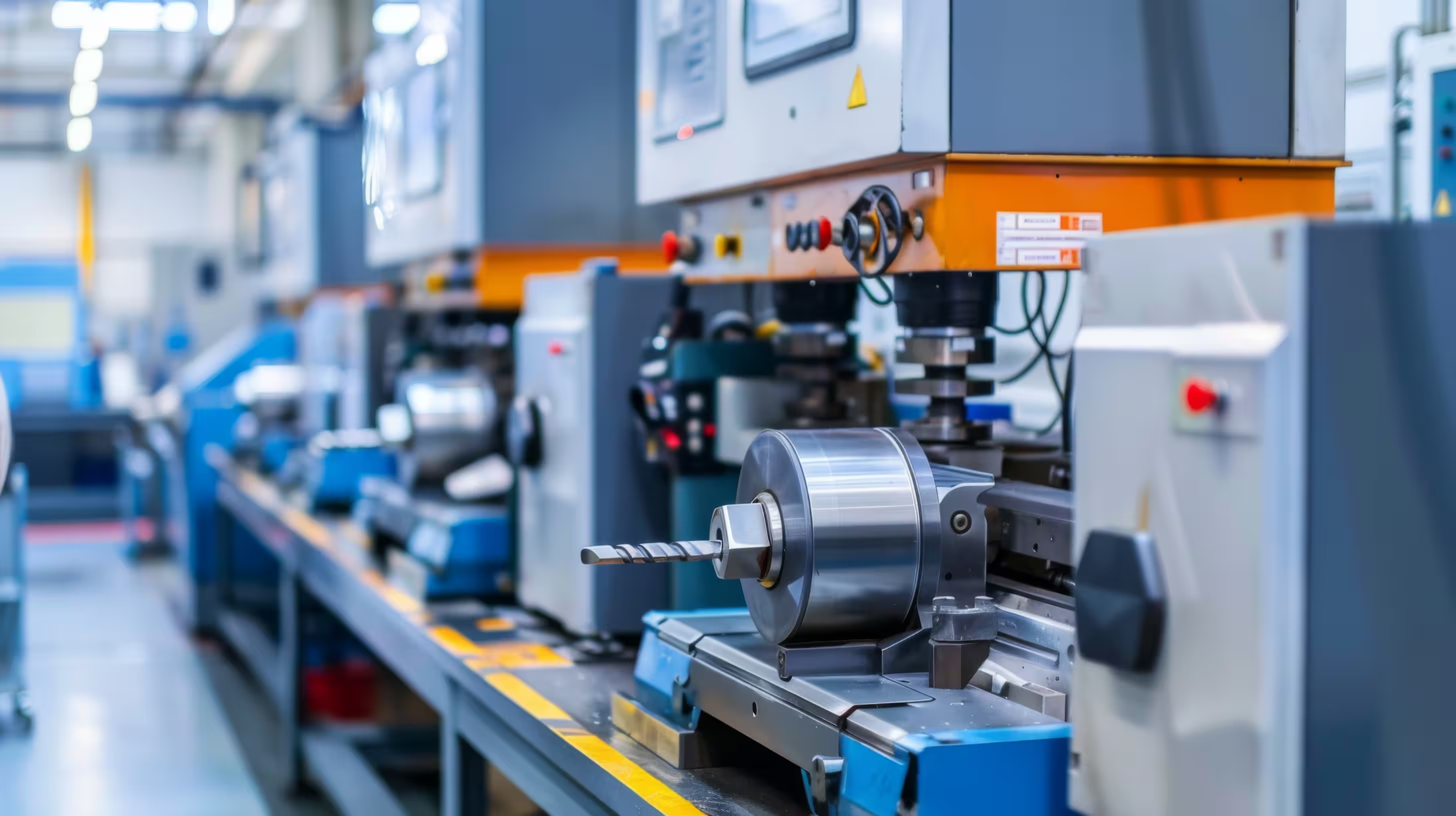
Southside Team
23 Apr 2026
0 min read
Machining

Materials Guide for CNC Milling: Aluminium, Steel, Brass, and Engineering Plastics

Material selection shapes performance, cost, and lead time. Here is how to choose wisely.

Introduction

Every CNC milling project starts with a material choice that affects performance, finish, and cost. Choosing well means a reliable part; choosing poorly risks failure, overspending, or unusable components.

There are dozens of metals and plastics for CNC machining, each with unique strengths, trade-offs, and costs. For most projects in our workshop, the choice typically comes down to four groups: aluminium, steel (mild and stainless), brass, and engineering plastics. These meet the needs of most Australian manufacturers, fabricators, and product developers.

This guide offers a machinist’s perspective. We focus on the grades we machine most at our Mordialloc workshop, the real-world trade-offs, and practical insights to help you choose confidently.

Summary

Key Takeaways

  • Aluminium (especially 6061-T6) is the most popular CNC milling material because it machines quickly, costs less per part, and suits a wide range of structural and cosmetic applications.
  • Mild steel offers raw strength at the lowest material cost, while stainless steel adds corrosion resistance for food, medical and marine environments — though it takes longer to machine and wears tooling faster.
  • Brass (particularly C360) produces exceptionally clean cuts with minimal burr, making it ideal for fittings, valves and electrical connectors that demand tight tolerances and smooth sealing surfaces.
  • Engineering plastics like PEEK, nylon and acetal solve problems where metal falls short — chemical resistance, electrical insulation, low friction, and significant weight savings.
  • The right material choice is driven by how the part will actually be used: its operating environment, the loads it must carry, the tolerances it needs to hold, and your budget.

1. How to Think About Material Selection

Instead of jumping to alloys, first assess your part's needs. Matching material properties to application demands is key—not simply picking the strongest or cheapest option.

From our CNC machining experience in fabrication, mining, food processing, marine, and custom projects, the key factors typically fall into a few categories:

  • Operating environment – will the part be exposed to moisture, chemicals, heat, UV, or abrasive conditions? A mounting bracket inside a dry control panel has very different material requirements from a valve body in a dairy processing line
  • Mechanical loads – does the part need to carry structural weight, resist impact, handle vibration, or provide a bearing surface? Different applications, such as load-bearing shafts and cover plates, require distinct materials.
  • Required tolerances – some materials hold tight tolerances more easily than others. Brass and aluminium are dimensionally stable and straightforward to machine to ±0.01 mm. Some plastics can move with temperature and humidity, which needs to be factored in
  • Surface finish and appearance – if the part is visible or needs a specific surface roughness for sealing, the material choice affects what finishes are practical and cost-effective
  • Cost and lead time – exotic materials like titanium or PEEK cost significantly more than aluminium or mild steel, both in raw material and machining time. If the application doesn’t demand those properties, there’s no reason to pay for them
  • Compliance – medical, food, and aerospace applications may require specific certified material grades, which narrows the field from the start

A practical approach is to list the must-haves first, then consider nice-to-haves. By following this framework, you can quickly narrow dozens of possible materials down to two or three realistic options, saving time and reducing decision stress.

2. Aluminium: The Default Starting Point

If you’re not sure where to start, aluminium is almost always a good place to begin. For most users, it cuts quickly, delivers clean finishes, offers a strong strength-to-weight ratio, and resists corrosion—characteristics that keep costs low and parts lasting longer without extra steps.

For the machine shop, aluminium is efficient to work with. It’s soft enough that tooling lasts well, feed rates can be pushed higher, and cycle times stay short—all of which keeps your per-part cost down. It’s also lightweight (roughly a third the density of steel), which matters for anything that moves, gets carried, or needs to minimise load on a structure.

Common Grades

  • 6061-T6 – this is the workhorse. It offers a good balance of strength, weldability, and corrosion resistance, making it suitable for brackets, enclosures, mounting plates, structural frames, and general-purpose components. With a yield strength around 276 MPa and excellent machinability, it’s the grade we reach for most often
  • 7075-T6 – significantly stronger than 6061 (yield strength around 503 MPa) with a higher hardness, but less weldable and slightly more expensive. It’s the go-to for jigs, fixtures, aerospace-adjacent parts, and anything where maximum strength at minimum weight is the priority
  • 5083 – the marine and chemical processing choice. It has the best corrosion resistance of the common aluminium alloys and handles saltwater and industrial chemicals well. Slightly lower strength than 6061 but tougher in harsh environments
  • 2024 – a high-fatigue-resistance alloy often used where the part will see repeated loading cycles. Common in transport and structural applications, though it has lower corrosion resistance than the 6000-series grades

Finishing Options

Aluminium takes well to a range of secondary processes. Anodising (clear or coloured) is the most common, adding a hard oxide layer that improves both wear resistance and appearance. Powder coating provides thicker protection for outdoor or industrial parts. Bead blasting gives a uniform matte texture, and polishing can bring the surface up to a near-mirror finish for cosmetic components.

One thing worth noting: if you’re planning to anodise, the alloy grade matters. 6061 anodises cleanly and consistently. 7075 can show a slightly yellowish tint, and 2024 can be inconsistent from batch to batch. If colour-matched anodising is important, raise it early.

When Aluminium Is the Right Choice

  • Lightweight structural parts where steel would be unnecessarily heavy
  • Prototypes and first-run production where fast machining reduces cost
  • Components exposed to moisture, mild chemicals, or outdoor weather
  • Parts that will be anodised, powder-coated, or need a decorative finish
  • Heat sinks and thermal management components (aluminium conducts heat well)

Need aluminium CNC milling in Melbourne? Get a quote from Southside Engineering →
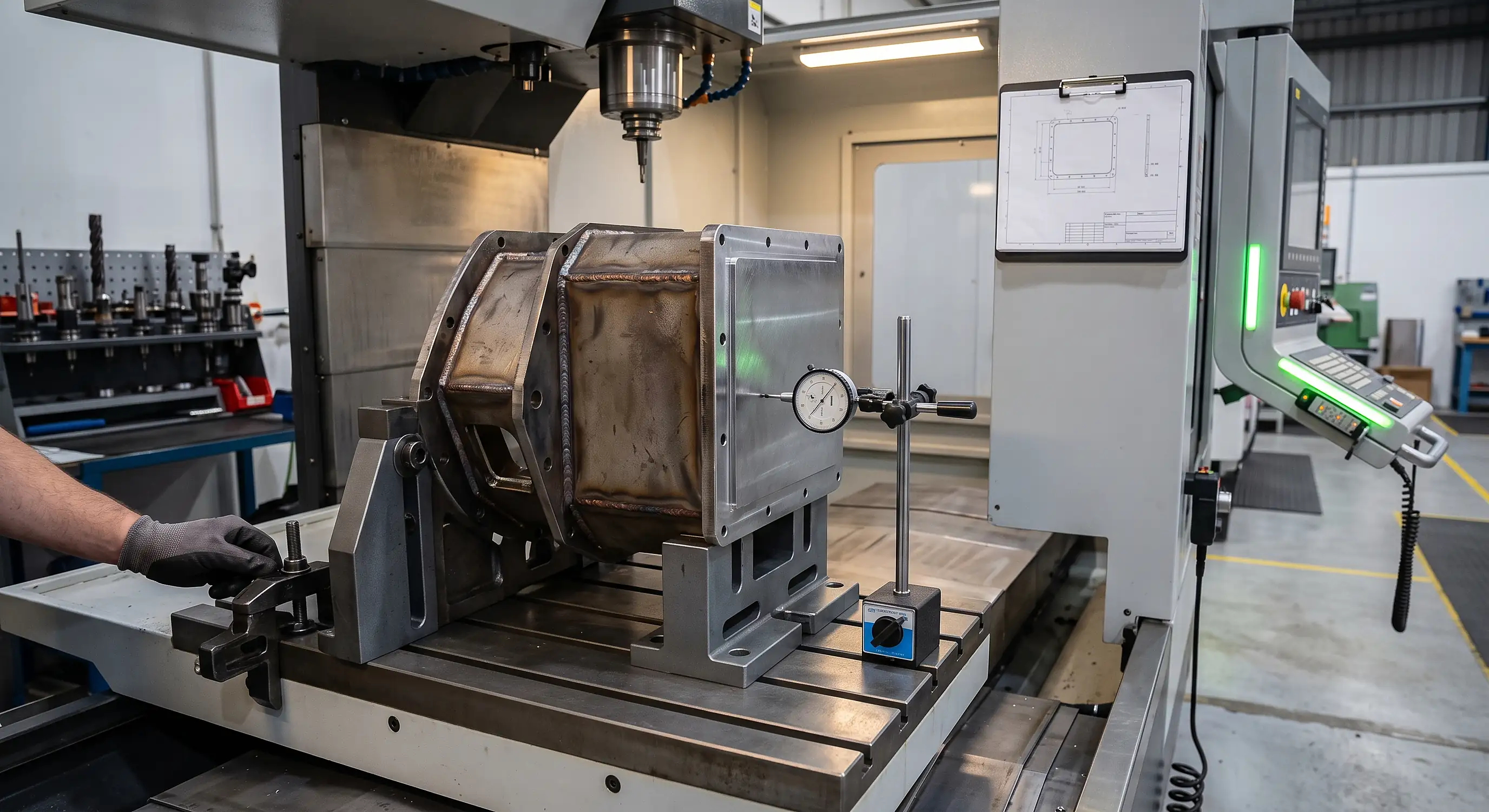
3. Steel: When Strength and Hardness Come First

When a part needs to carry heavy loads, withstand impact, or withstand abrasive conditions, steel is usually the answer. It machines more slowly than aluminium – harder materials wear tooling faster and require lower feed rates – but the mechanical properties make the extra time worthwhile for structural and heavy-duty applications.

Steel comes in a wide range of grades, but for CNC machining, the practical choice usually falls between mild (carbon) steel for strength at low cost and stainless steel when corrosion resistance is essential.

Mild Steel (Carbon Steel)

Mild steel is the most affordable structural metal and the backbone of Australian fabrication. It’s strong, weldable, and readily available in a range of plate and bar sizes. The trade-off is that it has no inherent corrosion resistance, so it generally needs to be painted, powder-coated, zinc-plated, or galvanised for any environment where moisture is present.

  • 1018 – a low-carbon, general-purpose steel with excellent machinability and weldability. Yield strength is around 370 MPa. Used for brackets, fixtures, mounting plates, and fabrication sub-assemblies where corrosion isn’t a primary concern
  • 1045 – a medium-carbon steel with higher strength and hardness (yield ~450 MPa). Well-suited to shafts, gears, studs, and load-bearing components. It can be heat-treated for additional hardness
  • 4140 – a chromium-molybdenum alloy steel with excellent toughness and fatigue resistance. Used for high-stress applications like axles, crankshafts, and structural components that will see repeated loading

Stainless Steel

Stainless steel adds chromium (at least 10.5%) to the mix, forming a passive oxide layer that protects against rust and corrosion. This makes it essential for food processing, medical devices, marine hardware, chemical handling, and any environment where parts are regularly washed, sterilised or exposed to corrosive substances.

The trade-off is machinability. Stainless steel requires more effort and time to machine, which increases costs. However, if your project must withstand regular cleaning, harsh chemicals, or moisture, the investment ensures lasting performance and peace of mind.

  • 304 – the most widely used stainless grade. Good all-round corrosion resistance, excellent weldability, and suitable for kitchen equipment, architectural fittings, general industrial components, and non-contact food equipment
  • 316 – the step up when you need resistance to chlorides, acids, and aggressive cleaning chemicals. The added molybdenum gives it superior performance in marine, dairy, pharmaceutical, and chemical processing environments. If in doubt between 304 and 316 for food or medical work, 316 is the safer choice
  • 303 – a free-machining stainless grade optimised for high-volume CNC production. It machines significantly faster than 304 or 316 but has slightly lower corrosion resistance. Ideal for fittings, fasteners, and precision-turned parts where machining speed matters

When Steel Is the Right Choice

  • Heavy structural loads, impact resistance, or high-vibration environments
  • Components in fabrication assemblies that will be welded into larger structures
  • Food, medical, marine, or chemical environments requiring corrosion resistance (stainless)
  • Parts that will be heat-treated for additional hardness or wear resistance
  • Cost-sensitive structural parts where aluminium’s higher material cost isn’t justified

4. Brass: Precision, Clean Cuts, and Corrosion Resistance

Brass, a copper-zinc alloy, occupies a unique position among CNC milling materials. It machines beautifully – producing clean, burr-free cuts with an excellent surface finish straight off the tool – which means less post-processing, tighter tolerances, and faster turnaround on precision components. It’s a material we work with regularly on our CNC turning and CNC milling machines.

It’s also naturally corrosion-resistant, non-sparking, and has useful antimicrobial properties. Its warm gold colour gives it a visual appeal that makes it popular for architectural and decorative hardware, while its electrical conductivity makes it a standard for connectors and terminals.

Common Grades

  • C360 (free-cutting brass) – the most machinable brass grade and one of the most machinable metals full stop. It’s the benchmark for fittings, valves, connectors, bushings, and any turned or milled component where surface finish and dimensional accuracy are priorities. Yield strength around 275 MPa with excellent elongation
  • C260 (cartridge brass) – a 70/30 copper-zinc alloy with good formability and corrosion resistance. Often used for decorative and architectural components
  • C932 (bearing bronze) – technically a bronze rather than a brass, but commonly requested alongside brass work. It offers good strength and wear resistance, making it ideal for bearings, bushings, pump components, and hydraulic fittings

Why Brass Machines So Well

Brass forms short, broken chips during cutting rather than long stringy swarf, which means the machine runs cleanly with minimal chip-clearing issues. The material doesn’t work harden the way stainless does, so tooling lasts well, and consistent results come batch after batch. For high-precision turned parts — fittings, valve seats, and threaded connectors — it’s hard to beat.

When Brass Is the Right Choice

  • Fittings, valves, and connectors that need smooth sealing surfaces
  • Electrical terminals and connectors requiring good conductivity
  • Plumbing and hydraulic components
  • Decorative or visible hardware where appearance matters
  • High-precision parts with tight tolerances where a burr-free finish reduces secondary operations

5. Engineering Plastics: When Metal Isn’t the Answer

There are applications where metal is simply the wrong material. When you need electrical insulation, chemical resistance, lightweight performance, low friction, or biocompatibility, engineering plastics offer properties that no metal can match. CNC-machined plastics also give you tolerances that injection moulding can’t achieve at low volumes, making them ideal for prototypes, custom components, and specialised one-off parts.

The key difference from machining metals is that plastics behave differently under the tool. Some absorb moisture and swell. Some soften with heat and require slower feed rates or air cooling. And some are dimensionally sensitive to temperature changes, which means tolerances need to be realistic for the material. A good machine shop will factor all of this in.

Common Grades

  • PEEK (Polyether Ether Ketone) – the high-performance option. It handles continuous operating temperatures up to 250°C, resists most chemicals, absorbs virtually no moisture, and is biocompatible. Used for medical implant components, semiconductor equipment, aerospace parts and food processing. The trade-off is cost — PEEK bar stock is expensive, which makes it a material you choose when the application genuinely demands it
  • Acetal / Delrin (POM) – one of the easiest plastics to machine, with excellent dimensional stability, low friction, and good strength. It’s the go-to for precision gears, rollers, bushings, conveyor components, and any part that needs to slide or rotate with minimal wear
  • Nylon (Polyamide) – strong, tough, and self-lubricating. Common grades include Nylon 6 and Nylon 66, used for bushings, gears, bearings, wear pads, and food processing guides. It absorbs more moisture than Acetal, which can affect dimensions in humid environments
  • ABS – impact-resistant and easy to machine. Widely used for enclosures, housings, prototypes, jigs, and fixtures
  • UHMWPE – extremely wear-resistant and self-lubricating, with FDA approval for food contact. Used for guide rails, wear strips, and conveyor components in food processing

When Engineering Plastics Are the Right Choice

  • Electrical insulation is a hard requirement
  • Chemical resistance to acids, solvents, cleaning agents, or other aggressive substances
  • Weight reduction where the metal is heavier than the application needs
  • Low-friction or self-lubricating wear parts like bushings, guides, and rollers
  • Biocompatible or food-safe components where material certification matters
  • One-off or low-volume parts where injection moulding isn’t viable

Not sure whether your part needs metal or plastic? Talk to Southside Engineering — we machine both. →

6. Material Comparison at a Glance

The table below summarises the key differences across the most common CNC milling materials. Use it as a starting point, but remember that the right choice always depends on the specific application.

Material Strength Machinability Corrosion Weight Relative Cost
Aluminium 6061 Moderate Excellent Good Light Low
Aluminium 7075 High Good Medium Light Medium
Mild Steel 1018 Moderate Excellent Low Heavy Low
Mild Steel 1045 High Good Low Heavy Low
Stainless 304 High Fair Good Heavy Medium
Stainless 316 High Fair Excellent Heavy High
Brass C360 Moderate Excellent Good Medium Medium
PEEK Moderate Good Excellent Very Light High
Nylon Low–Med Good Good Very Light Low
Acetal (Delrin) Moderate Excellent Good Very Light Low–Med

A few things this table doesn’t capture: lead time (exotic materials or non-stock grades take longer to source), minimum order sizes for raw material, and the impact of secondary processes like heat treatment or anodising on the final cost and timeline. These are all things we can advise on when you send through your drawings.

7. Surface Finish and Secondary Processes

The material you choose also determines what finishing options are available and practical. Surface finish matters both for function (sealing faces, bearing surfaces, and hygiene) and for appearance (customer-facing products and architectural hardware).

Here’s a quick overview of common finishes by material:

  • Aluminium – anodising (clear, black, colour), powder coating, bead blasting, polishing, chromate conversion
  • Mild steel – powder coating, zinc plating, electroplating, painting, hot-dip galvanising
  • Stainless steel – passivation, electropolishing, mechanical polishing, bead blasting
  • Brass – polishing (to a high shine), lacquering, nickel plating, left natural (develops a patina over time)
  • Engineering plastics – generally used as-machined. Some can be vapour-smoothed or polished for cosmetic applications

If your part has threads, it’s also worth considering how they’ll be finished. For lightly loaded threads, a machined-in thread is fine. For threads that will see repeated use or significant stress, a Helicoil or keyed insert can significantly extend the part’s service life.

8. How to Choose: A Practical Framework

If you’re still weighing up options, here’s a simple framework that covers most situations:

Start with the environment. If the part will face moisture, chemicals, or food contact, that typically rules out mild steel and points you towards stainless, aluminium, or an appropriate plastic.

Then consider the loads. Heavy structural loads and impact favour steel. Moderate loads where weight matters point to aluminium. Light loads or sliding/rotating applications often suit plastics.

Factor in tolerances and finish. If you need very tight tolerances and a clean surface finish with minimal post-processing, aluminium and brass are the easiest to work with. Stainless is achievable but costs more in machining time.

Check for compliance requirements. Medical, food, and aerospace applications often mandate specific material grades with traceable certification. This narrows the field before you even consider properties.

Then look at the budget. If two materials both meet the functional requirements, the one that machines faster and costs less in raw material is usually the right call. There’s no engineering benefit in using 316 stainless when 6061 aluminium does the job.

And if you’re unsure, send us the drawing with a note about the application. Our CNC machinist Melbourne team will recommend a material based on what we’ve seen work in similar situations – no charge, no obligation.

Have a CNC milling project and need material advice? Get a quote from Southside Engineering →

9. Why a Local Melbourne Machine Shop Matters

Choosing the right material is only half the equation. You also need a machining manufacturer that stocks common grades, knows how each material behaves under the tool, and can advise when your drawing calls for something that’ll work better in a different alloy.

A local CNC Melbourne machine shop gives you practical advantages that offshore or interstate suppliers can’t match. Faster lead times, because the part doesn’t spend days in transit. Direct communication, because you can pick up the phone or visit the workshop. And same-day resolution when something needs to change mid-job, rather than waiting for a reply across time zones. Across the machining industry, local partnerships consistently outperform distant ones for responsiveness and quality.

Southside Engineering is based in Mordialloc, in Melbourne’s south-east manufacturing corridor. We’ve been providing CNC machining Melbourne manufacturers rely on since 1973 — over 50 years of metal machining for Australian industry. Whether you’re looking for CNC machining Australia-wide or a local partner, we serve fabricators, food manufacturers, medical device companies, mining operations and custom project clients. As a trusted machining workshop in Australia, we hold tolerances to ±0.01 mm, offer 24-hour prototyping for urgent work, and return quotes within 4 hours of receiving drawings.

10. Conclusion

Material selection shapes every aspect of a CNC manufacturing project — from how quickly the part can be machined to how it performs in service to what it ultimately costs. Aluminium offers the best all-round balance of machinability, weight and cost for most applications. Steel provides the strength and toughness needed for heavy-duty structural work. Brass delivers precision and clean finishes for fittings and connectors. And engineering plastics solve the problems where metal simply isn’t the right tool for the job.

The key is to start with the application, not the material. Understand what your part needs to do, the environment it’ll operate in, and the tolerances it needs to hold — and the right material choice will usually become clear.

Southside Engineering machines all of the materials covered in this guide from our Mordialloc workshop. Whether you need CNC machining near me for a quick prototype or a production run, send us your drawings. We’ll come back with a recommendation and a quote within 4 hours.

Ready to get started? Request a quote from Southside Engineering →
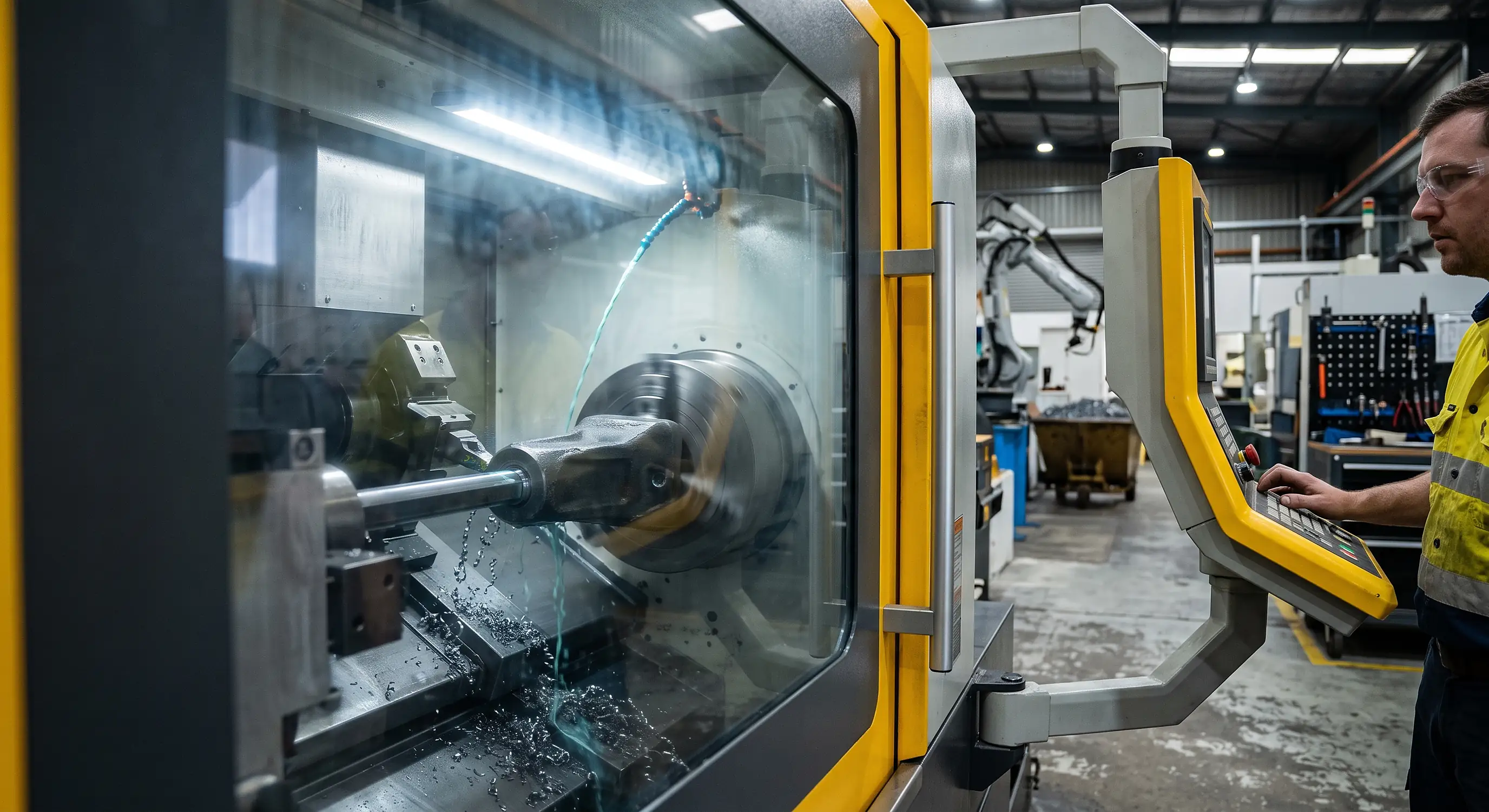
Southside Team
23 Apr 2026
0 min read
Industries

How to Write a CNC Machining Brief That Gets You an Accurate Quote Faster

Every industry has its own tolerances, materials, and deadlines. Here is how Melbourne's CNC machine shops meet them all.

Introduction

CNC machining in Melbourne serves a wide range of industries, from fabrication and heavy transport to medical devices, mining, and custom projects. Each sector has different requirements for materials, tolerances, lead times, and quality standards. This guide covers what each industry needs from a CNC machining partner and how precision manufacturing supports their work.

Summary

Key Takeaways:
  • Fabricators need a reliable CNC machining partner near them for precision flanges, brackets, and fittings that integrate with their fabricated assemblies.
  • Heavy truck and commercial vehicle manufacturers require high-volume CNC machining with consistent ±0.01mm tolerances for engine, transmission, and chassis components.
  • Medical CNC machining demands biocompatible materials, micron-level accuracy, and smooth surface finishes for surgical instruments, implants, and diagnostic equipment.
  • Mining components must be durable enough to withstand constant dust, vibration, and heavy loads. Fast turnaround for replacement parts is critical to reduce costly downtime.
  • Custom CNC projects - from one-off prototypes to limited production runs - require a flexible machine shop that can work from CAD files and deliver in as little as 24 hours.

CNC Machining for Fabricators

Fabrication projects often need machined components with exact tolerances that cannot be achieved through cutting or welding alone. When a fabricated assembly requires a custom flange, machined bracket, or threaded fitting, those parts need to be right the first time. A misaligned hole pattern or an out-of-tolerance shaft can hold up an entire project.

Southside Engineering provides CNC milling and CNC turning services for fabricators in Melbourne, producing components that integrate directly into fabricated structures and assemblies. Working from your CAD files, PDF drawings, or specifications, our machine shop delivers:

  • Custom flanges and mounting plates - CNC milling for exact hole patterns and flat mating surfaces
  • Machined brackets and gussets - CNC-machined to exact dimensions for structural assembly
  • Threaded components and fasteners - CNC turning for precise threads and consistent quality across repeat orders
  • Specialty fittings and adapters - custom parts that connect fabricated equipment sections

Materials include mild steel, stainless steel, aluminium, brass, and copper. Finishing options include powder coating, anodising, and electroplating. Simple components are typically ready within 3 to 5 working days.

Need CNC machining near you for fabrication work? Get a quote from Southside Engineering.

CNC Machining for Heavy Trucks and Commercial Vehicles

Heavy truck and commercial vehicle manufacturers face two main challenges: producing large quantities of identical components consistently, and making sure those parts can handle constant vibration, heavy loads, and long operating hours without failing.

A single faulty part can cause costly downtime and safety risks across an entire fleet. This is why precision and reliability are non-negotiable in this sector.

Southside Engineering's high-volume CNC manufacturing lowers per-unit costs while keeping quality consistent across thousands of parts. We machine components to ±0.01 mm tolerances using stainless steel, aluminium, brass, copper, and engineering plastics. Key components we produce for the heavy transport sector include:

  • Chassis and suspension parts - precision components that improve stability and performance
  • Brackets, frames, and assemblies - custom-machined for secure, durable construction
  • Fasteners, bushes, and washers - safety-critical parts built with absolute accuracy
  • Spacers and mounting hardware - accurately machined for precise alignment under heavy-duty use

We also offer single-piece machined designs that eliminate the weaknesses found in multi-piece welded assemblies. For urgent repairs, prototypes can be delivered within 24 hours to get vehicles back on the road quickly.

CNC Machining for Medical Equipment

Medical CNC machining leaves no room for error. Components used in surgical instruments, diagnostic devices, and patient-specific implants must be manufactured with micron-level accuracy and smooth surface finishes, using materials that are safe for contact with the human body.

Southside Engineering machines medical components to ±0.01 mm tolerances using biocompatible materials, including titanium, stainless steel, aluminium, and engineering plastics such as PEEK, ABS, and Nylon. These materials are selected for their corrosion resistance and ability to withstand sterilisation processes such as autoclaving.

Medical components we manufacture include:

  • Orthopaedic components - CNC-machined parts for surgical tools and support devices
  • Medical device components - reliable parts for pumps, ventilators, and diagnostic tools
  • Laboratory and equipment parts - CNC precision components for medical and lab equipment

Finishing options include polishing, bead blasting, anodising, and coating to create smooth, hygienic surfaces. Rapid prototyping is available with urgent prototypes deliverable in as little as 24 hours, supporting medical device manufacturers and research teams who need to test and validate designs quickly.

Need precision CNC machining for medical components in Melbourne? Our team can help you.

CNC Machining for Mining

Mining machinery operates in some of the harshest conditions in Australia. Constant exposure to dust, vibration, heat, and heavy loads means that components must be built to last. When a part fails on a mining site, every hour of downtime can cost thousands of dollars.

Southside Engineering produces durable CNC-machined components from stainless steel, aluminium, brass, copper, and specialty alloys designed specifically for high-impact, abrasive environments. Our precision machining achieves ±0.01 mm tolerances, ensuring reliable performance even for safety-critical parts where exact fits are essential.

Mining components we manufacture include:

  • Wear-resistant components - built to endure abrasive environments and extend equipment life
  • Custom fittings and housings - built for heavy machinery with reliable, long-term performance
  • Safety-critical components - precision-engineered to reduce operational risk
  • Repair and refurbishment parts - CNC milling and turning to restore equipment to full performance

We handle single replacement parts through to full production runs, with urgent parts deliverable within 24 hours to minimise downtime.

Custom CNC Projects

Not every project fits a standard production format. Some businesses need a one-off component that no standard supplier carries. Others need to prototype and test a new product quickly before committing to full production. Custom CNC projects cover all of these scenarios.

Southside Engineering's machine shop in Melbourne handles custom CNC machining for businesses and innovators across medical, defence, electronics, mining, automotive, and scientific research sectors. Whether you have a unique design requirement or an unusual production run, we manufacture to your exact specifications with tolerances up to ±0.01 mm.

Custom CNC services include:

  • One-off components - customised parts manufactured to order from your drawings or CAD files
  • Prototypes and concept models - from CAD design to physical part in as little as 24 hours
  • Custom fixtures and fittings - designed for specialised applications where standard parts do not work
  • Low-volume production runs - cost-efficient CNC manufacturing for niche projects that do not suit mass production

Materials include aluminium, stainless steel, brass, titanium, copper, and engineering plastics such as PEEK, nylon, and ABS, with finishing options including powder coating, electroplating, and welding.

Ready to get started? Visit ssengineering.com.au

Why a Local Melbourne Machine Shop Matters

For all five of these industries, having a CNC machining partner near you in Melbourne makes a practical difference. A local machine shop means faster lead times, direct communication, and the ability to resolve quality issues the same day rather than waiting weeks for an offshore supplier to respond.

Southside Engineering is based in Mordialloc, in the heart of Melbourne's south-east manufacturing corridor. Melbourne-based since 1973. Over 50 years of precision machining for Australian industry. We have served fabricators, transport companies, medical manufacturers, mining operations, and custom project clients. Tolerances up to ±0.01 mm, 24-hour prototyping, Australian-based quality control, and quotes within 4 hours of receiving drawings.

Conclusion

CNC machining in Melbourne supports a broad range of industries, each with different demands. Fabricators need precision components that integrate seamlessly into their assemblies. Heavy transport manufacturers need high-volume consistency and durability. Medical manufacturers need biocompatible materials and micron-level accuracy. Mining operations need rugged parts and fast turnaround. And businesses with custom projects need a flexible machine shop that can work from any drawing and deliver quickly.

Southside Engineering provides all of these services from our Mordialloc machine shop. Whether you need ongoing production or a one-off custom project, we are ready to help.

Have a custom CNC project in Melbourne? Get a quote from Southside Engineering.

Southside Team
31 Mar 2026
0 min read

Get High-Quality CNC Machined Components

Quality assurance at every stage in our factory based in Melbourne

Is your part file ready to go?
Get a Quote
Want to talk about your project?
Contact Us