Introduction
Food and beverage manufacturing is one of the most demanding sectors for precision metal machining. Every component that touches food, liquid or steam must be made from approved materials, machined to surface finishes that prevent bacterial harbourage, and built to withstand daily exposure to high-pressure wash-downs, caustic cleaning chemicals and thermal cycling.
For food equipment manufacturers across Australia, finding a CNC machining services provider — whether you’re searching for CNC Melbourne specialists or CNC machining Australia-wide — that understands these requirements is critical. A general-purpose machining manufacturer can produce a part to tolerance, but if the material grade is wrong, the surface is too rough, or the internal geometry traps residue, the component becomes a food safety liability.
This guide covers the key requirements for CNC machining food and beverage equipment components, from material selection and surface finish standards to common parts and compliance considerations. It’s written from our experience as a CNC machining Melbourne workshop that has supplied food-grade components to processors, OEMs and equipment builders for over 50 years.
Summary
Key Takeaways
- 316 stainless steel is the industry standard for food-contact CNC components, offering superior resistance to chlorides, acids and CIP cleaning chemicals.
- Surface finish matters as much as material choice — food-contact surfaces typically require Ra 0.8 μm or better to prevent bacteria accumulating in micro-crevices.
- Engineering plastics like PEEK, Acetal and UHMWPE are used for non-metallic food-contact components including guides, rollers, wear strips and seals.
- A CNC machinist working in the food and beverage space needs to understand both the machining tolerances and the hygiene context behind each component.
- Australian food manufacturers must comply with FSANZ and HACCP requirements, and the materials and finishes used in machined components play a direct role in meeting those standards.
1. Why CNC Machining Matters for Food and Beverage
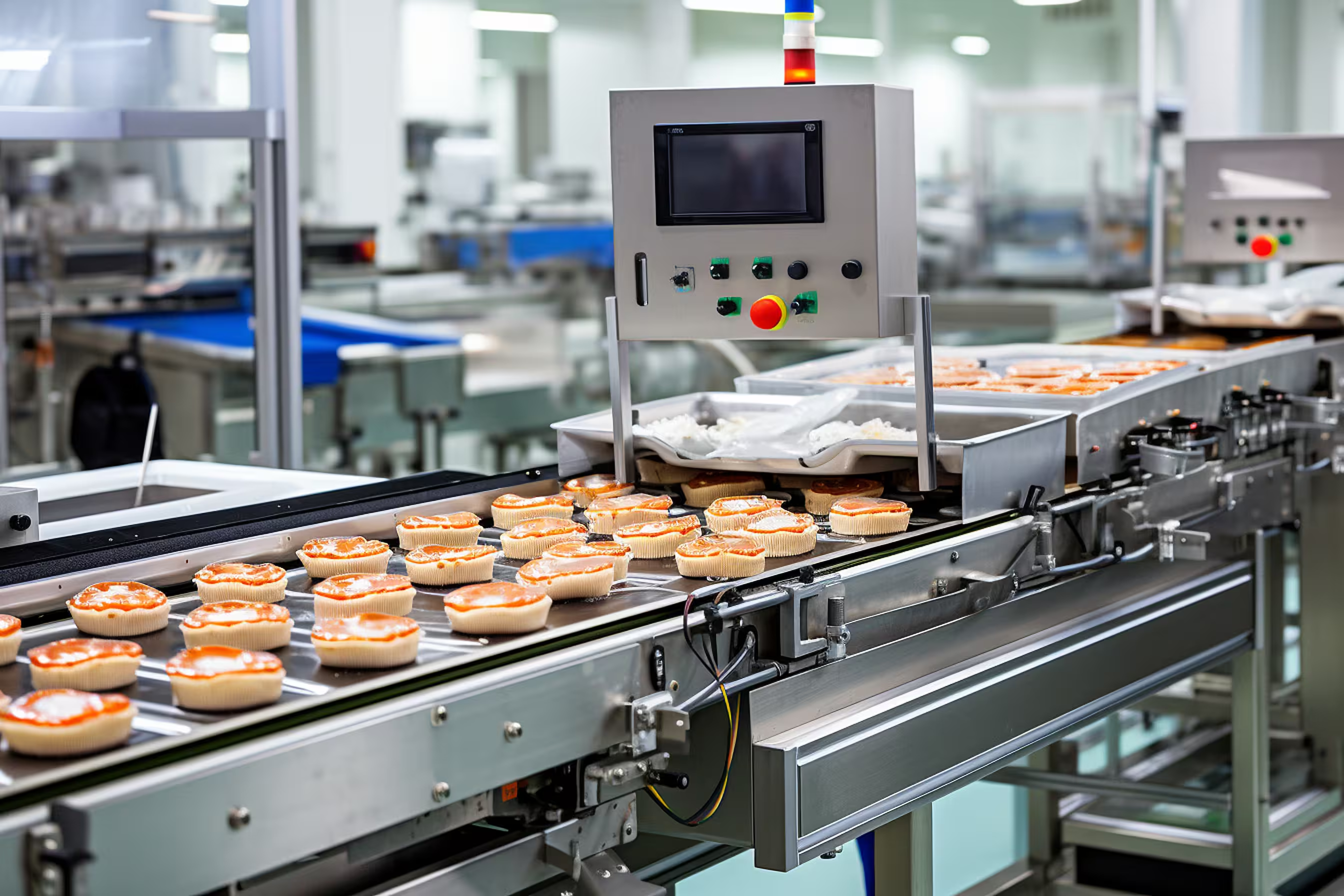
Food processing and beverage production lines are built from hundreds of precision components — valve bodies, pump housings, fittings, nozzles, shafts, guides and wear parts that keep product moving from mixing through to packaging. These parts operate under constant exposure to water, steam, food acids, caustic wash chemicals and mechanical wear. They need to hold precise dimensions, seal reliably, resist corrosion, and clean up completely during every wash cycle.
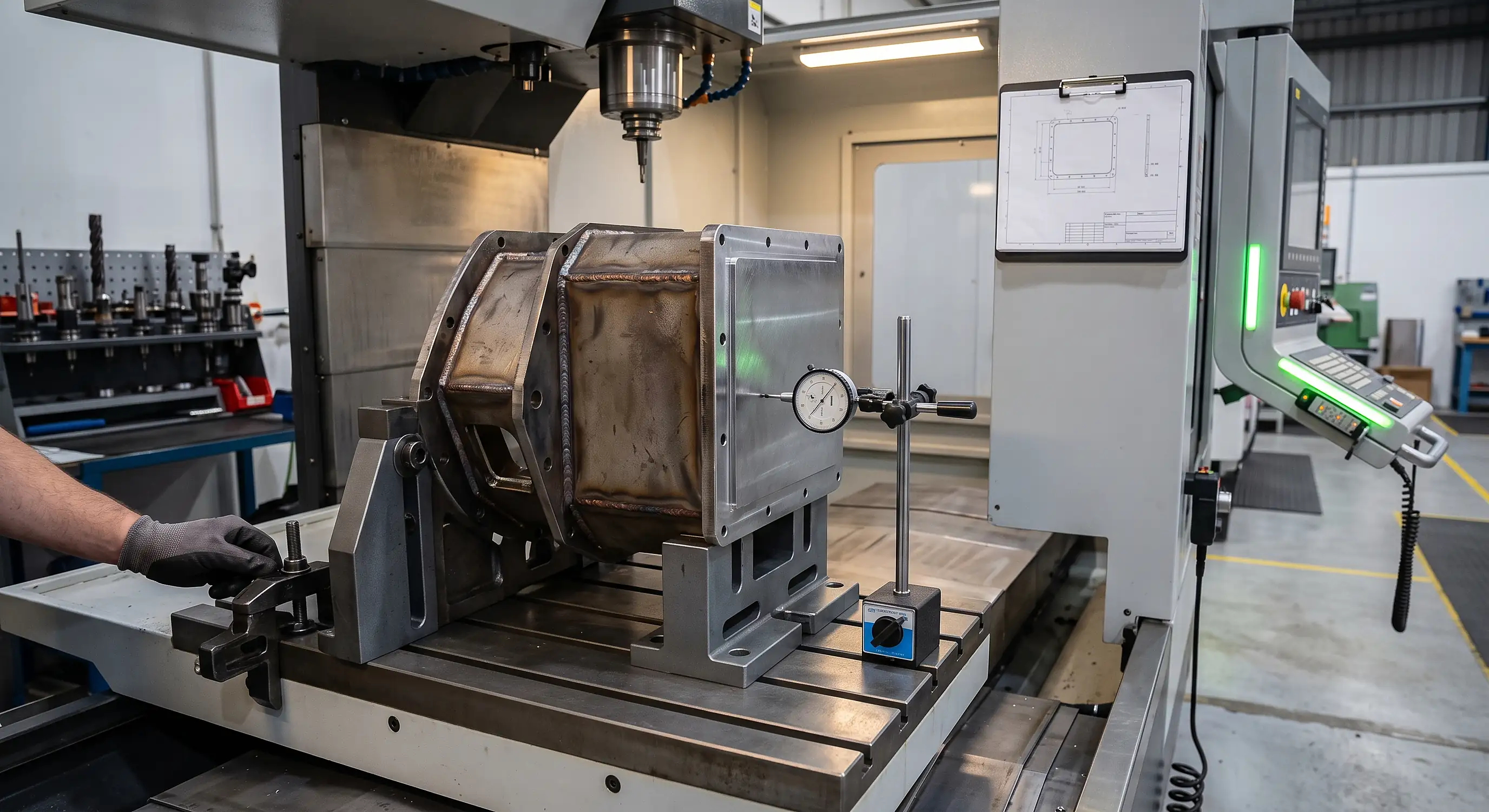
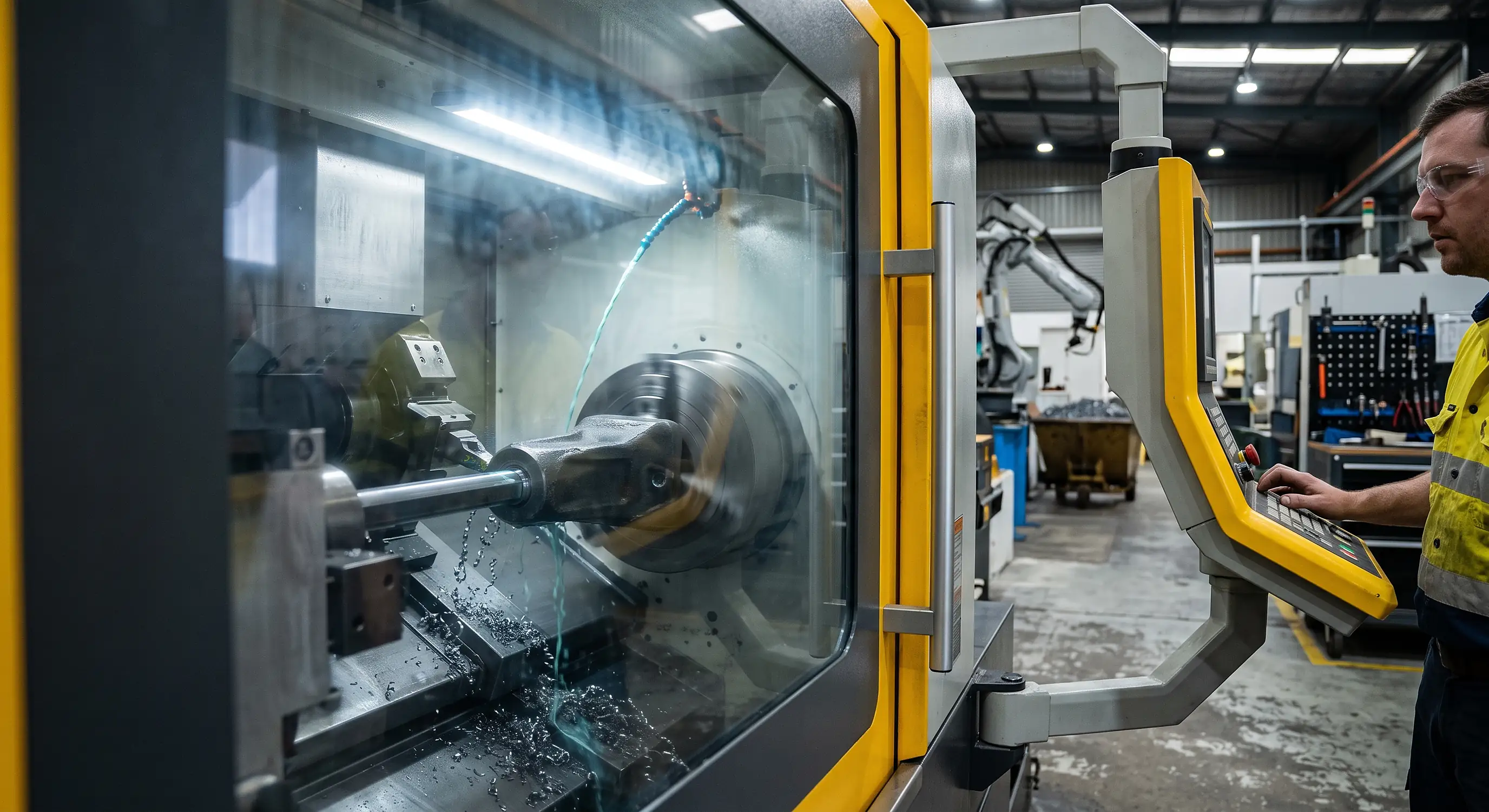
Off-the-shelf parts rarely meet the specific dimensional, material or hygiene requirements of custom food processing equipment. That’s where CNC manufacturing comes in. CNC milling and CNC turning allow manufacturers to produce components that are purpose-built for the application — machined from the correct food-grade material, to the exact tolerances required, with surface finishes that support hygienic operation from day one.
The machining industry serves food and beverage in two main ways: producing components for OEMs building new processing equipment, and machining replacement or upgraded parts for existing production lines. In both cases, the requirements go well beyond what a standard metal machining job demands. The machine shop needs to understand not just how to cut the part, but why the material, finish and geometry matter for food safety.
2. Materials for Food-Grade Components
Material selection is the foundation of every food-safe machined component. The material must resist corrosion from food acids and cleaning chemicals, maintain structural integrity under thermal cycling, and in many cases meet specific regulatory requirements for food contact.
Stainless Steel: The Industry Standard
Stainless steel dominates food and beverage CNC machining for good reason. Its chromium content forms a passive oxide layer that resists corrosion, and the austenitic grades (300-series) are non-magnetic, weldable and well-suited to hygienic fabrication.
- 316 stainless steel – the primary choice for food-contact surfaces in the machining industry. The added molybdenum gives it superior resistance to chlorides, organic acids, and CIP (Clean-in-Place) chemicals — the harsh alkaline and acidic solutions used to clean production lines without disassembly. If you’re machining components for dairy, brewing, sauce production or pharmaceutical processing, 316 is the standard
- 316L (low carbon) – the preferred option for welded assemblies. The reduced carbon content prevents carbide precipitation at weld zones, which would otherwise create weak points susceptible to intergranular corrosion
- 304 stainless steel – a cost-effective alternative for non-contact structural components, equipment frames, mounting brackets and housings where the part doesn’t directly touch food
One practical note: stainless is tougher on tooling than aluminium or mild steel. It work-hardens during cutting, generates more heat, and requires slower feed rates. This means higher per-part costs, but for food-contact applications, the material cost is a non-negotiable part of compliance.
Engineering Plastics for Food Applications
Not every food-grade component needs to be metal. Engineering plastics are widely used in food processing for guides, rollers, wear strips, seals, bushings and conveyor components where low friction, chemical resistance or weight savings matter.
- PEEK – handles continuous temperatures up to 250°C, is autoclavable, chemically inert and FDA-compliant. Used for valve seats, seals and components in high-temperature sterilisation environments
- Acetal (Delrin / POM) – low friction, excellent dimensional stability and good chemical resistance. A practical choice for conveyor guides, rollers and metering components
- UHMWPE – extremely wear-resistant, self-lubricating and FDA-approved for food contact. The go-to for guide rails, wear strips and conveyor components in meat, poultry, bakery and general food processing
- Nylon (food grade) – strong, tough and self-lubricating. Used for gears, bushings and spacers in packaging and bottling machinery
Need food-grade CNC machining in Melbourne? Get a quote from Southside Engineering →
3. Surface Finish: Where Hygiene Starts
In food and beverage manufacturing, surface finish is a hygiene requirement, not a cosmetic preference. Rough or porous surfaces create micro-crevices where bacteria, mould and food residue can accumulate and resist cleaning.
The industry-standard measure is Ra (Roughness Average) — the arithmetic average of the peaks and valleys across a surface, measured in micrometres (μm). For food-contact stainless steel surfaces, the benchmark is:
- Ra 0.8 μm or better – the widely accepted standard for food-contact surfaces, referenced in 3-A Sanitary Standards and adopted across most Australian dairy, beverage and food processing operations
- Ra 0.4 μm or finer – required in some dairy, pharmaceutical and high-care processing environments where even stricter hygiene control is necessary
Achieving these finishes is a two-stage process. First, the CNC machining operation itself needs to be set up correctly. Then, secondary finishing processes bring the surface to its final specification.
Beyond surface roughness, the geometry of the part also matters for hygiene. Internal bores, channels and cavities should be machined with smooth, crevice-free transitions to ensure complete drainage and effective CIP cleaning. Dead legs, sharp internal corners and pockets that trap fluid are all design features that a food-aware CNC machinist in Melbourne will flag before production begins.
4. Common Food and Beverage Components We Machine
Southside Engineering produces a wide range of CNC-machined components for food and beverage processing equipment. These include both direct food-contact parts machined from 316 stainless or food-grade plastics, and structural components that support processing lines.
Valves and Flow Control
- Valve bodies and seats – precision-machined from 316 stainless for leak-free operation in liquid, steam and CIP circuits. Sealing surfaces finished to Ra 0.8 μm or better
- Fittings and adapters – custom tri-clamp compatible fittings, reducers and adapters machined to sanitary standards
Pumps and Mixing
- Pump housings and impellers – close-tolerance components for sanitary pumps used in dairy, beverage and sauce production
- Mixer shafts and agitator components – CNC-turned shafts with polished surfaces for hygienic mixing vessels
Filling and Packaging
- Filling nozzles and dosing components – precision-bored nozzles for accurate, repeatable filling in bottling and sachet packaging lines
- Conveyor guides and wear strips – UHMWPE and Acetal components that reduce friction and extend belt life in packaging lines
Cutting and Processing
- Cutting blades and slicing fixtures – hardened stainless steel components for food cutting, portioning and trimming equipment
- Inspection and mounting brackets – structural components for sensors, cameras and quality control equipment on production lines
Whether you need a single replacement part machined urgently to get a line running again, or a production run of custom components for new equipment, our CNC machining services cover the full range of food and beverage work.
5. Compliance and Standards in Australia
Food and beverage manufacturers in Australia operate within a regulatory framework that directly affects what materials and finishes are acceptable for processing equipment. While the CNC machining manufacturer isn’t responsible for certifying the end product, the materials and finishes we use play a direct role in compliance.
- Food Standards Australia New Zealand (FSANZ) – sets the overarching regulatory framework for food safety in Australia, including requirements for materials that come into contact with food during processing
- HACCP (Hazard Analysis Critical Control Points) – the systematic food safety management approach used by most Australian food manufacturers. HACCP principles influence equipment design, material selection and surface finish specifications
- 3-A Sanitary Standards – widely referenced in Australia for equipment design, surface finish requirements (Ra 0.8 μm maximum for food-contact surfaces) and cleanability criteria
- AS 4674:2004 – the Australian standard for the construction of equipment for the food industry, covering design, materials and fabrication requirements
- FDA 21 CFR – relevant for Australian manufacturers exporting to the US or using food-contact plastics that reference FDA compliance
In practice, what this means for any machining manufacturer working in the food space is straightforward: use the specified material grade, machine to the specified surface finish, avoid design features that trap food residue, and document what was done. As a CNC machining services manufacturer with decades of food-industry experience, Southside Engineering can work from your compliance-driven specifications or advise on material and finish options.
6. Finishing and Post-Processing
The right finishing process protects the component, ensures hygiene compliance and extends service life. For food and beverage components, finishing isn’t optional — it’s part of the specification.
- Electropolishing – the gold standard for food-contact stainless steel. It electrochemically removes the outer layer of metal, creating an ultra-smooth, passive surface that resists both corrosion and bacterial adhesion
- Passivation – a chemical treatment that removes free iron from the stainless steel surface after machining, restoring the chromium-rich passive layer that gives stainless its corrosion resistance
- Mechanical polishing – achieves mirror or satin finishes for components where a specific Ra value is required or where the part is visible on the production line
- Bead blasting – creates a uniform matte texture for non-contact surfaces such as equipment housings and frames
- As-machined (plastics) – many food-grade plastics are used without additional finishing. UHMWPE, Acetal and PEEK have inherently low porosity and chemical resistance that make them suitable as-machined
Need food-grade finishing on CNC components? Talk to Southside Engineering about your requirements →
7. What to Look for in a Food-Grade CNC Machinist
Not every machine shop is set up to handle food and beverage work. If you’re sourcing CNC machining near me for food-grade components, here’s what separates a capable food-industry machining partner from a general-purpose shop:
- Material knowledge – they should discuss 316 vs 304, explain why 316L matters for welded assemblies, and know which plastic grades are FDA-compliant
- Surface finish capability – they can achieve and verify Ra 0.8 μm or better, and understand why it matters for hygiene
- Finishing partnerships – if they don’t do electropolishing or passivation in-house, they should have established relationships with finishing suppliers
- Design awareness – they’ll flag potential hygiene issues — dead legs, sharp internal corners, trapped cavities — before machining begins
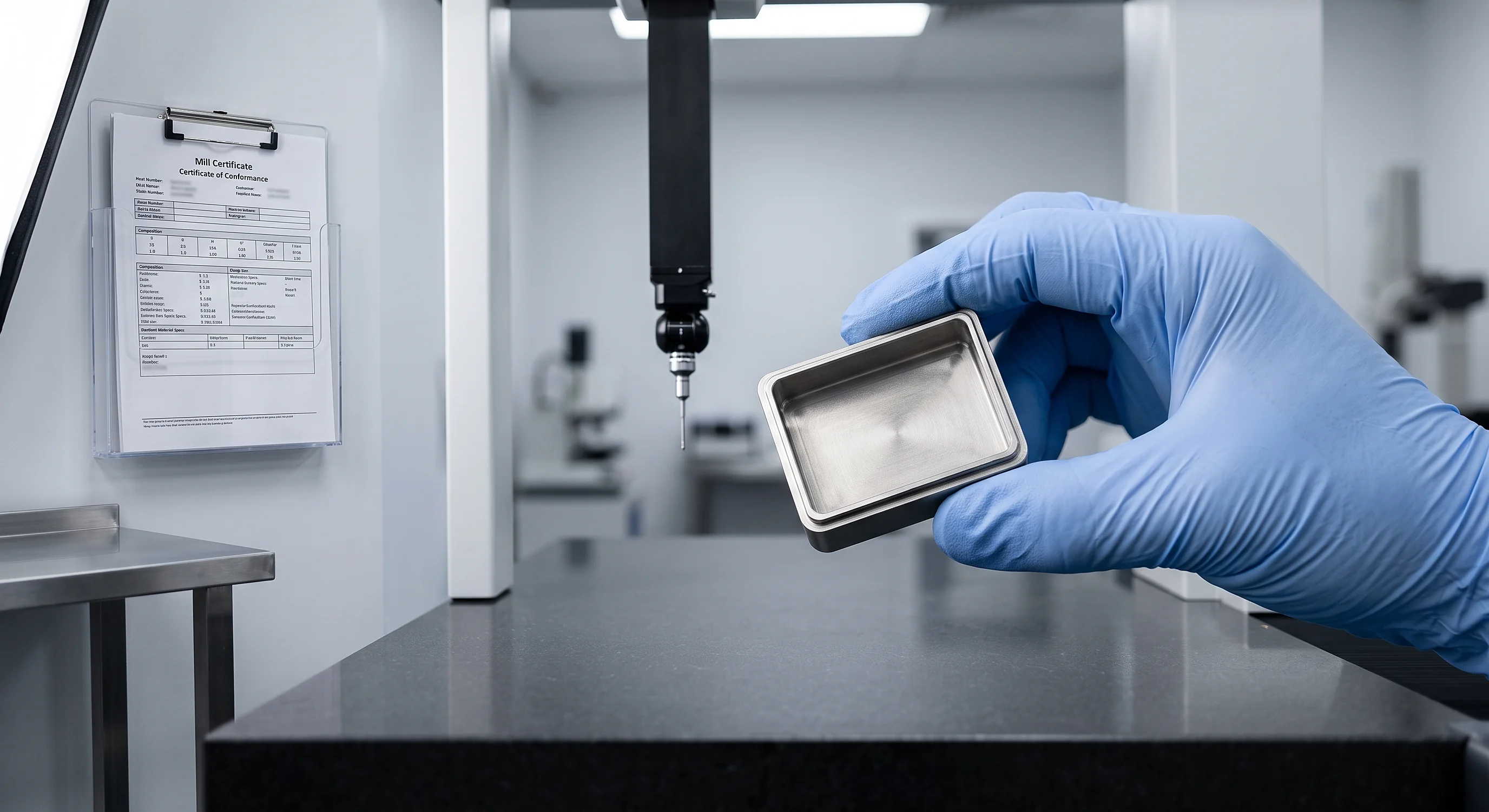
- Traceability – for compliance-sensitive work, they can provide material certificates and documentation
- Consistent quality on repeat orders – your CNC machining services provider should maintain setup records via [[${L.repetition}|repetition engineering]] so that every batch matches the first
8. Why a Local Melbourne Machine Shop Matters
For food and beverage manufacturers, having a CNC machining partner nearby makes a tangible difference. Production lines don’t wait. When a pump housing fails or a filling nozzle wears out, the cost isn’t just the replacement part — it’s the downtime on the line while you wait for it.
A local CNC machinist Melbourne businesses can visit means faster turnaround on urgent replacement parts, the ability to inspect components in person, and direct communication when specifications change mid-job. For anyone searching for CNC machining near me, proximity also means understanding the Australian regulatory environment, rather than working across time zones with a supplier unfamiliar with FSANZ or AS 4674.
Southside Engineering is based in Mordialloc, in Melbourne’s south-east manufacturing corridor. We’ve provided CNC machining Melbourne manufacturers rely on since 1973 — over 50 years of CNC machining Australia’s food-grade components. We hold tolerances to ±0.01 mm, offer 24-hour prototyping for urgent breakdowns, and return quotes within 4 hours of receiving drawings.
9. Conclusion
CNC machining for food and beverage equipment demands more than dimensional accuracy. It requires the right material, the right surface finish, and an understanding of why those choices matter for food safety and regulatory compliance. From 316 stainless steel valve bodies finished to Ra 0.8 μm, to UHMWPE conveyor guides that handle years of daily wash-downs, every component needs to be machined with hygiene in mind.
The difference between a general metal machining shop and a food-industry capable one comes down to knowledge and attention. Material selection that accounts for corrosion from CIP chemicals. Surface finishes that prevent bacterial harbourage. Design feedback that flags hygiene risks before the first cut. And consistent quality across every batch.
Southside Engineering has been providing CNC machining services to Australian food and beverage manufacturers for over five decades, and we’re proud to be a trusted machining Australia partner for some of Melbourne’s most recognised food brands. If you have a food-grade component that needs to be machined right, send us your drawings. We’ll come back with a material recommendation, surface finish specification and a quote — within 4 hours.
Have a food or beverage equipment project? Request a quote from Southside Engineering →